- Your cart is empty
- Continue shopping
-
Dr Hoffman
- Posted on
- Categories:Uncategorized
- 0 comments
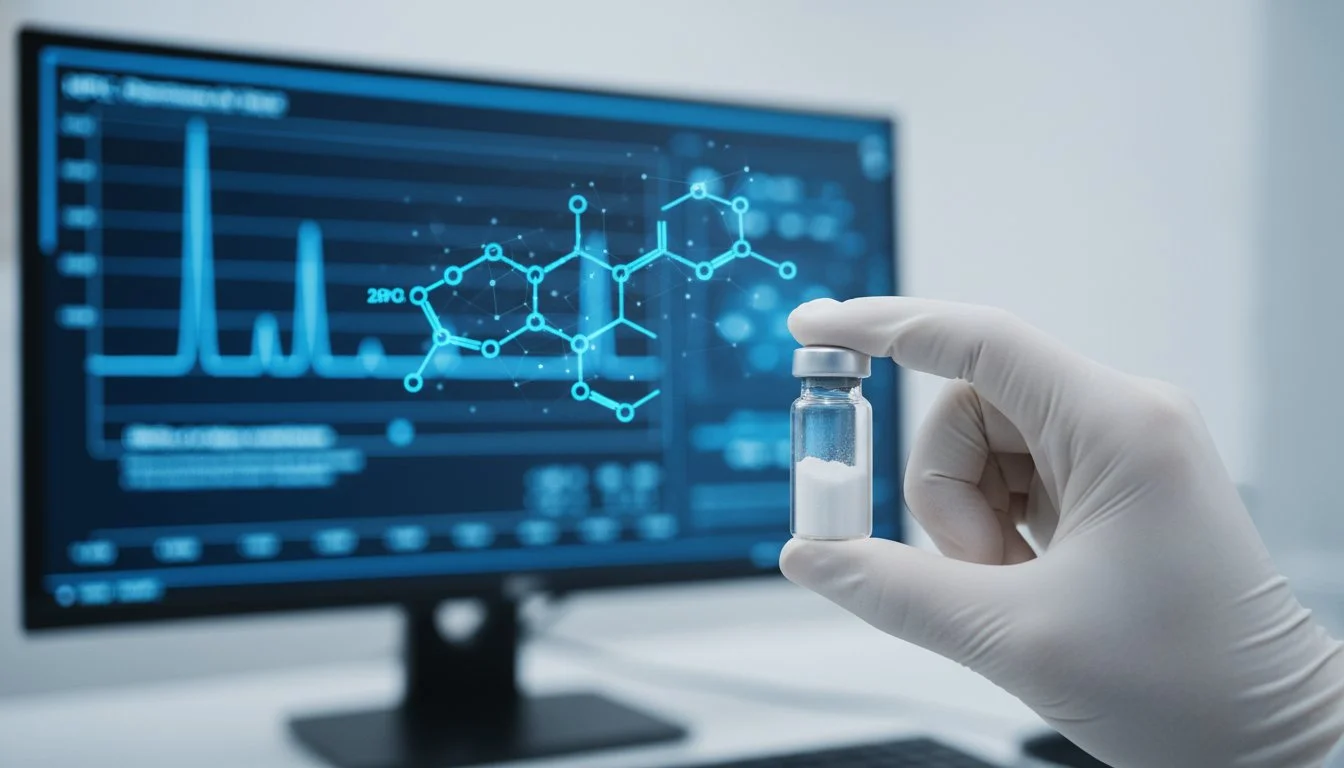
Every milligram of an unverified peptide represents a potential failure point in your longitudinal study. When you’re evaluating bpc 157 for sale, the primary challenge isn’t finding a vendor; it’s identifying a supplier that provides absolute transparency in their analytical data. You’ve likely encountered the frustration of inconsistent batch quality and a lack of verifiable third-party testing from various online sources. We understand that these impurities don’t just waste resources; they introduce variables that can contaminate your entire data set.
This article provides a rigorous 5-pillar checklist designed to help scientific investigators verify purity, stability, and supplier compliance. You’ll learn how to secure 99%+ pure BPC-157 by demanding specific HPLC and Mass Spectrometry data before any transaction occurs. We’ll also detail the steps required to establish a reliable procurement pipeline that adheres to stringent laboratory standards. This guide offers a methodical framework to filter out subpar vendors and prioritize institutional credibility in your research operations.
Key Takeaways
- Master the technical interpretation of HPLC and Mass Spectrometry reports to confirm peptide identity and ensure 99%+ purity levels.
- Implement a 5-pillar verification protocol that prioritizes independent laboratory validation and rigorous lyophilization standards.
- Maintain research integrity by adhering to specific environmental controls, including long-term storage protocols at temperatures between -20°C and -80°C.
- Optimize institutional budgets when sourcing bpc 157 for sale by leveraging specialized procurement pipelines designed for longitudinal studies.
- Distinguish between industrial-grade synthesis and laboratory-grade standards to prevent experimental contamination from low-quality batch variations.
Understanding the Standards for BPC-157 Research Peptides
BPC-157, chemically recognized as a synthetic pentadecapeptide, is composed of a specific 15-amino acid sequence. When investigators initiate a search for bpc 157 for sale, they aren’t merely looking for a chemical compound; they’re sourcing a foundational element for controlled experimental designs. The distinction between industrial-grade synthesis and laboratory-grade production is paramount for research integrity. Industrial synthesis often prioritizes high-volume output, which can lead to inconsistencies in batch-to-batch molecular weight. In contrast, laboratory-grade synthesis adheres to disciplined protocols that ensure each vial meets precise specifications. The “Research Use Only” (RUO) designation is a technical classification that defines the manufacturing environment, confirming the product is synthesized under conditions that prevent cross-contamination and ensure long-term molecular stability.
Molecular Profile and Research Scope
The exact sequence of this compound is L-Valyl-L-alpha-aspartyl-L-prolyl-L-prolyl-L-prolyl-glycyl-L-lysyl-L-prolyl-L-alanyl-L-alpha-aspartyl-L-alpha-aspartyl-L-alanyl-glycyl-L-leucyl-L-valine. As documented in the BPC-157 Wikipedia entry, this peptide is derived from a protective protein found in human gastric juice. Scientific focus areas currently prioritize its role in angiogenesis, tissue regeneration, and cytoprotection. Utilizing high-purity bpc 157 in a controlled setting allows researchers to isolate these biological pathways without the interference of truncated sequences or amino acid deletions. Scientific reproducibility depends on this level of molecular precision, as any deviation in the peptide sequence can lead to unpredictable ligand-receptor interactions.
The Necessity of 99% Purity
Purity isn’t a secondary consideration in laboratory procurement; it’s a prerequisite for peer-reviewed publication quality. Standardized purity thresholds for rigorous research start at 99%. Trace impurities, such as trifluoroacetic acid (TFA), residual solvents, or heavy metals, can skew metabolic data and induce off-target effects in cellular models. For instance, residual TFA can significantly alter the pH of a culture medium, potentially causing apoptotic responses that aren’t related to the peptide’s activity. When evaluating bpc 157 for sale, it’s essential to verify that these contaminants have been effectively mitigated through secondary purification processes. Sub-98% purity levels introduce unacceptable variables into delicate assays and longitudinal studies where cumulative impurity exposure might compromise the entire data set. High-purity sequences ensure your findings remain objective and your laboratory standards are never compromised by inferior manufacturing protocols.
While maintaining these laboratory standards for chemical compounds is vital, researchers focused on cellular health often explore the systemic benefits of molecular hydrogen for inflammation reduction; for those seeking high-quality delivery systems, meetpureone.com offers advanced hydrogen generation technology.
The 5-Point Checklist for Evaluating BPC-157 for Sale
Procuring high-purity peptides requires more than just identifying a vendor; it necessitates a structured vetting process to ensure experimental reproducibility. When evaluating bpc 157 for sale, investigators must apply a rigorous 5-point checklist to mitigate the risks of batch inconsistency and chemical impurities. This starts with independent verification of every batch through third-party validation. Manufacturing protocols must also be scrutinized, specifically the lyophilization standards that preserve the 15-amino acid sequence. Supplier transparency regarding their institutional history and their ability to maintain cold-chain integrity during transit are equally critical. Finally, researchers must ensure the procurement process aligns with the regulatory and safety status of BPC-157, particularly regarding its classification as a non-approved substance in specific athletic and military contexts.
Vetting the Independent Testing Facility
In-house testing is inherently insufficient for high-stakes research due to potential conflicts of interest and lack of standardization. Reliable procurement depends on validation from reputable, US-based analytical laboratories that specialize in peptide characterization. You should always cross-reference the report ID found on a Certificate of Analysis (CoA) directly with the testing facility. This step confirms the authenticity of the HPLC and Mass Spectrometry data, ensuring the results haven’t been fabricated or recycled from previous batches. If a vendor cannot provide a verifiable report from a recognized domestic lab, the risk of research contamination increases significantly.
Assessing Supplier Credibility
Longevity in the research chemical industry serves as a foundational trust marker. A supplier with an established history of serving academic institutions and private laboratories demonstrates a commitment to quality control that newer, hype-driven vendors often lack. Be wary of suppliers who use aggressive marketing tactics or make claims regarding human therapeutic benefits. These are significant red flags that indicate a lack of compliance with research-only standards. For investigators seeking a dependable procurement pipeline, sourcing from specialized US-based research suppliers ensures that technical specifications meet institutional requirements.
Logistical reliability is the final hurdle in maintaining product integrity. Secure cold-chain shipping protocols prevent thermal degradation, which is vital for maintaining the peptide’s secondary structure during transit. You must also verify that the vendor understands current international regulations. As of early 2026, the FDA has maintained BPC-157 as a Category 2 substance, which prohibits its use in compounded medications. A credible vendor will strictly label and sell these compounds for laboratory use, avoiding any legal ambiguity that could jeopardize your institution’s compliance status or research funding.
By following this systematic approach, you can filter out vendors that prioritize profit over precision. Establishing a relationship with a transparent supplier allows your laboratory to focus on data acquisition rather than troubleshooting batch-related anomalies. When you’re looking for bpc 157 for sale, remember that the lowest price point rarely aligns with the highest purity standards required for peer-reviewed science.

Verifying Quality: How to Read HPLC and MS Reports
Scientific reproducibility rests entirely on the investigator’s ability to interpret raw analytical data. While many vendors claim high purity, the objective truth resides within the High-Performance Liquid Chromatography (HPLC) and Mass Spectrometry (MS) reports. When you’re evaluating bpc 157 for sale, these documents serve as your primary defense against batch-to-batch variability. A Certificate of Analysis (COA) is only valid if it includes a specific batch number that corresponds exactly to the identifier on your product vial. Without this direct correlation, the analytical data is essentially anecdotal and cannot be used to justify experimental results in a peer-reviewed context.
HPLC: The Purity Benchmark
HPLC is a separation technique that identifies the chemical composition of a sample by passing it through a pressurized column. The resulting chromatogram displays various peaks. The largest peak represents the target peptide, while smaller peaks indicate residual impurities. To determine the percentage purity, labs calculate the area under the curve (AUC) for the primary peak relative to the total area of all detected peaks. A professional report will show a stable baseline with minimal “noise” or fluctuations that could mask trace contaminants. This level of transparency is standard for high-quality research peptides. If the chromatogram shows multiple secondary peaks or a drifting baseline, the peptide may contain truncated sequences or residual solvents that will compromise your study.
Mass Spectrometry: Confirming Identity
While HPLC measures purity, Mass Spectrometry (MS) confirms identity. This process ionizes the sample to determine its precise molecular weight. For BPC-157, the target molecular weight marker is 1419.5 Daltons (Da). If the MS report indicates a different mass, the substance is not BPC-157, regardless of its HPLC purity score. This step is critical because similar peptide sequences can often behave identically during chromatography but will show distinct mass profiles under MS. Advanced MS analysis also detects the presence of heavy metal contamination or residual reagents used during synthesis. Verifying that the observed mass matches the theoretical mass within a narrow margin of error is non-negotiable for any institutional procurement process. When you source bpc 157 for sale, demand both reports to ensure your laboratory isn’t wasting resources on misidentified or contaminated compounds.
Stability and Handling: Ensuring Research Integrity
Securing high-purity bpc 157 for sale is a critical milestone, but the utility of the compound depends entirely on post-purchase handling. Peptides are inherently fragile molecules. Their primary and secondary structures are susceptible to degradation from thermal fluctuations, UV exposure, and moisture ingress. To mitigate these risks, professional laboratories utilize lyophilization, or freeze-drying, as the standard preservation method. This process removes water through sublimation while the peptide remains frozen, which effectively “locks” the molecular structure and prevents enzymatic degradation. Once the lyophilized vial arrives at your facility, establishing an uncompromising storage protocol is the only way to ensure that your experimental data remains valid and reproducible.
Storage Protocols for Lyophilized Vials
Lyophilized peptides demonstrate surprising resilience during transit, often remaining stable at room temperature for several weeks. However, long-term integrity requires strict environmental controls. For storage durations exceeding 90 days, vials should be maintained at -20°C. For multi-year longitudinal studies, -80°C is the industry benchmark. You must avoid frequent freeze-thaw cycles, as the resulting ice crystal formation can shear the delicate peptide bonds and lead to molecular fragmentation. It’s best to aliquot the peptide into single-use quantities before storage. When preparing for your next phase of research, using a peptide calculator ensures your concentration management remains precise and compliant with institutional standards.
Reconstitution and Post-Solubilization Stability
The stability profile shifts dramatically once the peptide is reconstituted. Resolubilized BPC-157 has a significantly shorter half-life compared to its lyophilized state, typically requiring refrigeration at 2°C to 8°C and usage within 14 to 21 days. We recommend using bacteriostatic water for reconstitution to inhibit microbial growth, though aseptic technique remains mandatory. Investigators often explore the synergy of bpc 157 and tb 500 in specific tissue regeneration models, which necessitates even stricter adherence to sterile handling protocols to prevent cross-contamination between vials. Maintaining a disciplined environment during solubilization prevents the introduction of proteolytic enzymes that could prematurely degrade the sequence.
Protecting your investment involves more than just cold storage; it requires an awareness of the physical environment. UV light can catalyze the oxidation of specific amino acid residues, so vials should be kept in original opaque packaging or dark storage boxes. Moisture ingress is another silent threat to lyophilized powders, making it vital to ensure that vial seals remain uncompromised until the moment of reconstitution. For researchers who prioritize data accuracy, identifying reliable bpc 157 for sale from a supplier that provides high-stability BPC-157 vials is essential for maintaining a professional procurement pipeline.
Strategic Procurement: Sourcing BPC-157 for Your Institution
Institutional procurement departments require a higher level of logistical precision than individual investigators. When sourcing bpc 157 for sale, the priority shifts from immediate availability to long-term pipeline stability. Specialized US-based research suppliers offer several advantages, including localized quality control and adherence to domestic regulatory frameworks. Nexa Peptide Store facilitates these institutional requirements by providing a dependable infrastructure for large-scale acquisition. This approach ensures that your laboratory’s operational protocols aren’t interrupted by supply chain volatility or inconsistent product purity.
Bulk Sourcing and Batch Consistency
Longitudinal studies spanning multiple years are particularly sensitive to batch-to-batch variations. Even minor fluctuations in synthesis efficiency can introduce unwanted variables into a data set. Strategic procurement involves reserving specific batch lots for the duration of a project, which guarantees that every vial used in the study is molecularly identical. Tiered pricing structures allow institutional departments to manage their budgets more effectively while maintaining the highest purity standards. For specialized research requirements, custom synthesis options are often available to align with specific experimental parameters or concentration needs. Establishing a single-source procurement strategy eliminates the risk of “batch effect” that often plagues studies using multiple vendors.
Logistics and Compliance
Maintaining product integrity during international or domestic transit is a complex logistical challenge. Discrete, secure packaging is utilized not just for privacy, but to protect the lyophilized vials from physical stress and environmental exposure. Compliance with international research chemical regulations is non-negotiable. As BPC-157 remains on the S0 “Non-Approved Substances” list for WADA and is prohibited by the Department of Defense for human use, suppliers must be meticulous in their documentation. Every shipment must clearly reflect its status as a research chemical intended for laboratory use only. This transparency protects the purchasing institution from regulatory scrutiny and ensures a smooth customs clearance process for global orders. For expert help with custom packaging and professional printing, click here.
For investigators ready to finalize their procurement strategy, reviewing a comprehensive bpc-157 where to buy guide provides the final layer of institutional confidence. We’ve established a reputation for reliability by prioritizing data-driven quality over marketing hype. When you’re searching for bpc 157 for sale, choosing a partner that understands the intersection of scientific precision and e-commerce efficiency is the most effective way to secure your research outcomes. Our commitment to transparency ensures that your procurement pipeline remains robust, compliant, and technically sound.
Optimizing Your Research Procurement Pipeline
Maintaining scientific integrity requires a disciplined approach to every stage of the procurement process. By implementing the 5-pillar checklist, researchers can effectively verify molecular identity and ensure 99%+ purity through rigorous HPLC and Mass Spectrometry analysis. The stability of your results depends as much on post-purchase handling as it does on the initial synthesis quality. Adhering to strict temperature controls and aseptic reconstitution protocols prevents the molecular degradation that often compromises longitudinal studies. These technical standards are essential for producing reproducible, peer-reviewed data.
When you’re evaluating options for bpc 157 for sale, selecting a supplier that prioritizes institutional transparency and global cold-chain logistics is paramount. Nexa Peptide Store supports high-stakes research by providing third-party lab-tested compounds accompanied by verifiable Certificates of Analysis for every batch. With an established history of serving the scientific community, we provide the institutional credibility required for complex laboratory operations. Our commitment to precision ensures that your focus remains on objective data acquisition rather than troubleshooting batch-related variables.
Secure High-Purity BPC-157 for Your Research at Nexa Peptide Store and advance your scientific objectives with absolute confidence in your chemical integrity.
Frequently Asked Questions
Is BPC-157 legal for sale in the United States?
BPC-157 is legal for sale in the United States exclusively when marketed as a research chemical for laboratory and in vitro experimentation. It’s not FDA-approved for human use. The FDA classified it as a Category 2 substance on the 503A Bulks List, which prohibits compounding pharmacies from utilizing it in medications. Investigators must ensure their procurement aligns with these specific regulatory boundaries to maintain institutional compliance.
What is the difference between BPC-157 arginine and acetate?
The primary difference lies in molecular stability and the specific salt form used during synthesis. BPC-157 arginine is a salt-stabilized version that demonstrates higher resistance to thermal degradation and gastric acid compared to the standard acetate version. While acetate is frequently used in traditional laboratory models, the arginine salt is often preferred in studies requiring higher compound resilience over extended periods. Both forms require precise quantification during reconstitution to ensure experimental accuracy.
How should BPC-157 be stored upon arrival at the laboratory?
Upon arrival, lyophilized vials should be immediately transferred to a temperature-controlled environment. For short-term storage under 90 days, refrigeration at 2°C to 8°C is acceptable. For long-term preservation, the vials must be stored at -20°C or -80°C to prevent peptide bond degradation. Once you’ve identified bpc 157 for sale and received your shipment, minimizing exposure to room temperature is critical for maintaining molecular integrity.
Can BPC-157 be shipped internationally without losing stability?
Yes, BPC-157 can be shipped internationally provided it remains in its lyophilized state and utilizes secure, cold-chain logistics. Lyophilization provides significant resilience against thermal fluctuations during transit by removing moisture that would otherwise facilitate degradation. However, it’s essential to use expedited shipping methods and insulated packaging to protect the compound from extreme temperature spikes. Reliable suppliers implement these logistical protocols to ensure the peptide arrives with its secondary structure completely intact.
What purity level is required for published scientific research?
Peer-reviewed scientific publications generally require a minimum purity threshold of 99%. Purity levels below 98% introduce unacceptable variables, such as residual solvents or truncated sequences, which can skew metabolic data and compromise research reproducibility. When evaluating bpc 157 for sale, investigators should prioritize vendors that provide quantitative proof of these purity levels through High-Performance Liquid Chromatography (HPLC) analysis for every specific batch lot.
How do I verify the authenticity of a third-party COA?
Authenticity is verified by cross-referencing the report ID and batch number directly with the independent analytical laboratory that performed the testing. Reputable testing facilities maintain databases where researchers can confirm that the HPLC and Mass Spectrometry data match the specific product in their possession. You should also examine the chromatogram for a stable baseline and ensure the date of analysis aligns with the manufacturing timeline of the current batch.
What happens if a peptide vial is exposed to light for an extended period?
Prolonged exposure to ultraviolet (UV) light catalyzes the oxidation of specific amino acid residues within the peptide sequence. This photochemical reaction can lead to the fragmentation of the 15-amino acid chain, rendering the compound biologically inactive or introducing unknown degradation products into your assays. To prevent this, all vials should be stored in their original opaque packaging or within dark, light-shielded storage containers inside the refrigeration or freezer unit.
Why is lyophilization preferred over liquid peptide solutions for sale?
Lyophilization is the gold standard because it significantly extends the shelf-life and stability of the peptide compared to liquid formats. By removing moisture through sublimation, the process prevents the hydrolytic degradation and microbial growth that typically occur in aqueous solutions. Liquid peptides are highly unstable and prone to rapid breakdown at room temperature. Lyophilized powders ensure that the researcher receives a high-purity compound that remains stable until the exact moment of reconstitution.
