- Your cart is empty
- Continue shopping
-
Dr Hoffman
- Posted on
- Categories:Uncategorized
- 0 comments
In a research landscape where the FDA’s Pharmacy Compounding Advisory Committee is scheduled to review BPC-157 on July 23-24, 2026, the distinction between a retail vendor and a clinical-grade supplier determines the integrity of your scientific data. Identifying exactly bpc-157 where to buy shouldn’t involve a gamble on under-dosed vials or absent certificates of analysis. Since the removal of BPC-157 from the FDA’s Category 2 list on April 23, 2026, the market has entered a transitional phase, making it harder to separate pioneering excellence from unreliable intermediaries who ignore essential laboratory standards.
You’ve likely encountered suppliers who offer low prices but fail to provide the verified HPLC and Mass Spec data your protocols demand. This guide provides the technical framework to identify suppliers maintaining >99% purity and strictly adhering to temperature-controlled logistics. We’ll examine current 2026 pricing benchmarks, which currently range from $31.99 to $59.90 for a 5mg vial, detail the necessary verification steps for third-party COAs, and ensure your procurement remains compliant with “Research Use Only” standards.
Key Takeaways
- Learn to distinguish between consumer-grade supplements and high-purity research compounds to ensure the integrity of your laboratory protocols.
- Discover the essential criteria for determining bpc-157 where to buy, focusing on suppliers that provide verifiable third-party testing instead of relying on in-house claims.
- Understand why lyophilized powder remains the industry standard for peptide stability and how it preserves the integrity of the 15-amino acid sequence.
- Master the technical analysis of HPLC and Mass Spectrometry reports to verify a minimum purity of 99% before finalizing any procurement.
- Leverage the 14 years of pioneering excellence at Nexa Peptide Store to secure a consistent supply of laboratory-grade peptides intended for research use only.
Navigating the BPC-157 Market: Why Professional Sourcing is Critical
Precision in peptide synthesis isn’t a luxury; it’s the foundation of scientific validity. BPC-157, or Body Protection Compound 157, is a synthetic pentadecapeptide comprised of a 15-amino acid partial sequence derived from human gastric protein. While its biochemical potential has been documented in pre-clinical models since the early 1990s, the current market landscape is fraught with inconsistencies. Following the April 23, 2026, removal of the compound from the FDA’s Category 2 restricted list, a surge of new vendors has emerged. However, most of these entities operate in the consumer wellness space, providing products that lack the chemical integrity required for institutional research.
When investigators determine bpc-157 where to buy, they must prioritize suppliers that understand the “Research Use Only” mandate. This isn’t merely a legal disclaimer; it’s a commitment to laboratory-grade manufacturing. Since 2012, Nexa Peptide Store has maintained a disciplined approach to peptide production, ensuring that every vial meets the rigorous demands of scientific investigators. Institutional compliance begins with the supplier’s ability to provide verifiable data, not marketing claims. Choosing a supplier with 14 years of pioneering excellence ensures that your laboratory protocols aren’t compromised by industrial-grade shortcuts or lack of oversight.
The Distinction Between Research Peptides and Dietary Supplements
The proliferation of BPC-157 capsules, gummies, and nasal sprays in the consumer market creates a significant hurdle for serious researchers. These formats are designed for metabolic absorption in non-controlled environments and are fundamentally unsuitable for precise scientific investigations. Research-grade peptides must be provided in a lyophilized (freeze-dried) state to ensure chemical stability and accurate dosing. Procuring research chemicals through supplement vendors exposes a laboratory to significant legal and procedural risks. Authentic research sourcing requires a partner that excludes human consumption applications and focuses exclusively on the integrity of the chemical sequence.
Reproducibility Crisis: How Impurities Ruin Research Data
The difference between 95% and 99% purity may seem negligible, but in a 5mg vial, a 5% impurity rate represents 250 micrograms of unknown reagents, trifluoroacetic acid (TFA) residues, or truncated sequences. These contaminants can trigger unintended cellular responses, effectively neutralizing the validity of your experimental data. Common contaminants in low-tier manufacturing often include residual solvents or heavy metals that skew results and endanger laboratory safety. In a professional laboratory setting, BPC-157 purity is defined as a minimum of 99% verified by High-Performance Liquid Chromatography (HPLC) and Mass Spectrometry (MS) to ensure consistent, reproducible results across all research batches.
Criteria for Evaluating BPC-157 Suppliers: The Professional Framework
Establishing a rigorous procurement framework is the only way to mitigate the risks inherent in the research chemical industry. When evaluating bpc-157 where to buy, scientific investigators must look beyond price points and focus on analytical transparency. In-house testing constitutes a fundamental conflict of interest; a supplier cannot objectively audit their own manufacturing output. Professional sourcing requires third-party verification from accredited laboratories that utilize High-Performance Liquid Chromatography (HPLC) to determine purity levels.
When determining bpc-157 where to buy for institutional use, HPLC identifies the presence of impurities by separating chemical components, while Mass Spectrometry (MS) confirms the molecular weight and identity of the peptide sequence. Without these dual data points, there’s no guarantee that the vial contains BPC-157 or a truncated, inactive sequence. Longevity serves as a secondary but critical trust marker. Nexa Peptide Store, established in 2012, has maintained 14 years of pioneering excellence by providing consistent, batch-verified results to the scientific community.
How to Read a Certificate of Analysis (COA)
A legitimate COA must include three primary metrics: purity percentage, peptide content, and moisture levels. Purity should exceed 99% for research-grade materials. Peptide content indicates the actual mass of the peptide within the lyophilized cake, while moisture levels should remain below 5% to prevent premature degradation. Investigators must remain vigilant against forged reports. Outdated dates or mismatched batch numbers often signal unscrupulous vendors. Batch-specific testing is mandatory; generic “representative” reports are insufficient for high-precision laboratory work.
Manufacturing Standards and Laboratory Integrity
The integrity of a peptide is determined by its synthesis environment. State-of-the-art manufacturing requires ISO-certified cleanrooms and strict synthesis protocols to prevent cross-contamination. Logistics are equally vital. Temperature-controlled shipping ensures that the peptide remains stable from the laboratory to your facility. For a deeper understanding of these requirements, review our Research Peptides: A Comprehensive Guide to Quality, Purity, and Laboratory Standards.
While BPC-157 remains prohibited by the World Anti-Doping Agency for athletic use, its role in pre-clinical research continues to expand. Investigators exploring multi-peptide protocols should also consult our technical guide on BPC-157 and TB-500 peptide synergy in laboratory research to understand how these compounds interact across distinct signaling pathways. Scientific investigators must adhere to “Research Use Only” protocols to maintain institutional compliance and safety. If you’re seeking a partner that prioritizes data over hype, you can buy premium peptides from an established industry leader that understands the nuances of chemical integrity.

Lyophilized Powder vs. Other Formats: Choosing the Correct Research Form
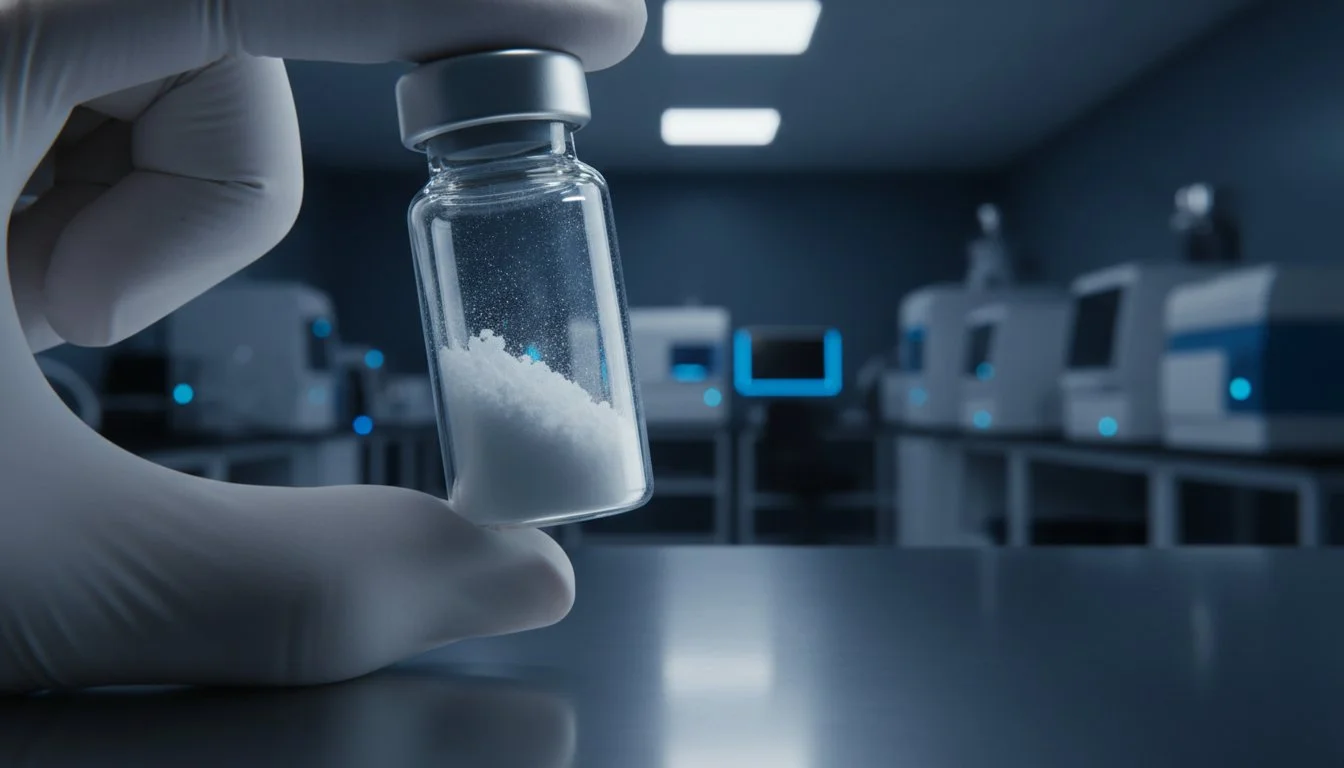
Lyophilization is the technical process of removing moisture from a biological substance through sublimation, effectively “locking” the molecular structure in place. For BPC-157, this state-of-the-art preservation method isn’t a luxury; it’s a fundamental requirement for chemical stability. While consumer-facing vendors might offer liquid sprays or drops, these formats are highly susceptible to thermal degradation and enzymatic breakdown. Professional researchers understand that lyophilized powder represents the industry standard for stability. It ensures the 15-amino acid sequence remains intact from the point of manufacture to the moment of reconstitution.
When determining bpc-157 where to buy, the physical format of the product serves as an immediate filter for supplier quality. Pre-mixed liquid solutions often lose potency within days at room temperature, making them unreliable for controlled laboratory settings. Lyophilized vials, however, maintain their integrity for months when stored correctly. This stability is critical during transit, where temperature fluctuations are common. Once delivered, the lyophilized cake should be stored in a climate-controlled environment to prevent degradation. It’s essential that researchers use bacteriostatic water for reconstitution to maintain sterility during the research phase.
Why Research Protocols Demand Lyophilized Vials
Precision in dosing is the cornerstone of any valid trial. Lyophilized vials allow investigators to calculate exact concentrations by adding a measured volume of bacteriostatic water. This level of control isn’t possible with pre-mixed liquids or oral formats. Liquid-form peptides face a high risk of “shearing” or degradation during shipping due to mechanical agitation. Lyophilized powder is far more resilient. While these vials are stable at room temperature for short-term transit, long-term storage should occur at 2°C to 8°C to preserve the purity of >99%. Maintaining these strict temperature controls ensures that the peptide’s integrity remains uncompromised until the experiment begins.
Avoiding the ‘Supplement’ Trap
The market is, as of May 2026, flooded with BPC-157 capsules and gummies, but these are intended for general wellness rather than scientific inquiry. Research into oral bioavailability is a distinct niche that requires specific enteric-coated formulations, which standard “supplement” brands often lack. These products frequently contain fillers, binders, and stabilizing agents that introduce unwanted variables into a study. As noted by Operation Supplement Safety on BPC-157, many of these “wellness” products circumvent regulatory standards and lack the analytical verification required for institutional use. Lyophilization remains the gold standard for peptide integrity because it prevents hydrolytic degradation and maintains the compound’s structural fidelity until the precise moment of laboratory use. Avoid these consumer-grade products to ensure your data remains reproducible and scientifically sound.
Securing High-Purity BPC-157: A Researcher’s Procurement Checklist
Successful procurement requires a methodical approach that mirrors the rigor of the research itself. When determining bpc-157 where to buy, investigators must evaluate the supplier’s logistical infrastructure and commitment to institutional standards. This process isn’t a simple transaction; it’s a verification of chemical integrity. A comprehensive checklist ensures that every vial dispatched to your facility meets the strict “Research Use Only” mandate, protecting both your data and your regulatory standing. Professional sourcing isn’t about finding the lowest price; it’s about securing a consistent, >99% pure supply that won’t compromise your experimental outcomes. For a structured approach to evaluating vendors, our professional laboratory procurement checklist for BPC-157 for sale provides a rigorous 5-pillar framework to verify purity, stability, and supplier compliance before any transaction occurs.
Logistical precision is just as critical as chemical purity. Peptides are sensitive to thermal fluctuations, so you must verify that your supplier utilizes temperature-controlled shipping protocols. This typically includes insulated packaging and expedited delivery times to minimize environmental exposure. For large-scale institutional projects, assess bulk purchase options early in the process. Procuring larger quantities from a single, verified batch is a strategic move that significantly reduces inter-experimental variability, ensuring that your results remain reproducible across the entire duration of your study.
Step 1: Supplier Vetting and History
Longevity is the most reliable indicator of quality in the peptide industry. Look for established entities that have navigated the evolving regulatory landscape for over a decade. Nexa Peptide Store was established in 2012, representing 14 years of pioneering excellence in supplying the scientific community. This history of commercial reliability suggests a disciplined approach to quality control that newer “pop-up” vendors simply cannot match. Reliable suppliers often have documented histories of providing materials to universities and private research organizations, serving as a “Scientific Gatekeeper” for high-stakes laboratory work.
Step 2: Technical Data and Compliance
Every shipment must be accompanied by batch-specific documentation. This isn’t optional; it’s a requirement for institutional compliance. You should cross-reference the provided HPLC and Mass Spec data with the independent testing facility to confirm the reports aren’t forged or outdated. For a deeper analysis of the compound’s biochemical properties and pre-clinical history, consult our BPC-157 Peptide: A Comprehensive Scientific Review and Research Guide. Aligning your procurement with these technical standards ensures your laboratory maintains the highest level of scientific integrity. Don’t settle for less than absolute transparency when identifying bpc-157 where to buy for your next project.
A disciplined researcher knows that the quality of the input determines the validity of the output. To ensure your laboratory is equipped with the highest-quality compounds, buy premium-grade BPC-157 from a supplier that prioritizes precision and laboratory standards above all else.
Nexa Peptide Store: Your Trusted Partner for BPC-157 Research
Established in 2012, Nexa Peptide Store has spent 14 years of pioneering excellence refining the synthesis and distribution of high-purity research compounds. We’ve seen the industry evolve and the regulatory landscape shift, yet our commitment to laboratory standards remains unyielding. When investigators evaluate bpc-157 where to buy, they aren’t just looking for a product; they’re looking for an institutional peer that values data integrity as much as they do. Our reputation as a Scientific Gatekeeper is built on the fact that every vial of BPC-157 we offer is verified at >99% purity through rigorous third-party analysis.
Our operations are centered in state-of-the-art facilities where precision is the only metric of success. We understand that a research project’s validity depends on the stability of its chemical inputs. That’s why our logistics department prioritizes temperature-controlled transit and rapid dispatch. We’ve established a worldwide reputation for reliability, ensuring that research institutions from major universities to private laboratories receive their compounds in peak condition. It’s this fusion of chemical expertise and e-commerce efficiency that defines our role as an industry leader.
The Nexa Difference: Laboratory Standards First
Every batch of BPC-157 we release is accompanied by comprehensive HPLC and Mass Spec data. We don’t rely on outdated representative reports; we provide the specific data for the batch in your hands. This transparency is why we’ve been a trusted partner for over a decade. Our catalog includes over 100 high-purity peptides, ranging from BPC-157 and TB-500 to specialized compounds like IGF-1 LR3 and GHK-Cu. Researchers interested in exploring the combined regenerative potential of these compounds can reference our detailed analysis of BPC-157 and TB-500 synergistic signaling pathways for standardized multi-peptide research protocols. We strictly adhere to Research Use Only protocols. This isn’t just a legal requirement; it’s a core part of our professional identity that ensures our products are used in the controlled environments they were designed for.
Procurement and Institutional Support
We offer tiered pricing structures designed to support high-volume laboratory orders and long-term institutional research projects. Whether you’re conducting a small-scale pilot study or a multi-year investigation, our procurement team provides the logistical support necessary to maintain a consistent supply chain. Our secure online platform allows for the streamlined procurement of individual research vials, ensuring that even independent investigators have access to the same >99% purity standards as large-scale institutions. Choose a partner where quality meets reliability. When you decide bpc-157 where to buy for your next study, trust the supplier with a proven track record of clinical professionalism.
Secure your 99% pure BPC-157 for research today at Nexa Peptide Store.
Advancing Scientific Integrity in Peptide Research
Identifying exactly bpc-157 where to buy requires a shift from consumer-grade marketplaces to professional laboratory suppliers. By prioritizing third-party verified HPLC data and lyophilized stability, investigators ensure their experimental outcomes remain reproducible and precise. Institutional compliance begins with a supplier that understands the “Research Use Only” mandate. Nexa Peptide Store facilitates this standard through 14 years of pioneering excellence and an uncompromising stance on chemical integrity. Our peptides are strictly manufactured in state-of-the-art facilities to maintain a consistent purity of >99%.
Since our establishment in 2012, we’ve functioned as a scientific gatekeeper for universities and private research organizations worldwide. This disciplined approach provides the logistical reliability and technical data required for high-stakes pre-clinical trials. Don’t settle for unverified materials that jeopardize your data’s validity. Trust in a partner where quality meets reliability to secure the future of your laboratory investigations. We’re ready to support your next breakthrough with precision and professional accountability. Your research deserves the highest-quality chemical inputs available in the industry today.
Shop High-Purity BPC-157 (99%+ Purity) for Research Only
Frequently Asked Questions
Is BPC-157 legal to buy for research purposes?
BPC-157 is legal to purchase exclusively for laboratory research use as of May 2026. While the FDA removed it from the Category 2 restricted compounding list on April 23, 2026, it remains unapproved for human consumption. Investigators must ensure their procurement aligns with “Research Use Only” protocols to maintain institutional compliance. The legal landscape continues to evolve, with a critical review by the Pharmacy Compounding Advisory Committee scheduled for July 23, 2026.
How do I know if the BPC-157 I’m buying is real?
Verifying the authenticity of your compound requires batch-specific High-Performance Liquid Chromatography (HPLC) and Mass Spectrometry (MS) reports. These documents confirm the molecular identity and purity of the peptide sequence. When deciding bpc-157 where to buy, avoid vendors that only provide “representative” or outdated reports. Authentic suppliers like Nexa Peptide Store, established in 2012, provide transparent, third-party verified data for every dispatched batch to ensure scientific integrity.
What is the difference between research-grade and pharmaceutical-grade peptides?
The primary distinction lies in the intended application and the regulatory framework governing production. Research-grade peptides are synthesized for in-vitro and in-vivo laboratory investigations and are strictly prohibited from human use. Pharmaceutical-grade peptides are manufactured for clinical treatment under specific FDA approvals and prescriptions. Laboratories require research-grade compounds that prioritize chemical stability and sequence accuracy over the fillers or delivery mechanisms found in medical products.
Why is BPC-157 sold as a ‘research chemical’ and not a supplement?
BPC-157 is categorized as a research chemical because it hasn’t undergone the multi-phase clinical trials required for FDA approval as a dietary supplement or drug. Selling it as a supplement would violate federal regulations regarding unapproved new drugs. By maintaining a “Research Use Only” status, suppliers ensure that investigators can access high-purity compounds for scientific discovery while remaining compliant with the strict oversight of agencies like the Department of Defense.
Can I buy BPC-157 on Amazon or from a local pharmacy?
No, high-purity BPC-157 is not available through traditional retail channels like Amazon or local pharmacies. Amazon’s policies strictly prohibit the sale of research chemicals, and local pharmacies can only dispense BPC-157 with a medical prescription if compounding regulations allow. For scientific investigators, finding bpc-157 where to buy means sourcing from specialized peptide laboratories that maintain the ISO-certified environments necessary for synthesizing compounds with >99% purity. Investigators evaluating verified sources of BPC-157 for sale should apply a structured supplier vetting process that demands batch-specific HPLC and Mass Spectrometry documentation before committing to any procurement.
How should BPC-157 be stored once it arrives at the laboratory?
Lyophilized BPC-157 should be stored in a climate-controlled environment at temperatures between 2°C and 8°C for long-term stability. While the freeze-dried powder remains stable at room temperature during short-term transit, refrigeration preserves the integrity of the 15-amino acid sequence for up to 24 months. Once reconstituted with bacteriostatic water, the solution must be stored at 2°C to 8°C and used within a 30-day window to prevent degradation or bacterial growth.
What does ‘>99% purity’ actually mean for my scientific data?
A purity level of >99% indicates that less than 1% of the vial’s content consists of manufacturing byproducts such as residual solvents or truncated sequences. In a 5mg vial, this standard ensures that contaminants like trifluoroacetic acid (TFA) are kept to negligible levels. High purity is essential for data reproducibility, as even minor impurities can trigger unintended cellular responses that skew experimental results and compromise the validity of your laboratory protocols.
How long does shipping take for BPC-157 research vials?
Shipping times typically range from 2 to 5 business days depending on the laboratory’s location and the selected dispatch method. Because peptides are temperature-sensitive, Nexa Peptide Store utilizes expedited logistics and insulated packaging to maintain chemical integrity during transit. Every order is dispatched with tracking information to allow investigators to prepare for immediate climate-controlled storage upon arrival. We’ve maintained this standard of logistical reliability since our founding in 2012.
