
- Your cart is empty
- Continue shopping
-
Dr Hoffman
- Posted on
- Categories:Uncategorized
- 0 comments
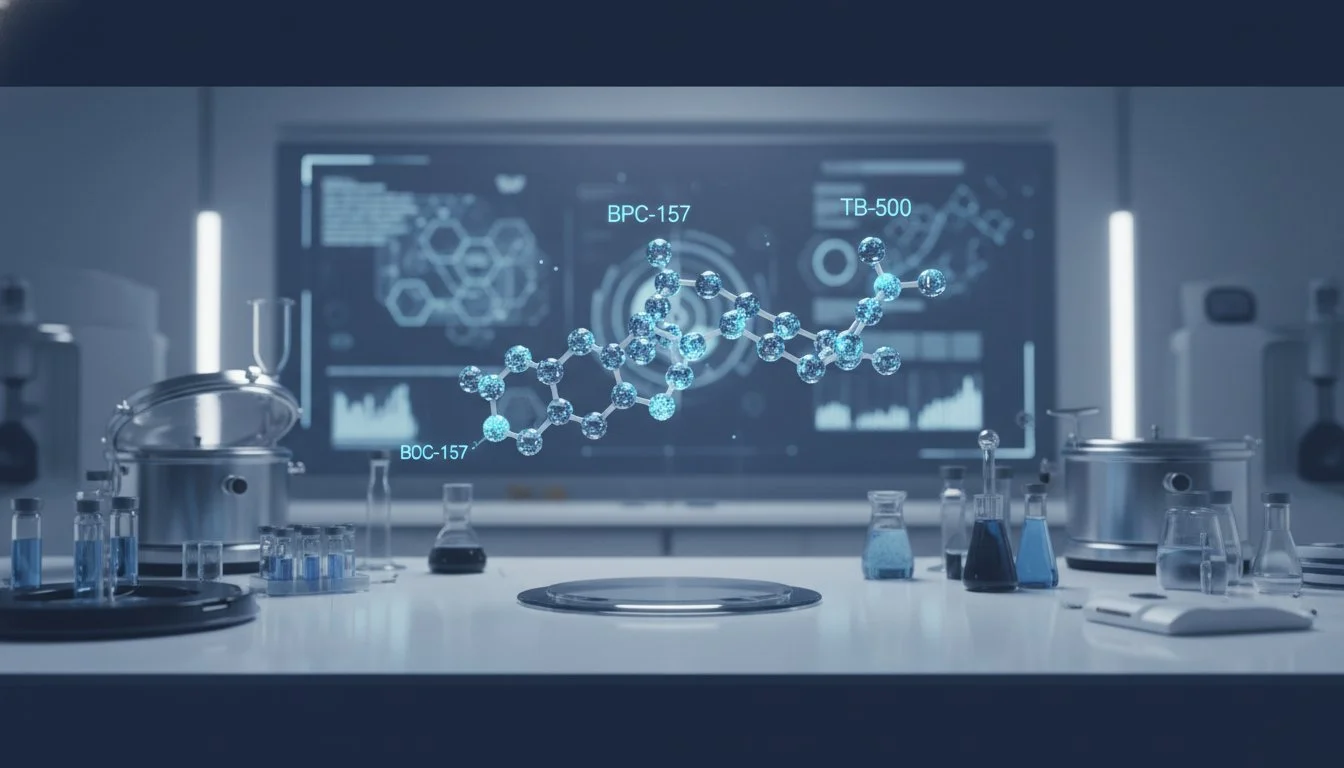
The synergy of BPC-157 and TB-500 in a laboratory setting is not merely additive but multiplicative, representing a sophisticated intersection of gastric-derived signaling and thymic-mediated cell migration pathways. You likely recognize that inconsistent purity and ambiguous reconstitution protocols often compromise the integrity of peptide research, leading to data variability that hinders scientific progress. With the global peptide therapeutics market projected to reach $163.98 billion in 2026, the demand for rigorous laboratory standards has never been higher. This technical guide clarifies the molecular interaction between bpc 157 and tb 500 and provides standardized protocols for handling these compounds in a controlled, non-human research environment. We’ll examine the distinct systemic and localized signaling pathways of each peptide, outline precise reconstitution steps using bacteriostatic water, and establish the verified sourcing criteria necessary for high-purity compounds. By prioritizing clinical professionalism and disciplined quality control, researchers can effectively explore the regenerative potential of these sequences while maintaining compliance with the evolving regulatory landscape surrounding the July 23-24, 2026, Pharmacy Compounding Advisory Committee meeting.
Key Takeaways
- Distinguish between the molecular profiles of BPC-157 as a gastric-derived pentadecapeptide and TB-500 as a synthetic analog of Thymosin Beta-4.
- Evaluate the synergistic potential of bpc 157 and tb 500 by contrasting localized tissue binding with systemic cell migration pathways in research models.
- Execute precise laboratory reconstitution protocols using bacteriostatic water and sterile vials while maintaining strict temperature controls to ensure compound integrity.
- Maintain institutional compliance by strictly adhering to “Research Use Only” (RUO) designations and acknowledging the current absence of human clinical trials.
- Identify high-purity sourcing markers, focusing on suppliers that demonstrate verified quality control and reliable cold-chain logistics for global distribution.
Understanding the Synergistic Mechanisms of BPC-157 and TB-500
BPC-157 is a stable gastric pentadecapeptide consisting of a sequence of 15 amino acids. It’s derived from a protective protein found in human gastric juice, exhibiting high stability in various laboratory environments. In contrast, TB-500 is a synthetic analog of the naturally occurring protein Thymosin Beta-4. It represents the specific active fragment responsible for cell migration and tissue repair. When researchers investigate the synergy of bpc 157 and tb 500, they’re examining a multiplicative effect where the localized signaling of the pentadecapeptide complements the systemic migratory influence of the thymic analog. This dual-peptide approach is frequently employed to study complex regenerative environments that require both immediate structural support and long-term cellular migration.
The primary research objective for combining these two compounds is to observe how their distinct pathways overlap to accelerate tissue regeneration in vitro and in vivo models. While one compound stabilizes the immediate cellular environment, the other facilitates the recruitment of necessary biological materials from distant sites. This interaction provides a comprehensive model for studying wound healing, angiogenesis, and extracellular matrix remodeling. Precise laboratory handling is required to maintain the integrity of these sequences, as their biological activity depends entirely on their structural conformation.
The Molecular Pathway of BPC-157
The molecular pathway of BPC-157 involves the significant upregulation of vascular endothelial growth factor receptor 2 (VEGFR2). This process is critical for initiating angiogenic responses in controlled research environments. Additionally, BPC-157 influences nitric oxide (NO) signaling, which serves as a foundational mechanism for modulating vascular integrity and blood flow within research subjects. Laboratory observations indicate that BPC-157 enhances fibroblast recruitment, facilitating the structural assembly of the extracellular matrix during repair phases. For a more detailed chemical profile, this BPC-157 overview provides foundational data on its structure and stability. The peptide’s ability to remain active in the presence of gastric enzymes makes it a unique subject for studying localized tissue protection.
The Cellular Mechanics of TB-500
TB-500 operates primarily through a mechanism known as G-actin sequestration. By binding to globular actin, the peptide effectively prevents polymerization into F-actin, which directly impacts cell motility and cytoskeletal flexibility. This mechanism allows cells to migrate more efficiently to sites of injury within a research model. Beyond motility, TB-500 promotes angiogenesis and organized collagen deposition, ensuring that new tissue maintains structural integrity. Unlike localized signaling molecules, TB-500 exhibits systemic characteristics. Its influence extends throughout the research model rather than being confined to the immediate application site. Researchers utilize this systemic nature to study how signaling molecules travel through various physiological systems to reach target tissues.
Comparative Analysis: Localized vs. Systemic Research Pathways
The functional divergence between bpc 157 and tb 500 centers on their distinct pharmacokinetic behaviors within a research model. BPC-157, a pentadecapeptide, exhibits high-affinity binding at the site of application, making it a primary subject for localized tissue studies. TB-500, conversely, is characterized by its migratory nature. As a synthetic fragment of Thymosin Beta-4, it possesses a low molecular weight that facilitates movement through the circulatory system and across tissue barriers. Researchers often utilize both compounds simultaneously to address multiple regenerative phases, ensuring that the research model receives both immediate site-specific stabilization and systemic cellular recruitment.
In scientific circles, the colloquial “Wolverine Blend” refers to the co-administration of these two peptides to exploit their complementary signaling pathways. This isn’t merely a marketing term; it describes a strategic protocol designed to cover the inflammatory and proliferative phases of tissue repair. During the initial inflammatory phase, BPC-157’s influence on nitric oxide pathways helps stabilize the microenvironment. As the model transitions into the proliferative phase, TB-500’s ability to sequestration G-actin drives the migration of progenitor cells to the injury site. This sequential interaction provides a more comprehensive data set than studying either compound in isolation. For laboratories requiring high-purity sequences to maintain these precise interactions, sourcing from a reliable supplier like Nexa Peptide Store ensures experimental consistency.
BPC-157: The Local Signaling Specialist
BPC-157 is frequently prioritized in tendon and ligament research models due to its exceptional stability and site-specific activity. Unlike many signaling proteins that degrade rapidly, this peptide remains stable in gastric juice environments, which allows for specialized studies involving mucosal integrity and localized soft tissue repair. Its primary role involves the upregulation of growth factor receptors at the specific point of interest. To explore the precise biochemical interactions involved, researchers should consult this Comprehensive Scientific Review of BPC-157. While its localized efficacy is well-documented, researchers must remain aware of the broader regulatory context, including the FDA safety risks of compounded peptides, which underscores the necessity of using these compounds strictly for laboratory inquiry.
TB-500: The Systemic Migration Driver
TB-500 functions as a systemic driver by traveling through the research medium to reach distant injury sites. Its molecular structure allows it to bypass traditional tissue barriers that often restrict larger proteins. This systemic reach is essential for studying cellular differentiation and tissue remodeling on a macro scale. By promoting the migration of endothelial cells and keratinocytes, TB-500 facilitates the complex process of angiogenesis throughout the entire research subject. This makes it an invaluable tool for observing how signaling molecules coordinate repair processes across different physiological systems, providing a contrast to the localized focus of the pentadecapeptide counterpart.

How to Reconstitute and Handle Peptide Blends in the Lab
Successful research outcomes depend on the precise preparation and preservation of the peptide sequences involved. Reconstituting bpc 157 and tb 500 requires a sterile environment and specific laboratory equipment to ensure the compounds remain viable throughout the study. Essential tools include 30ml bacteriostatic water, sterile vials, and precision syringes. Bacteriostatic water is the preferred diluent because its 0.9% benzyl alcohol content inhibits bacterial growth, which is vital for multi-use research vials. Maintaining a controlled temperature during this process is critical. Rapid temperature fluctuations can stress the peptide bonds, potentially leading to degradation before the research cycle even begins.
The protocol for introducing the diluent to the lyophilized powder must be executed with extreme care. Most high-quality vials are sealed under a vacuum; if the diluent is allowed to rush in, the resulting pressure change can damage the delicate molecular structure. Researchers should aim the needle toward the side of the glass vial, allowing the bacteriostatic water to slowly drip down the wall and saturate the powder. A strict “no-shake” rule applies here. Instead of shaking the vial, which can cause shearing of the peptide chains, gently swirl the container until the solution is clear and all particulates have dissolved. This disciplined approach preserves the structural integrity of the bpc 157 and tb 500 blend for accurate data collection.
Precision Calculation and Measurement
Accurate concentration is the foundation of reproducible research. To determine the concentration per milliliter, use the formula: Total Milligrams of Peptide / Milliliters of Diluent = mg/mL. For example, adding 2ml of bacteriostatic water to a 5mg vial results in a concentration of 2.5mg/mL. For complex volumetric measurements, researchers often utilize a Peptide Calculator Guide to eliminate manual calculation errors. Calculating dosages for specific research subject weights requires converting these concentrations into micrograms (mcg) to ensure precision across different experimental groups.
Storage and Stability Protocols
Peptide stability is highly dependent on environmental controls. Lyophilized powders should be stored in a freezer at –20°C for long-term preservation, while reconstituted solutions must be kept refrigerated between 2°C and 8°C. Exposure to UV light is a significant factor in peptide degradation, so vials should be kept in dark storage or opaque containers. Before starting a research cycle, use this checklist to verify vial integrity:
- Confirm the vacuum seal is intact during the initial needle insertion.
- Inspect the lyophilized cake for any signs of moisture or discoloration.
- Verify that the solution remains completely transparent after reconstitution.
- Check the Regulatory Status of BPC-157 to ensure all laboratory protocols align with current institutional and governmental guidelines.
Adhering to these storage standards ensures that the chemical properties of the compounds remain consistent from the first application to the last.
Addressing Research Limitations and Regulatory Compliance
The classification of bpc 157 and tb 500 as Research Use Only (RUO) compounds is a fundamental distinction that defines the operational boundaries of the industry. These substances are intended exclusively for laboratory experimentation, whether in vitro or in vivo, and are not approved for human consumption. While search interest for peptide therapy has increased by 300% between April 2025 and April 2026, it’s essential to recognize that this public interest doesn’t equate to clinical approval. The lack of large-scale, placebo-controlled human clinical trials remains the primary basis for further scientific inquiry. Researchers must approach these compounds as experimental sequences rather than finished medical products.
Objective science requires the dismissal of “miracle” narratives often found in non-technical circles. Peptides don’t provide instantaneous results; they influence specific biological pathways over defined durations within a controlled experimental design. Third-party testing serves as the critical validator for research integrity, ensuring that the molecular sequence in the vial matches the documentation provided. Without this verification, data variability becomes an insurmountable hurdle. To ensure your laboratory work is built on a foundation of verified data, source your research compounds from suppliers that provide comprehensive analytical documentation.
The Role of Purity in Scientific Integrity
Impurities within a peptide batch are more than just a quality concern; they’re a threat to the validity of your entire data set. Contaminants can lead to unintended cellular responses, effectively skewing research results and leading to experimental failure. Achieving 99%+ purity is the mandatory threshold for institutional research, and this must be verified through High-Performance Liquid Chromatography (HPLC) and Mass Spectrometry (MS) analysis. These quantitative proof points act as the definitive evidence for quality claims. Investigators should thoroughly review established Quality and Purity Standards to understand the verification processes required for high-integrity sourcing.
Legal and Ethical Boundaries of Research
The legal landscape for research peptides is currently undergoing significant scrutiny. As of May 2026, while these compounds are eligible for compounding review, they remain unapproved for medical use. The FDA’s Pharmacy Compounding Advisory Committee (PCAC) meeting on July 23-24, 2026, will be a pivotal moment for the industry, potentially reclassifying how these substances are handled. However, for the active researcher, the ethical boundary remains clear: these compounds must not be used for veterinary or human applications. Furthermore, both BPC-157 and TB-500 are strictly banned by the World Anti-Doping Agency (WADA). Maintaining these boundaries is a core responsibility of the modern researcher, ensuring that the pursuit of knowledge remains compliant with global regulatory standards.
Sourcing High-Purity BPC-157 and TB-500 for Your Lab
Identifying a dependable supplier for bpc 157 and tb 500 requires more than a surface-level review of marketing claims. A reputable research chemical supplier functions as a technical gatekeeper, providing verified documentation for every batch produced. The primary marker of reliability is the availability of a Certificate of Analysis (COA). Interpreting these documents involves analyzing the High-Performance Liquid Chromatography (HPLC) results for purity and Mass Spectrometry (MS) data for molecular weight verification. These quantitative proof points ensure that the sequence in the vial is exactly what the research protocol demands. Without these markers, the integrity of the data collected is perpetually at risk. Laboratories establishing their procurement pipeline should consult a dedicated BPC-157 for sale procurement checklist to verify supplier compliance and analytical transparency before committing to any vendor.
Logistics play an equally critical role in maintaining compound integrity. Global shipping reliability and established cold-chain logistics are essential for peptides that are sensitive to environmental fluctuations. When compounds travel across different climates, specialized packaging and expedited transit times prevent thermal degradation. For long-term institutional studies, bulk purchasing provides both economic efficiency and experimental consistency. Using the same batch across multiple phases of a study eliminates the variable of batch-to-batch inconsistency, which is vital for maintaining the accuracy of longitudinal data. It’s a standard practice for high-functioning laboratories to secure their entire supply for a specific project timeline to ensure results remain reproducible.
Why Purity Matters for Reproducible Results
Nexa Peptide Store ensures a minimum of 99% purity for all research sequences, providing the institutional credibility required by academic and private laboratories. This standard is maintained through a rigorous lyophilization process, which removes moisture from the peptide while preserving its structural stability. Lyophilization ensures that the bpc 157 and tb 500 remain viable during transit and long-term storage. Procurement departments looking to standardize their supply chain should consult the available BPC-157 Sourcing Guides to establish verified sourcing criteria. High-purity compounds are the only way to ensure that cellular responses observed in the lab are caused by the peptide itself rather than external contaminants.
Conclusion: Advancing Scientific Discovery
The synergy of BPC-157 and TB-500 offers a sophisticated model for investigating regenerative pathways, combining localized structural support with systemic cellular migration. By adhering to precise reconstitution protocols and disciplined storage standards, researchers can unlock new insights into tissue repair and angiogenesis. It’s imperative to remember the strict mandate that these compounds are for laboratory research only and are not for human consumption. Maintaining these professional and regulatory boundaries is essential for the continued advancement of peptide science. To secure high-integrity compounds for your next study, you can purchase high-purity BPC-157 and TB-500 from Nexa Peptide Store.
Elevating Laboratory Standards for Regenerative Research
Integrating the synergy of bpc 157 and tb 500 into your laboratory protocols offers a sophisticated, multi-layered approach to studying complex tissue repair and cellular migration. By prioritizing 99%+ purity and disciplined reconstitution techniques, you successfully eliminate the variables that often lead to skewed data or experimental failure. The reliability of your longitudinal studies depends on compounds that meet the highest industrial benchmarks. Nexa Peptide Store remains a dedicated partner for research organizations and academic institutions worldwide, providing third-party lab-tested sequences and secure global logistics to protect your project’s integrity. Maintaining these rigorous standards ensures that every observation contributes to the broader body of scientific knowledge with absolute precision. We invite you to utilize our high-purity compounds to advance your research objectives and achieve reproducible results in your controlled environment.
Secure 99%+ Pure BPC-157 and TB-500 for Your Research
Your commitment to scientific excellence drives the future of regenerative medicine, and it’s our priority to provide the foundational materials required for your next breakthrough.
Frequently Asked Questions
Can BPC-157 and TB-500 be reconstituted in the same vial?
While BPC-157 and TB-500 can be reconstituted in the same vial for specific dual-peptide studies, researchers often maintain separate vials to ensure precise control over experimental ratios. Combining them requires careful volumetric calculation to maintain the intended concentration of each sequence. If a study necessitates the simultaneous application of bpc 157 and tb 500, using a pre-blended vial or mixing them post-reconstitution in a sterile environment are both acceptable laboratory practices.
What is the recommended storage temperature for lyophilized peptides?
Lyophilized peptides must be stored at –20°C or colder to ensure long-term molecular stability. Maintaining this temperature prevents the degradation of the delicate amino acid sequences and protects the compound from environmental stressors. For short-term use during an active research cycle, refrigeration between 2°C and 8°C is acceptable for unconstituted vials. However, sub-zero storage remains the industry standard for preserving the structural integrity of these research chemicals for extended periods.
How long do BPC-157 and TB-500 remain stable after reconstitution?
Once reconstituted, these peptides typically maintain their biological activity for 14 to 21 days when stored under strict refrigeration between 2°C and 8°C. Stability is significantly reduced if the solution is exposed to room temperature or UV light for extended durations. Researchers should monitor the solution for any signs of precipitation or cloudiness, which indicates that the peptide bonds have begun to degrade, potentially rendering the data collected from that vial invalid.
What is the primary difference between BPC-157 and TB-500 in research?
The fundamental difference centers on their pharmacokinetic behavior; BPC-157 provides localized signaling at the site of application while TB-500 facilitates systemic cellular migration. BPC-157 is often utilized in tendon and ligament models due to its site-specific binding. Conversely, TB-500’s low molecular weight allows it to travel through the research medium to reach distant injury sites. This distinction is why the synergy of bpc 157 and tb 500 is so valuable in comprehensive regenerative research.
Why is third-party lab testing essential for research peptides?
Third-party laboratory testing is the only definitive method for verifying that a peptide batch meets the 99%+ purity threshold required for scientific integrity. HPLC and Mass Spectrometry analysis provide quantitative proof that the molecular sequence is accurate and free from synthesis byproducts. Without these verification processes, researchers risk introducing unknown variables into their experiments, which can lead to skewed results and a lack of reproducibility in their published findings. When evaluating bpc 157 for sale from compliant laboratory suppliers, demanding specific HPLC and Mass Spectrometry documentation before any transaction is the essential first step in protecting your research integrity.
Is BPC-157 or TB-500 FDA approved for human use?
Neither compound is FDA approved for human use, medical prescriptions, or veterinary applications. They are strictly designated as “Research Use Only” chemicals. While the Pharmacy Compounding Advisory Committee (PCAC) will evaluate their status for compounding in July 2026, this does not equate to a safety or efficacy approval for the general public. Additionally, both substances are explicitly prohibited by the World Anti-Doping Agency (WADA) for use in competitive sports.
What diluent is best for reconstituting these peptides for laboratory use?
Bacteriostatic water is the preferred diluent for laboratory reconstitution because it contains 0.9% benzyl alcohol to inhibit bacterial growth. This allows for multiple draws from the same vial over the course of a research cycle without compromising the sterility of the solution. While sterile water for injection is an alternative, it lacks preservative properties, meaning any reconstituted peptide must be utilized immediately to prevent potential contamination and subsequent experimental failure.
