- Your cart is empty
- Continue shopping
-
Dr Hoffman
- Posted on
- Categories:Uncategorized
- 0 comments
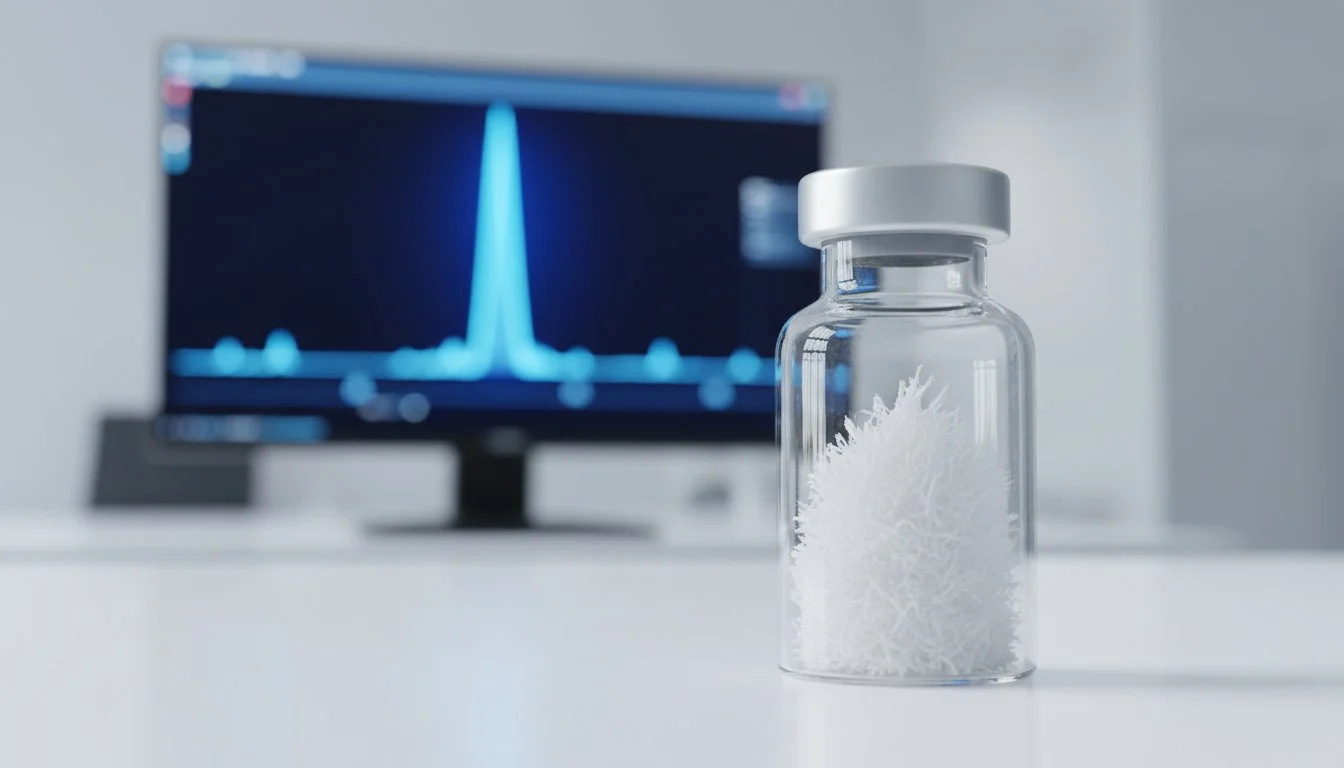
A claim of 99% purity is statistically meaningless if it isn’t backed by a batch-specific HPLC report dated within the last 30 days. With the FDA scheduled to reconsider the compounding status of 12 peptides in July 2026, the demand for verified peptides has never been more critical for maintaining research integrity. You recognize that a failed experiment isn’t just a loss of time; it’s a compromise of objective data caused by mislabeled or degraded compounds.
This guide provides the technical framework required to identify truly verified peptides through rigorous HPLC and Mass Spectrometry (MS) documentation. We’ll examine the new EMA guidelines effective June 2026 and show you how to interpret batch-specific data to ensure your research utilizes compounds with a purity standard of >99%. From understanding lyophilization to leveraging 14 years of pioneering excellence since our establishment in 2012, you’ll gain the tools to secure a stable, long-term supply chain for your laboratory needs.
Key Takeaways
- Learn why High-Performance Liquid Chromatography (HPLC) and Mass Spectrometry (MS) are the non-negotiable gold standards for confirming peptide sequence identity and quantitative purity.
- Discover how to spot critical red flags in a Certificate of Analysis, such as generic dates or missing batch numbers, to avoid unreliable suppliers.
- Understand the technical requirements for temperature-controlled storage and vacuum-sealed lyophilization to prevent moisture-induced degradation of your research chemicals.
- Identify the specific documentation required to procure verified peptides that meet a minimum purity threshold of 99% for consistent experimental results.
- Gain insights into the “Research Use Only” mandate and how institutional longevity, such as our 14 years of pioneering excellence, serves as a benchmark for logistical reliability.
What Are Verified Peptides? Defining the Research Standard
Verified peptides are defined as research chemicals that have undergone rigorous validation through independent, third-party analytical laboratories to confirm both sequence identity and quantitative purity. Unlike internal in-house testing, which lacks the necessary objectivity for high-stakes scientific inquiry, third-party verification provides a transparent, verifiable record of a compound’s integrity. This process is essential because the landscape of chemical peptide synthesis often involves complex reagents and side reactions that can leave behind unwanted byproducts. Since our establishment in 2012, Nexa Peptide Store has maintained that true verification requires a documented trail from the laboratory bench to the final dispatched vial.
The Research Use Only (RUO) mandate isn’t merely a legal disclaimer; it’s a marker of professional verification. Legitimate suppliers adhere to these strict boundaries to ensure their products are handled within appropriate laboratory environments by qualified personnel. By maintaining this compliance, a supplier demonstrates a commitment to the scientific method rather than the unregulated consumer market. This disciplined approach is a foundational component of what makes a batch truly verified. With the EMA implementing more rigorous standards for peptide characterization in June 2026, adhering to these professional markers is no longer optional for serious researchers.
The Role of Purity in Scientific Reproducibility
Achieving a purity of >99% is the industry benchmark because even minor deviations can compromise experimental results. Trace impurities, often representing less than 1% of the total mass, can interfere with receptor interaction studies or lead to unintended cellular responses. High salt content or residual solvents like trifluoroacetic acid can also destabilize the peptide during storage or affect the pH of the research medium. Peptide purity is defined as the ratio of the target sequence to all other detected substances in a sample. Without this high-resolution clarity, the reproducibility of your data is at risk.
Verified vs. Certified: Understanding the Terminology
A Certificate of Analysis (COA) is the baseline requirement for lab procurement, yet not all certificates are equal. Many vendors provide representative data from a single successful batch produced years ago, whereas verified peptides require batch-specific documentation. This ensures that the specific vial in your freezer matches the data on the screen. Distinguishing between chemical identity and quantitative purity is critical for precise dosing in research protocols. Since 2012, we’ve seen that over 80,000 clients worldwide rely on this distinction to prevent failed experiments and ensure their research integrity remains beyond reproach.
The Science of Validation: HPLC and Mass Spectrometry
Visual assessment of a lyophilized powder reveals nothing about its chemical composition or stability. To confirm a sample contains verified peptides, a laboratory must employ a dual-testing protocol consisting of High-Performance Liquid Chromatography (HPLC) and Mass Spectrometry (MS). These analytical methods provide the quantitative and qualitative proof required to ensure research integrity. Since 2012, we’ve maintained that providing these reports for every batch is the only way to guarantee a purity of >99%. Relying on a supplier’s word without seeing the raw data is a risk that often leads to failed experiments and discarded data sets.
How HPLC Measures Peptide Purity
High-Performance Liquid Chromatography serves as the gold standard for determining the quantitative purity of a compound. During this process, the peptide is dissolved in a mobile phase and passed through a stationary column under high pressure. Different molecules move through the column at different rates based on their chemical properties. The resulting chromatogram displays these movements as peaks. A single, sharp peak indicates a high-purity research chemical, while smaller “shoulder” peaks represent impurities or synthesis byproducts. Factors such as column degradation or improper mobile phases can skew these results; therefore, it’s essential that testing is performed by an independent, third-party facility to maintain objectivity. Peak area integration allows researchers to calculate the exact percentage of the target peptide relative to all other detected substances.
Mass Spectrometry: Verifying Molecular Identity
While HPLC tells you how much of a substance is present, Mass Spectrometry confirms what that substance actually is. This test measures the mass-to-charge ratio of ions to determine the molecular weight of the peptide. By comparing the theoretical molecular weight against the observed mass in the lab, researchers can verify the amino acid sequence identity. MS is particularly adept at detecting sequence errors or incomplete synthesis that might otherwise go unnoticed. In complex research protocols using blends like CJC-1295 + Ipamorelin, multi-peak MS analysis is non-negotiable to ensure both components are present in the correct ratios. Researchers seeking this level of quantitative validation can browse our certified catalog to view batch-specific data that reflects our 14 years of pioneering excellence.
Both tests are required to ensure a peptide is truly verified. HPLC provides the purity percentage, while MS provides the identity. Once these standards are met, the role of lyophilization becomes critical. This freeze-drying process removes moisture via sublimation, which prevents hydrolytic degradation. By vacuum-sealing the vials immediately after lyophilization, the integrity of the verified peptides is preserved during transit and long-term storage. Our disciplined approach to these standards has served over 80,000 clients worldwide since our establishment in 2012, ensuring that every dispatched vial meets the highest-quality benchmarks for scientific inquiry.

How to Authenticate a Supplier’s Purity Claims
The presence of a digital document on a website does not constitute verification. For a researcher, the ability to distinguish between a legitimate report and a decorative marketing asset is a vital skill. To secure verified peptides, you must scrutinize the source of the data. Independent, third-party laboratories provide the only objective measure of quality. If a supplier performs testing in-house, the conflict of interest inherently compromises the data’s reliability. Professional research organizations typically require that testing be conducted by recognized analytical facilities with no financial stake in the product’s sale.
Several red flags immediately signal a lack of integrity in a Certificate of Analysis (COA). One of the most common is the “perfect” 100.0% purity result. In the complex landscape of peptide synthesis, achieving absolute purity is statistically improbable; most premium batches fall between 99.1% and 99.8%. In addition, look for generic or missing dates. A report dated from 2024 is irrelevant for a batch purchased in May 2026. Every COA must include a unique batch number that corresponds exactly to the physical label on the vial you receive. If these numbers do not align, the documentation is effectively useless for your audit trail.
The Anatomy of a Genuine Certificate of Analysis (COA)
A transparent COA contains more than just a final percentage. It must feature the specific product name, a unique batch ID, the exact date of analysis, and the raw HPLC and MS spectra. These graphs are the “fingerprints” of the chemical. Researchers should contact the testing lab directly to verify the authenticity of a COA. Legitimate labs maintain databases of their results and can confirm if a report has been altered or manipulated to hide impurities. This level of due diligence ensures that the chemicals utilized in your studies meet the rigorous standards of modern scientific inquiry.
Supplier Longevity as a Proxy for Reliability
In an industry characterized by high turnover and fleeting brands, supplier longevity serves as a critical trust marker. Our “EST 2012” status represents 14 years of pioneering excellence in the distribution of research chemicals. This history is not just a date; it reflects a decade and a half of refined manufacturing standards and stable raw material sourcing. Long-term suppliers have established relationships with high-end laboratories that smaller, newer operations cannot replicate. This institutional knowledge ensures that the verified peptides you procure today maintain the same quantitative integrity as those dispatched to our 80,000 clients over the past decade.
Handling and Storage: Preserving Verified Purity
Procuring verified peptides is the first step in ensuring research integrity; however, the technical validation provided by HPLC and MS is easily nullified by improper handling. Once a lyophilized vial is dispatched and received, the responsibility for maintaining that 99% purity shifts to the laboratory. Lyophilization is a sophisticated preservation method that removes moisture via sublimation, yet the resulting powder remains highly hygroscopic. If the vacuum seal is compromised or the vial is exposed to ambient humidity, the peptide will undergo rapid hydrolytic degradation. Since our establishment in 2012, we’ve emphasized that environmental control is as critical as the initial synthesis.
Storage Protocols for Lyophilized Peptides
Optimal temperatures are determined by the intended duration of the study. For immediate use within 7 to 14 days, refrigeration at 4°C is generally sufficient for most lyophilized sequences. Long-term archiving requires deeper thermal stabilization at -20°C or, preferably, -80°C to halt all kinetic activity. Researchers must avoid repeated freeze-thaw cycles, as the resulting mechanical stress can fracture the delicate peptide bonds, leading to sample heterogeneity. When preparing for multi-use protocols, the use of bacteriostatic water is mandatory to maintain sterility and prevent microbial growth that can contaminate the research environment. Proper labeling with the date of reconstitution is a non-negotiable standard for any disciplined laboratory.
Reconstitution Best Practices for Lab Use
The physical transition from a lyophilized cake to a liquid solution is a high-risk phase for molecular integrity. Researchers should utilize a peptide calculator to ensure precise concentrations and avoid dosing errors that could skew quantitative data. Vigorous shaking is strictly prohibited, as the resulting shear forces can denature the molecular structure. Instead, a gentle swirling motion should be used until the powder is completely dissolved. This is particularly important when handling a BPC-157 Peptide, where maintaining the native conformation is essential for accurate receptor interaction studies. This level of care ensures that the compound remains shelf-stable and effective throughout the duration of the experiment.
Certain compounds, such as GHK-Cu, exhibit significant sensitivity to ultraviolet (UV) radiation. Exposure to direct light can catalyze oxidation reactions that alter the chemical profile of the sample. Storing these vials in amber containers or dark environments is a standard requirement for maintaining the verified status of the compound. Our 14 years of pioneering excellence have shown that these small logistical details often make the difference between a successful publication and a failed experiment. Ensure your laboratory is equipped with the highest-quality compounds by choosing a supplier with a proven history of technical precision. Shop premium-grade peptides here and access the documentation your research deserves.
Nexa Peptide Store: 14 Years of Verified Research Excellence
Since our establishment in 2012, Nexa Peptide Store has functioned as a critical infrastructure partner for the global scientific community. We’ve spent 14 years of pioneering excellence refining a supply chain that prioritizes quantitative proof over marketing claims. Our mandate is clear; every compound in our inventory must meet a minimum purity threshold of 99%. This standard is not a goal but a baseline requirement for all verified peptides dispatched from our facility. By maintaining this uncompromising stance, we’ve secured a worldwide reputation for reliability among over 80,000 clients who require absolute precision in their data.
Why 100+ Research Institutions Choose Nexa
More than 100 research institutions and universities currently rely on our logistics for their longitudinal studies. We provide scalable bulk procurement options that allow large-scale operations to maintain consistency across multiple trial phases. Our international shipping network is optimized for temperature-controlled transit to North America, Europe, and Oceania. This ensures that the chemical integrity established in the lab is preserved until it reaches its destination. The catalog is intentionally broad. It includes foundational sequences like BPC-157 alongside advanced metabolic research compounds like Retatrutide. This variety allows researchers to source their entire experimental requirements from a single, trusted entity that understands the nuances of scientific procurement.
The Future of Peptide Verification
The landscape of analytical chemistry is constantly evolving. Our commitment to transparency keeps pace with these advancements through ongoing investment in state-of-the-art analytical equipment and strictly controlled manufacturing environments. Every batch we produce is intended for Research Use Only; we ensure this status is supported by a robust library of third-party verified data for over 100 peptides. This institutional knowledge ensures that the verified peptides we supply today will meet the regulatory standards of tomorrow, including the upcoming June 2026 EMA guidelines. We provide research-first support that addresses the technical needs of our peers in the scientific community. Where quality meets reliability, Nexa remains the scientific gatekeeper for researchers who demand precision.
Explore our verified peptides catalog and download the latest COAs for your research.
Securing Your Research Integrity for the Next Decade
The pursuit of empirical truth depends on the quantitative precision of your starting materials. You’ve learned that truly verified peptides require more than a generic label; they demand batch-specific HPLC and Mass Spectrometry data that confirm sequence identity and a purity threshold of >99%. Maintaining this integrity extends beyond the laboratory bench to include disciplined, temperature-controlled storage and precise reconstitution techniques. As regulatory oversight from the EMA and FDA intensifies through 2026, partnering with an established supplier becomes a strategic necessity for reproducible results.
Since 2012, Nexa Peptide Store has provided 14 years of pioneering excellence to over 80,000 clients worldwide. We eliminate the variables of synthesis by mandating independent third-party lab testing for every dispatched batch. This commitment ensures your data remains objective and your research protocols stay on schedule. It’s essential to utilize compounds that meet these rigorous institutional standards to ensure the longevity of your studies. Don’t settle for less than technical perfection.
Shop Premium Verified Peptides for Your Research and advance your scientific objectives with confidence.
Frequently Asked Questions
How do I know if peptides are truly third-party verified?
Authentic verification is confirmed by reviewing a batch-specific HPLC and Mass Spectrometry report issued by an independent analytical laboratory. This document must feature the lab’s official letterhead, a unique batch ID, and the signature of the lead chemist. Since 2012, we’ve maintained that in-house testing is insufficient for establishing verified status. Researchers should cross-reference the batch ID with the lab’s database to ensure the data hasn’t been altered or reused from previous years.
What is the difference between 98% and 99% peptide purity?
A 1% increase in purity represents a 50% reduction in unknown impurities within the sample. In a 10mg vial, a 98% purity level allows for 200mcg of synthesis byproducts, while 99% purity limits these contaminants to 100mcg. This reduction is vital for preventing unwanted cross-reactivity in sensitive receptor-binding studies. Maintaining a purity of >99% is the benchmark for ensuring that experimental observations are driven exclusively by the target peptide sequence.
Can I trust a Certificate of Analysis provided by the supplier?
You can trust a Certificate of Analysis only if it includes raw HPLC and MS spectra rather than just a summary of results. These graphs provide the raw data necessary to verify the peak integration and molecular weight of the compound. If a report is missing a date of analysis or a clear batch number, it should be discarded. Legitimate suppliers provide these reports transparently to support the integrity of every dispatched research chemical.
What happens if a peptide is not lyophilized?
Peptides that aren’t lyophilized undergo rapid hydrolytic degradation because residual moisture breaks the delicate amide bonds. Lyophilization removes water through sublimation, which creates a stable, solid “cake” that protects the molecular structure. Without this process, the compound’s half-life at room temperature is reduced significantly. This makes it impossible to guarantee quantitative purity during transit or long-term storage in the laboratory environment.
How should I store verified peptides to prevent degradation?
Lyophilized verified peptides must be stored at -20°C for long-term archiving or 4°C for immediate use within a 30-day window. Once you reconstitute the powder with bacteriostatic water, the solution must remain refrigerated and be utilized within 7 to 14 days. Protecting the vials from UV light and moisture is essential. These disciplined storage protocols prevent the kinetic activity that leads to sequence fragmentation and failed experimental outcomes.
Is it possible to verify the sequence of a peptide blend like CJC-1295 + Ipamorelin?
Sequence verification for blends is achieved through Mass Spectrometry (MS) by identifying the unique mass-to-charge ratios of each component. A proper MS report for a blend will display distinct peaks that correspond to the theoretical molecular weights of both CJC-1295 and Ipamorelin. This qualitative analysis ensures that the ratio of the combined compounds is accurate. It also confirms that no incomplete synthesis fragments are present in the final research formulation.
Why do some verified peptides have different colors or textures?
Variations in appearance are usually caused by the specific amino acid sequence or the salts used during the final purification stage. GHK-Cu is naturally blue due to its copper content, while other peptides may appear as a dense crystalline cake or a fluffy white powder. These physical differences don’t indicate a change in purity levels. As long as the HPLC report confirms a purity of >99%, the texture of the lyophilized material is a secondary characteristic.
How long do lyophilized peptides stay stable at room temperature?
Most lyophilized peptides remain stable for 2 to 4 weeks at room temperature when they are vacuum-sealed and protected from light. This stability allows for safe international dispatch without the need for dry ice in most cases. However, for periods exceeding 30 days, thermal stabilization at -20°C is required to maintain the chemical integrity. Our 14 years of pioneering excellence have shown that maintaining a consistent cold chain after arrival is the best practice for long-term research.
