- Your cart is empty
- Continue shopping
-
Dr Hoffman
- Posted on
- Categories:Uncategorized
- 0 comments
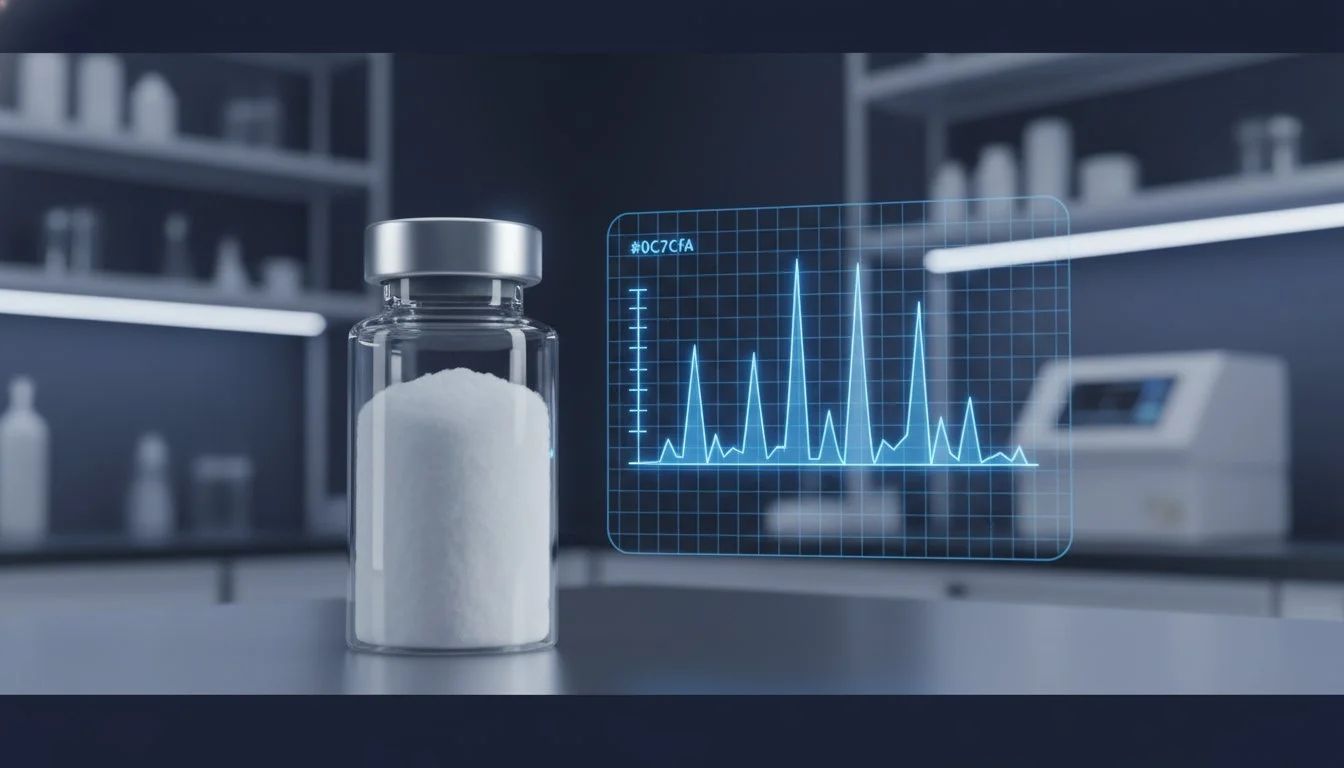
A “99% purity” claim on a peptide vial is functionally meaningless if the accompanying documentation lacks a batch-specific chromatogram or a verifiable mass spectrometry report. You likely recognize that as the FDA moves 14 key peptides, including BPC-157 and TB-500, into Category 1 as of April 2026, the necessity for absolute precision in your laboratory has reached a critical peak. It’s a common frustration to face redacted reports or complex HPLC graphs that seem designed to obscure rather than reveal. By mastering the art of understanding a peptide certificate of analysis, you secure the integrity of your data and the safety of your research environment. This guide provides a clinical framework for verifying peptide identity and interpreting technical metrics with total confidence. We will examine how to validate third-party laboratory results, distinguish between purity and net peptide content, and identify the specific markers that separate institutional-grade materials from unreliable offerings.
Key Takeaways
- Distinguish between molecular identity and chemical purity by cross-referencing High-Performance Liquid Chromatography (HPLC) results with Mass Spectrometry (MS) data.
- Identify forensic indicators of fraudulent documentation, such as inconsistent typography or the absence of verifiable laboratory contact information, to mitigate the risk of contaminated materials.
- Ensure data integrity by confirming that each report is batch-specific rather than a generic or outdated document, which is essential for maintaining rigorous laboratory standards.
- Develop a systematic framework for understanding a peptide certificate of analysis to verify that research compounds meet the industry-standard threshold of ≥99% purity.
- Establish a protocol for sourcing materials from suppliers that provide transparent, third-party analytical verification for every individual production lot.
What is a Peptide Certificate of Analysis (COA)?
A Certificate of Analysis is an authoritative document issued by an analytical laboratory to certify that a specific product meets its pre-defined chemical and physical specifications. Within the scientific community, this document serves as the primary bridge between the synthesis process and the laboratory application. It’s the only way to verify that the material inside the vial matches the label on the outside. Understanding a peptide certificate of analysis is a prerequisite for any researcher who prioritizes data integrity and laboratory safety.
When working with research peptides, the absence of a COA introduces unacceptable risks. Impurities or incorrect molecular identities can lead to skewed results, failed replications, or even hazardous chemical reactions. A professional COA provides the necessary transparency by detailing the batch number, molecular weight, and purity percentage. These metrics don’t just suggest quality; they provide the forensic evidence required to validate the compound’s suitability for sophisticated research.
The Role of Third-Party Testing
Independent verification is the gold standard for quality control in the peptide industry. While some suppliers rely on in-house manufacturing reports, these lack the objectivity of a third-party audit. Unbiased analytical precision is essential for high-stakes research where even a small variance in purity can alter an outcome. Reputable labs, including MZ Biolabs, employ standardized testing protocols that provide a neutral, expert assessment of the compound. This external validation ensures that the supplier’s claims are grounded in verifiable data rather than marketing rhetoric.
Components of a Professional COA
A standard report is divided into several sections, each requiring careful review. The header must display the laboratory’s credentials, the date of analysis, and a unique sample ID. This ensures the document is current and traceable to a specific production run. Following the header, the chemical specifications section compares the theoretical mass of the peptide to its actual mass. If these values don’t align, the identity of the molecule is in question. Finally, the analytical results section provides the raw data from High-Performance Liquid Chromatography and Mass Spectrometry. These technical graphs are the core of understanding a peptide certificate of analysis, as they reveal the presence of any secondary peaks that might indicate contaminants.
Deciphering the Data: HPLC Purity and Mass Spectrometry
Purity and identity are distinct metrics that must be verified independently to ensure the validity of any experimental result. High-Performance Liquid Chromatography (HPLC) serves as the industry standard for measuring the chemical purity of a compound. However, a report showing 99% purity is functionally irrelevant if the substance is not the intended peptide. This is where Mass Spectrometry (MS) becomes critical. It confirms the identity of the molecule by measuring its molecular weight. Understanding a peptide certificate of analysis involves ensuring these two data points align perfectly. If the MS data fails to match the theoretical weight of the peptide, the purity score becomes a secondary concern.
Reading the HPLC Chromatogram
The visual representation of an HPLC test is the chromatogram, which displays peaks relative to time. A researcher should look for a single, sharp peak that dominates the graph. Sharpness indicates a high concentration of the target molecule and minimal degradation. Conversely, secondary peaks or noise in the baseline represent impurities or residual solvents from the manufacturing process. Researchers must scrutinize the Area Under the Curve (AUC) to determine the exact purity percentage. AUC is the ratio of the target peptide to total detected substances. When sourcing high-purity research compounds like Tirzepatide 10mg, verifying that the AUC reflects a minimum of 99% purity is essential for maintaining laboratory standards.
Confirming Identity with Mass Spec
Identity verification is the foundational step in analytical testing. Mass Spectrometry provides this by comparing the Observed Mass of the sample to its Theoretical Mass. The theoretical mass is the calculated weight based on the peptide amino acid sequence. In high-precision research chemicals, an acceptable variance range is typically within 1 Dalton (Da), though this can vary slightly based on the sensitivity of the equipment used. If the observed mass deviates significantly from the theoretical value, it suggests the presence of a different peptide or a truncated sequence. This identity check must occur before assessing purity, as it guarantees the researcher is testing the intended compound. By integrating both MS and HPLC data, you establish a forensic level of certainty regarding your material sourcing.
Identifying Red Flags: Authentic vs. Fraudulent COAs
Identifying fraudulent documentation requires a forensic mindset. The peptide market’s unregulated nature has led to an influx of manipulated reports designed to deceive researchers. Understanding a peptide certificate of analysis involves more than just reading numbers; it requires a systematic audit of the document’s physical and digital integrity. A single discrepancy in a COA can indicate a contaminated or under-dosed batch, compromising the safety and validity of your research protocols. You must treat every report as a claim that requires verification rather than an absolute truth.
Researchers should prioritize a visual inspection of the document. Forged reports often exhibit inconsistent fonts, misaligned text, or “cut-and-paste” artifacts where data from an old report has been superimposed over a new template. Another common red flag is the presence of “recycled” chromatograms. If the baseline noise and peak shapes are identical across different batches or even different products, the data is likely fabricated. Authentic analytical testing always produces unique “fingerprints” due to minor variations in laboratory conditions and solvent batches. If the report looks too perfect or identical to previous orders, it warrants further investigation.
Common Forgery Tactics in the Peptide Industry
The “Photoshop” method remains a prevalent tactic. Unscrupulous suppliers alter dates and purity percentages on expired reports to make old stock appear fresh. Redacted reports are another significant warning sign. If a supplier hides the laboratory name or contact information, it’s usually because the lab doesn’t exist or the supplier doesn’t have permission to use their data. Finally, the “Generic COA” trap involves using a single high-purity report for every batch of a product sold, regardless of actual production variances. This practice ignores the reality of batch-to-batch inconsistency in chemical synthesis.
Verification Strategies for Researchers
To protect the integrity of your work, you must adopt proactive verification strategies. Start by matching the batch number printed on your vial to the batch number listed on the report. If they don’t align, the document is useless for that specific sample. You can also cross-reference the molecular weight provided in the COA with a peptide calculator to ensure the theoretical mass is accurate for the sequence provided. Understanding a peptide certificate of analysis also means knowing when to walk away from a supplier that provides unverifiable data.
Direct laboratory verification is the most reliable method for confirming authenticity. Most reputable labs maintain databases and will verify a report if you provide the sample ID or a copy of the document. If a supplier refuses to provide a clear, unredacted report that can be verified by the issuing lab, you should seek an alternative source. Utilizing public COA libraries can also help you compare industry standards and identify suppliers that consistently provide verifiable, high-precision data for their research compounds.
The Importance of Batch Consistency and Testing Dates
A Certificate of Analysis represents a temporal snapshot of a compound’s state at the specific moment of testing. While lyophilized peptides exhibit significant stability under optimal conditions, they are not immune to the laws of chemical degradation. Understanding a peptide certificate of analysis requires a critical look at the date of analysis, as this timestamp indicates the actual age of the production lot. A report that is several years old may no longer accurately reflect the purity or potency of the material, especially if the secondary storage environment was compromised. Researchers must recognize that batch-to-batch variation is an inherent reality of chemical synthesis; therefore, every new acquisition necessitates a unique, corresponding report to ensure data reliability.
The relationship between storage conditions and the validity of analytical data is absolute. If a peptide was subjected to thermal fluctuations or light exposure post-analysis, the original HPLC chromatogram becomes an obsolete reference. Impurities can evolve over time through oxidation or deamidation, processes that are often accelerated by improper handling or moisture ingress. Maintaining a rigorous audit trail means correlating the specific batch number on the vial with the technical metrics provided in the most recent laboratory verification. Understanding a peptide certificate of analysis involves verifying that the data you are reviewing actually corresponds to the physical material in your possession.
Understanding the Testing Timeline
A COA issued in 2024 cannot reliably substantiate the integrity of a batch sold in 2026. While the lyophilization process extends the shelf-life by removing moisture and stabilizing the molecular structure, it does not stop the clock on chemical evolution. Analytical results are valid only for the specific point in time they were recorded. A fresh COA is the only guarantee of current purity levels.
Batch Tracking and Accountability
Traceability is paramount when conducting sensitive experiments, such as tirzepatide mechanism of action studies. Any deviation in batch consistency can introduce variables that obscure molecular interactions or yield inconsistent data. To ensure institutional accountability, researchers should transcribe COA data directly into their laboratory notebooks, creating a permanent link between the material used and the resulting observations. This practice ensures that every vial is traceable from the manufacturer’s synthesis floor to the final research application. For those requiring documented precision, you can access our latest batch-specific reports to verify the current integrity of your research compounds.
Nexa Peptide Store’s Commitment to Analytical Transparency
Nexa Peptide Store maintains an uncompromising stance on product integrity through every stage of our operations. Every production lot is subjected to rigorous third-party HPLC and MS testing to ensure absolute compliance with our internal quality benchmarks, which are designed to support the most demanding laboratory environments. We mandate a minimum of 99% purity for all research compounds, providing a level of precision that exceeds standard industry expectations for research-grade materials. Understanding a peptide certificate of analysis becomes a straightforward process when the documentation is unredacted, batch-specific, and directly traceable to a reputable laboratory. We ensure that the technical metrics displayed on our reports, including those for bpc 157, represent the exact chemical composition of the material in the vial you receive.
Why 99% Purity Matters for Your Research
Trace impurities, even in fractional percentages, can introduce confounding variables that skew experimental datasets and compromise the validity of your results. When researchers utilize the Nexa standard, they’re using tools designed for high-sensitivity applications where precision is non-negotiable and data integrity is the primary priority. For instance, melanotan 2 peptide investigations often require strict adherence to molecular identity to avoid off-target effects during in vitro studies. By consistently surpassing industry averages, we provide the scientific community with the institutional-grade materials necessary for reproducible results and high-impact research.
Securing Your Supply Chain
Our operational protocol includes a multi-stage vetting process that begins with raw material sourcing and concludes with final analytical verification by independent laboratories. We don’t just supply research chemicals; we maintain a commitment to ongoing education, helping our peers refine their process of understanding a peptide certificate of analysis to identify potential risks in their procurement. This transparency serves as a necessary safeguard for your laboratory’s supply chain, ensuring that every compound is verified for both identity and purity before it reaches your bench. Institutional credibility is built on these quantitative proof points, and we remain dedicated to providing the unredacted data required for sophisticated scientific inquiry.
View our latest third-party tested peptides and COAs here.
Advancing Laboratory Standards through Analytical Precision
The integrity of your research depends on the absolute verification of your chemical inputs. By understanding a peptide certificate of analysis, you transition from passive procurement to active quality oversight. This guide has detailed the necessity of cross-referencing molecular identity with chemical purity while identifying the forensic red flags that signal compromised documentation. Maintaining a rigorous audit trail through batch-specific reporting is the only reliable method to ensure that your experimental results remain reproducible and scientifically valid. Nexa Peptide Store supports these institutional standards by providing unredacted, third-party verified data for every compound in our catalog. Our logistical framework ensures that research organizations receive high-precision materials backed by a 99% minimum purity guarantee and global shipping capabilities. Precise data begins with precise materials. We invite you to secure your next production lot with a partner that prioritizes analytical transparency as much as you do.
Browse our 99%+ pure research peptides with verified COAs
Frequently Asked Questions
What is the most important part of a peptide COA?
The most critical component is the definitive alignment between the Mass Spectrometry identity verification and the HPLC purity percentage. While high purity is desirable, it’s irrelevant if the molecular weight doesn’t match the target peptide sequence. Researchers must prioritize this dual verification to ensure the material is both the correct compound and free from significant contaminants.
Can a peptide be 100% pure?
Achieving 100% purity is statistically improbable in chemical synthesis due to the presence of residual moisture, trifluoroacetic acid (TFA) salts, or trace solvents. The industry standard for high-precision research is a minimum of 98% purity, with 99% representing the premium tier. Any document claiming 100% purity should be viewed with skepticism, as it often indicates a lack of analytical sensitivity or data manipulation.
What is the difference between HPLC and Mass Spectrometry on a report?
HPLC (High-Performance Liquid Chromatography) measures the chemical purity by separating various components in a sample to identify the ratio of the target peptide to impurities. In contrast, Mass Spectrometry (MS) confirms the identity of the molecule by determining its exact molecular mass. Understanding a peptide certificate of analysis requires interpreting both sets of data to confirm the correct molecule is present at the reported purity level.
How do I know if a COA for BPC-157 is real?
Authentic BPC-157 documentation must feature a batch number that corresponds exactly to the physical vial and a verifiable laboratory contact. You should look for unique baseline noise in the HPLC chromatogram, as identical graphs across different batches suggest forgery. Directly contacting the issuing laboratory with the sample ID is the most reliable method for confirming that the report hasn’t been altered or recycled from an older lot.
Does the molecular weight on the COA include the TFA salt?
The molecular weight reported on a COA typically refers to the “free base” peptide rather than the salt-conjugated weight. Most research peptides are synthesized as TFA (trifluoroacetate) salts to improve solubility and stability, but the Mass Spectrometry peak will reflect the theoretical mass of the peptide sequence itself. Researchers should distinguish between the total powder mass and the net peptide content, which accounts for these necessary salt components.
How often should a peptide batch be re-tested for purity?
A peptide batch should ideally undergo re-testing every 12 to 24 months to ensure that storage conditions haven’t led to significant degradation. While lyophilized compounds are stable, factors like moisture ingress or thermal fluctuations can trigger oxidation or deamidation. Understanding a peptide certificate of analysis involves checking the analysis date; if the report is older than two years, the data may no longer reflect the current chemical state of the compound.
Why do some COAs have redacted laboratory names?
Redacted laboratory names are a major red flag that often indicates a supplier is attempting to prevent direct verification of the analytical data. This practice obscures the credentials of the testing facility and makes it impossible for researchers to confirm the report’s authenticity. Reputable suppliers provide unredacted documents to maintain transparency and institutional trust, ensuring that the laboratory’s reputation stands behind the reported purity and identity metrics.
What should I do if the MS peak does not match the theoretical weight?
If the observed Mass Spectrometry peak deviates from the theoretical weight by more than a standard margin, you should immediately suspend research with that batch. This discrepancy suggests the vial contains a different peptide, a truncated sequence, or a significant manufacturing error. You must contact the supplier to request a technical explanation or a replacement batch that meets the required chemical specifications for your specific experimental protocol.
