
- Your cart is empty
- Continue shopping
-
Dr Hoffman
- Posted on
- Categories:Uncategorized
- 0 comments
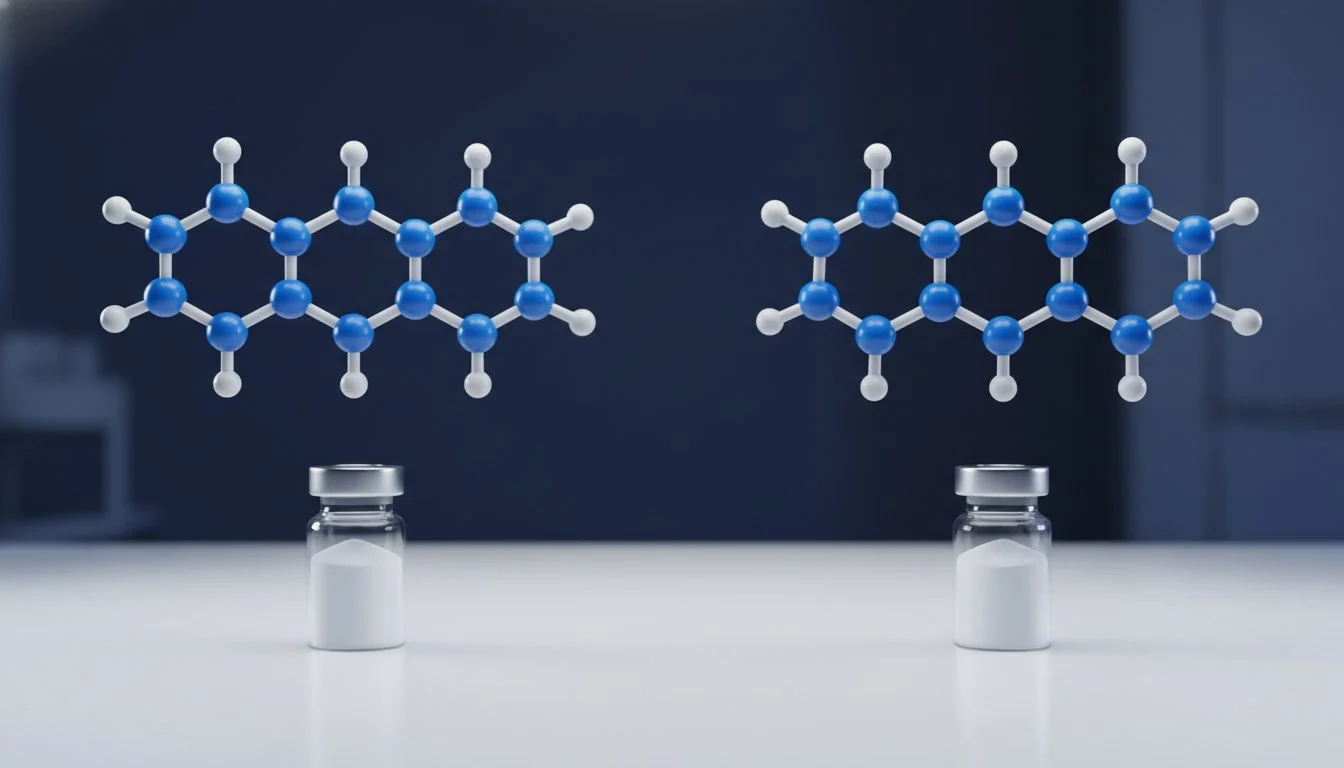
The most advanced metabolic research often reveals that the obvious choice between established agonists isn’t always the most effective for complex multi-pathway signaling models. When evaluating tirzepatide vs semaglutide, investigators must look past the clinical brand names and focus on the raw chemical interactions that define their laboratory performance. You likely find that the ambiguity between marketing hype and actual stability data for lyophilized peptides creates significant friction in your procurement process. It’s difficult to maintain institutional standards when scientific data is obscured by commercial narratives.
This article provides a rigorous scientific comparison of dual-agonist and single-agonist incretin mimetics to guide researchers in selecting the optimal compound for metabolic and neurological models. We move beyond surface-level efficacy to analyze GIP versus GLP-1 receptor signaling, pharmacokinetic modifications, and the specific molecular binding affinities that dictate experimental reproducibility. By establishing a clear framework for handling research-grade vials and interpreting stability data, this analysis ensures your laboratory protocols align with the highest institutional standards of quality control.
Key Takeaways
- Analyze the fundamental differences between GLP-1 monotherapy and GIP/GLP-1 dual agonism to determine how specific receptor pathways impact metabolic outcomes.
- Compare the research-grade performance of tirzepatide vs semaglutide regarding glucose tolerance and weight modulation in established murine models.
- Review the pharmacokinetic impact of C18 and C20 fatty acid chains on albumin binding and the resulting seven-day half-life of these compounds.
- Identify best practices for handling lyophilized vials to maintain 99%+ purity and ensure the integrity of your experimental results.
- Apply a structured selection framework that balances target receptor affinity with institutional budget constraints for pilot or long-term studies.
Molecular Mechanisms: GLP-1 Monotherapy vs. GIP/GLP-1 Dual Agonism
The technical divergence in tirzepatide vs semaglutide begins at the receptor level. Semaglutide operates as a highly selective, long-acting Glucagon-Like Peptide-1 receptor agonist (GLP-1RA). It mimics endogenous GLP-1 with approximately 94% sequence homology to the human hormone, modified to resist dipeptidyl peptidase-4 (DPP-4) degradation. In contrast, researchers utilize the Tirzepatide dual GIP/GLP-1 receptor agonist to study simultaneous activation of both GLP-1 and Glucose-dependent Insulinotropic Polypeptide (GIP) pathways. These biochemical tools are strictly for [Research Use Only] and are not intended for human consumption or veterinary applications.
Molecular analysis reveals that while semaglutide maintains a potent binding affinity (Ki) for the GLP-1 receptor, tirzepatide exhibits an unbalanced agonism. It shows equal potency to native GIP at the GIP receptor but is roughly 20-fold less potent than native GLP-1 at its respective receptor. This specific recruitment of intracellular signaling pathways, particularly the stimulation of cyclic adenosine monophosphate (cAMP), differentiates their performance in metabolic models. It doesn’t just mimic one hormone; it creates a multi-pathway response that researchers must account for in their experimental designs.
The Role of GLP-1 in Metabolic Regulation
GLP-1 receptors are distributed across critical metabolic hubs, including the pancreatic islets, the hypothalamus, and the gastrointestinal tract. In laboratory models, GLP-1RA compounds facilitate glucose-dependent insulin secretion by sensitizing beta cells to glycemic fluctuations. Simultaneously, these agents suppress glucagon secretion from alpha cells, effectively reducing hepatic glucose production. Research into semaglutide often focuses on its ability to delay gastric emptying and modulate central satiety signals. These are primary drivers of its efficacy in diet-induced obesity (DIO) models where caloric intake control is the primary variable under investigation.
GIP Synergy: The “Twincretin” Advantage in Tirzepatide
The inclusion of GIPR agonism introduces a secondary layer of metabolic control. GIP receptors are found in adipose tissue and the central nervous system, where they influence lipid buffering and energy expenditure. Unlike pure GLP-1RAs, the dual action of tirzepatide leverages GIP to potentially mitigate the gastrointestinal limitations often observed in single-agonist models. By recruiting both pathways, researchers observe a synergistic potentiation of insulinotropic effects. This twincretin mechanism allows for enhanced glycemic control and weight modulation without the linear dose-response toxicity sometimes associated with isolated GLP-1 overstimulation. The interaction between these two incretins creates a more complex physiological profile for laboratory study.
Pharmacokinetic Profiles: Half-Life, Binding Affinity, and Potency
The pharmacokinetic profile of tirzepatide vs semaglutide is characterized by a shared objective: extending the peptide’s duration of action through albumin-mediated protection. Both compounds exhibit a terminal half-life of approximately seven days. This structural persistence is achieved through precise acylation; this process allows the molecules to bind reversibly to serum albumin, effectively shielding them from renal filtration and proteolytic degradation. While their half-lives are similar, the specific chemical modifications used to achieve this stability differ significantly between the two molecules.
Structural Modifications for Extended Half-Life
Semaglutide utilizes a C18 fatty diacid chain attached to the lysine residue at position 26. This modification includes a small spacer that enhances its affinity for albumin. Tirzepatide incorporates a larger C20 fatty diacid moiety. This longer chain provides a more robust binding interaction with albumin; it compensates for the structural differences inherent in a dual-agonist backbone. For investigators, the stability of research peptides is paramount for ensuring that structural integrity remains intact during long-term storage or complex incubation periods. The acylation strategy doesn’t just extend life; it determines how the peptide interacts with the biological environment in a laboratory setting.
Receptor Binding Affinity and Signaling Potency
The Pharmacological Profile of Tirzepatide illustrates its imbalanced or “biased” agonism. Data indicates that tirzepatide possesses a high binding affinity for the GIP receptor, with a Ki value of approximately 0.13 nM. However, its affinity for the GLP-1 receptor is significantly lower, measured at roughly 4.2 nM. This is approximately 20-fold weaker than native GLP-1. In contrast, semaglutide demonstrates high selectivity and potency at the GLP-1 receptor with a Ki of approximately 0.38 nM. It doesn’t recruit the GIP pathway at all.
These binding affinities dictate the precise concentrations required for in vitro studies. Researchers must adjust their dosage calculations based on these potency differences to achieve comparable receptor activation levels. Maintaining a consistent supply of high-purity research materials is essential for longitudinal studies where pharmacokinetic stability is a critical variable. When designing protocols, it’s necessary to account for the fact that tirzepatide’s metabolic effects are driven by its superior GIPR activation rather than its GLP-1R potency alone. Semaglutide remains the benchmark for isolated GLP-1 signaling. Choosing between them requires a clear understanding of whether your model targets a single-receptor or multi-receptor signaling outcome.

Comparative Efficacy in Metabolic and Neurological Research Models
Experimental outcomes in tirzepatide vs semaglutide research often prioritize the extent of metabolic correction and physiological preservation. In diet-induced obesity (DIO) mouse models, investigators utilize these compounds to observe shifts in energy homeostasis and glucose disposal rates. While both agents demonstrate efficacy in restoring glycemic balance, the dual-agonist approach frequently yields more pronounced results in body mass reduction. These chemicals are essential for longitudinal studies where researchers must quantify the divergence between single-pathway and multi-pathway modulation in a controlled laboratory environment.
Metabolic Research: Weight Loss and Insulin Sensitivity
Data from recent head-to-head clinical trials provide a benchmark for laboratory expectations. In the SURMOUNT-5 extension, tirzepatide demonstrated an average body weight reduction of 22.4% over 72 weeks, whereas semaglutide achieved 14.9%. This disparity is largely attributed to the GIP component’s role in enhancing lipid buffering and insulin sensitivity. Beyond simple weight metrics, these peptides are critical in studying non-alcoholic fatty liver disease (NAFLD) models. They’ve shown a capacity to reduce hepatic fat accumulation and inflammatory markers. Behavioral research studies also indicate a significant decrease in caloric intake, though the “twincretin” effect appears to modulate satiety signals through broader CNS pathways than GLP-1 alone. For investigators exploring even more complex metabolic interactions, the Retatrutide peptide represents the next frontier in triple-agonist mechanics.
Beyond Metabolism: Neuroprotection and Cardiovascular Health
The presence of GLP-1 receptors in the hippocampus and cortex has opened new avenues for neurological research. Investigators are increasingly examining these agents in Alzheimer’s and Parkinson’s disease models to evaluate their impact on neuroinflammation and synaptic plasticity. These compounds appear to cross the blood-brain barrier, offering a potential framework for studying neuroprotective mechanisms. Cardiovascular outcomes research also provides compelling data for laboratory consideration. The SELECT trial showed that semaglutide reduced the risk of major adverse cardiovascular events (MACE) by 20%. Similarly, the SUMMIT trial indicated that tirzepatide reduced worsening heart failure events by 38% in patients with heart failure with preserved ejection fraction (HFpEF) and obesity. These findings suggest that the choice of peptide in a laboratory setting involves a comprehensive evaluation of systemic preservation that extends far beyond glycemic control.
Chemical Stability and Handling: Lyophilized Purity Standards
The success of any experimental protocol involving tirzepatide vs semaglutide depends entirely on the physical chemistry of the research vial. While clinical discussions often focus on physiological outcomes, the laboratory researcher must prioritize chemical stability and molecular integrity. Maintaining a purity standard of 99% or higher is mandatory for reproducible scientific results. Impurities within a peptide batch can act as confounding variables; they potentially interfere with receptor binding assays or introduce unexpected cellular toxicity in metabolic models. High-purity standards ensure that the observed biological response is attributable solely to the peptide’s primary sequence.
Purity Verification: HPLC and MS Analysis
Verification of peptide integrity requires a dual-layered analytical approach. High-Performance Liquid Chromatography (HPLC) is employed to determine the precise purity percentage by separating the target peptide from any residual solvents or synthesis byproducts. Following this, Mass Spectrometry (MS) confirms the correct molecular weight of the compound. This step ensures that the synthesized chain matches the intended chemical signature of the dual or single agonist. Researchers should always request third-party laboratory results for their specific batches to maintain institutional quality control standards. Without this data, the risk of utilizing degraded or incorrectly sequenced material increases significantly.
Reconstitution and Storage Protocols
Peptides are typically provided in a lyophilized state to maximize their shelf life. Lyophilization is a dehydration process that preserves the structural integrity of peptides by removing water under vacuum at low temperatures. For long-term preservation, these vials must be stored in specialized laboratory freezers at temperatures between -20°C and -80°C. Once the study requires active use, researchers must utilize bacteriostatic water for reconstitution to prevent microbial growth. It’s critical to avoid multiple freeze-thaw cycles after the peptide has been transitioned to a liquid state. These cycles create mechanical stress that can lead to peptide fragmentation and a measurable loss of signaling potency. For a broader understanding of standardized laboratory handling, investigators can consult our BPC-157 peptide guide.
Precision in handling is just as important as the initial synthesis quality. If you’re preparing for a new phase of metabolic investigation, you can purchase high-purity research peptides that meet these rigorous HPLC and MS verification standards. Ensuring that your materials are handled correctly from the moment they arrive at the facility is the only way to safeguard the validity of your research data.
Selecting the Optimal Incretin Mimetic for Scientific Investigation
Determining the appropriate compound for a laboratory protocol requires more than a cursory glance at clinical outcomes. The choice between tirzepatide vs semaglutide is a strategic alignment with the specific signaling pathways under investigation. Researchers must evaluate whether their hypothesis demands the targeted, high-affinity GLP-1 receptor activation provided by semaglutide or the broader, synergistic metabolic modulation of tirzepatide. This decision establishes the foundation for the study’s physiological relevance and the reproducibility of its data.
Factors Influencing the Choice of Peptide
The primary factor in peptide selection is the target receptor pathway. Semaglutide remains the definitive tool for isolated GLP-1 receptor research. Its extensive history in cardiovascular outcomes research (CVOT) and established neuroprotective models provides a robust baseline for comparison. If the research goal is to isolate the effects of GLP-1 on gastric emptying or central satiety without the interference of other incretins, semaglutide is the logical choice.
Conversely, tirzepatide is necessary when exploring the “twincretin” effect. The inclusion of GIP receptor agonism introduces variables related to adipose tissue buffering and CNS-mediated energy expenditure that are absent in GLP-1 monotherapy. Investigators must decide if this dual-agonist synergy is a requirement for their model or an unnecessary complexity. While tirzepatide demonstrated superior body weight reduction in 2026 trials, its imbalanced agonism means researchers must carefully calibrate concentrations to ensure the desired level of GLP-1 activation is achieved alongside GIPR signaling.
Procurement and Institutional Compliance
The regulatory landscape for these compounds is shifting rapidly. With the FDA’s April 30, 2026, announcement regarding the potential removal of GLP-1 receptor agonists from the 503B bulks list, institutional researchers face increasing pressure to secure reliable, high-purity sources for their projects. Wholesale procurement for long-term studies is the most effective way to ensure batch-to-batch consistency. Utilizing a single lot number across a multi-month study eliminates the risk of minor synthesis variations confounding the results.
Nexa Peptide Store maintains an uncompromising stance on quality control and regulatory boundaries. All products, including our 99%+ pure lyophilized vials, are strictly for [Research Use Only]. They aren’t intended for human consumption or medical prescriptions. We provide the analytical verification, including HPLC and MS data, required to meet the standards of academic and private research organizations. Before initiating your next metabolic or neurological study, ensure your laboratory protocols align with both local regulations and the technical requirements of your chosen peptide. You can Explore our high-purity Tirzepatide and Semaglutide for research to secure the reliable materials necessary for high-impact scientific investigation.
Ultimately, the comparison of tirzepatide vs semaglutide in a laboratory setting isn’t about which peptide is “better” in a general sense. It’s about which tool provides the most precise data for your specific research model. Precision in procurement is the first step toward precision in discovery.
Advancing Metabolic and Neurological Research Standards
Selecting between tirzepatide vs semaglutide requires a precise understanding of how single-receptor and multi-receptor signaling pathways influence experimental variables. While semaglutide remains the benchmark for isolated GLP-1 research, tirzepatide offers a more complex framework for studying GIP-mediated metabolic and neuroprotective effects. The validity of these findings depends entirely on the structural integrity of the compounds used. Researchers must prioritize high-purity materials to eliminate confounding variables and ensure the reproducibility of their data across longitudinal studies.
Nexa Peptide Store provides the technical foundation necessary for high-impact discovery. Our research-grade vials are third-party tested to ensure 99%+ purity and are lyophilized to maintain maximum chemical stability during transit and storage. We offer global shipping to academic and private research institutions to support the international scientific community. All products are strictly for [Research Use Only] and are not intended for human or veterinary use. Secure the precision your laboratory requires and Procure High-Purity Tirzepatide for Laboratory Research today. We look forward to supporting your next breakthrough in metabolic science.
Frequently Asked Questions
Is Tirzepatide more potent than Semaglutide in metabolic research?
Tirzepatide demonstrates greater efficacy in weight reduction and glycemic control within metabolic models compared to semaglutide. In the SURMOUNT-5 trial, tirzepatide achieved a 22.4% weight reduction versus 14.9% for semaglutide. However, potency is relative to the specific target; semaglutide is more potent at the isolated GLP-1 receptor, while tirzepatide’s strength lies in its dual-pathway activation. Researchers must choose based on their specific experimental endpoints.
What is the primary difference in receptor signaling between these two peptides?
The primary difference lies in receptor recruitment and pathway activation. Semaglutide is a selective GLP-1 receptor agonist that targets a single signaling pathway. Tirzepatide acts as a dual agonist; it activates both the GLP-1 and GIP receptors simultaneously. This multi-pathway approach differentiates tirzepatide vs semaglutide and is the biological driver behind the divergent results observed in comparative research settings.
Can Semaglutide and Tirzepatide be used in the same research model?
Yes, researchers frequently use both peptides in the same research model to conduct head-to-head comparative analyses. This allows for the direct observation of how single versus dual agonism affects specific metabolic or neurological markers under identical environmental conditions. Such studies are essential for validating the synergistic benefits of GIP/GLP-1 modulation against established GLP-1 monotherapy benchmarks and clinical data.
How should lyophilized Tirzepatide be stored for long-term stability?
Lyophilized tirzepatide must be stored in a temperature-controlled environment between -20°C and -80°C for long-term stability. This prevents peptide degradation and maintains structural integrity over extended periods. It’s vital to keep the vials away from light and moisture. Once reconstituted, the solution should be used promptly or aliquoted to avoid damaging freeze-thaw cycles that compromise signaling potency and experimental accuracy.
What is the role of the GIP receptor in Tirzepatide research?
The GIP receptor plays a critical role in modulating lipid metabolism and energy expenditure within the central nervous system. In tirzepatide research, GIP agonism potentiates the insulinotropic effects of GLP-1 while potentially reducing the gastrointestinal sensitivity often associated with pure GLP-1RAs. This dual recruitment allows for a more comprehensive study of metabolic homeostasis and adipocyte function than single-receptor models permit.
Why is 99% purity critical for peptide research results?
A purity standard of 99% or higher is essential to ensure the reproducibility and validity of laboratory data. Impurities can act as confounding variables; they might trigger unexpected cellular responses or mask the true effects of the peptide sequence. High-purity batches, verified by HPLC and MS, guarantee that the observed results are directly attributable to the peptide’s intended molecular action without interference.
Are these peptides intended for human consumption or clinical use?
No, these peptides are strictly for [Research Use Only] in laboratory environments. They aren’t intended for human consumption, clinical use, or medical prescriptions. Any use outside of a controlled research setting is strictly prohibited. Our products are provided exclusively to support academic and private research organizations in their scientific investigations and are handled according to strict laboratory safety protocols.
How do I calculate the correct concentration for in vitro peptide studies?
Concentration is calculated using the peptide’s molecular weight, which is confirmed through Mass Spectrometry analysis. Researchers should determine the desired molarity for their specific in vitro assay and then use the mass of the lyophilized powder to calculate the required volume of bacteriostatic water or buffer. Accurate measurements are foundational for ensuring that dosage levels remain consistent and statistically significant across all experimental replicates.
