- Your cart is empty
- Continue shopping
-
Dr Hoffman
- Posted on
- Categories:Uncategorized
- 0 comments
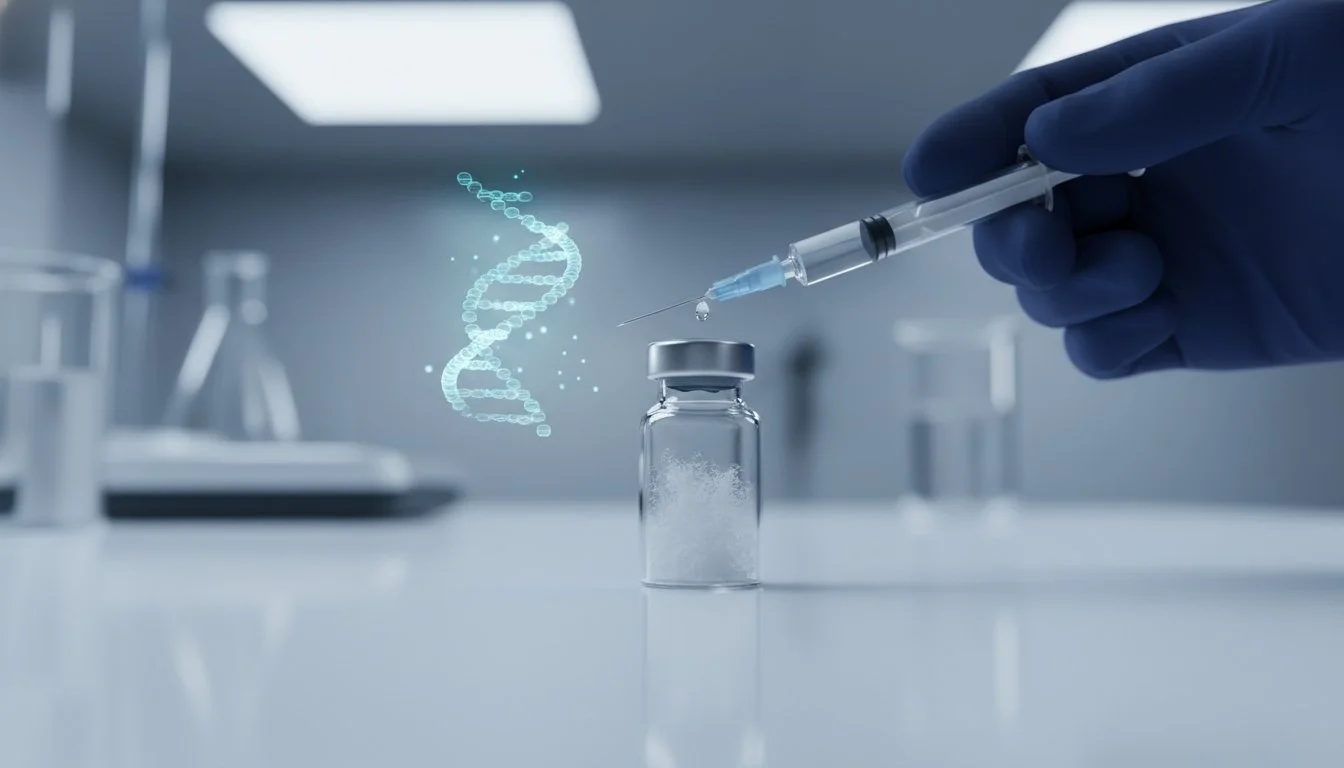
In an era where the unofficial industry standard for research-grade purity has ascended to a minimum of 99%, the margin for error during initial preparation has never been thinner. You’ve likely felt the apprehension that comes with handling high-value lyophilized vials, particularly as the 2026 regulatory environment and the sudden closure of major suppliers like Peptide Sciences have made sourcing and stability more critical than ever. It’s frustrating when inconsistent data or rapid degradation occurs simply because the solvent chemistry didn’t align with the specific peptide sequence or the mixing technique was too aggressive for the delicate molecular bonds.
Our peptide reconstitution guide for researchers solves these precision challenges by providing standardized protocols designed to maximize stability and ensure experimental reproducibility in any laboratory setting. You’ll master the scientific requirements for dissolving lyophilized compounds to maintain their peak biological activity throughout your study. This article details the specific applications of various diluents, provides a repeatable methodology for all peptide types, and outlines the environmental controls required to maintain compliance with current cGMP standards as defined in 21 CFR Part 211.
Key Takeaways
- Understand how lyophilization preserves 99%+ purity and why restoring biological activity requires precise environmental controls and specific solvent chemistry.
- Identify the optimal diluent for your specific sequence by evaluating the chemical properties of bacteriostatic water, sterile water, and acetic acid.
- Utilize this peptide reconstitution guide for researchers to establish a sterile laboratory field and calculate exact solvent volumes for maximum experimental reproducibility.
- Learn to identify signs of incomplete dissolution and resolve peptide aggregation through controlled temperature adjustments while avoiding the risks of ultrasonic degradation.
- Ensure long-term stability and valid research data by integrating standardized protocols with high-purity compounds verified through HPLC and mass spectrometry.
The Science of Peptide Lyophilization and Reconstitution Readiness
Peptide reconstitution is defined as the precise process of restoring a lyophilized, vacuum-sealed powder to a biologically active liquid state through the controlled addition of a sterile diluent. In high-standard laboratory environments, this step is far more than a simple mixing procedure; it’s a critical phase where the molecular integrity of the compound is either preserved or compromised. This peptide reconstitution guide for researchers emphasizes that the transition from a solid to a liquid state represents the most vulnerable point in the lifecycle of a research compound.
The role of lyophilization is foundational to maintaining the 99% purity standards required for modern scientific inquiry. By utilizing The Science of Peptide Lyophilization, manufacturers remove moisture through sublimation, which effectively halts the chemical processes of hydrolysis and oxidation that would otherwise degrade the peptide during transit or storage. Despite these preservation efforts, improper reconstitution remains the leading cause of peptide degradation in independent research. Failure to adhere to specific protocols often results in the shearing of delicate amino acid chains or the formation of insoluble aggregates, rendering the material useless for valid data collection.
Before beginning the procedure, investigators must complete a rigorous pre-reconstitution checklist to ensure environmental and material readiness:
- Vial Inspection: Confirm the integrity of the vacuum seal and the physical state of the lyophilized material.
- Temperature Equilibration: Allow the vial to reach room temperature (typically 20-25°C) for at least 20 minutes to prevent condensation upon opening.
- Aseptic Environment: Establish a sterile field using 70% isopropyl alcohol and appropriate personal protective equipment (PPE) to prevent microbial contamination.
Understanding the Lyophilized State
The freeze-drying process removes moisture to prevent the breakdown of peptide bonds, resulting in a stable “cake” or powder. A healthy cake typically appears as a uniform, porous solid that may occupy a significant portion of the vial’s volume. If the powder appears collapsed, sticky, or discolored, it may indicate moisture ingress or exposure to excessive heat during shipping, both of which can impair solubility. It’s vital to let the vial reach room temperature before introducing a solvent; adding cold diluent to a cold vial can create thermal stress and lead to incomplete dissolution.
Why Reconstitution Quality Dictates Research Integrity
Delicate peptide bonds are highly sensitive to mechanical stress. Aggressive shaking or high-velocity solvent injection can create shear forces that physically break the molecular structure, leading to degraded samples and inconsistent results. Furthermore, the pH of the chosen solvent significantly impacts molecular folding and stability. If the environment is too acidic or basic for the specific sequence, the peptide may precipitate out of solution. Standardizing reconstitution volumes across all study phases is essential for ensuring reproducibility, as concentration variances can alter the biological response observed in the research model.
Selecting the Optimal Solvent for Research Peptides
Selecting the correct diluent is a critical decision that directly influences the thermodynamic stability of the final solution. This peptide reconstitution guide for researchers highlights that the chemical composition of the solvent must align with the peptide’s primary sequence and net charge. While many investigators default to standard aqueous buffers, specific amino acid sequences require tailored pH environments to prevent irreversible precipitation or aggregation. Precision in this phase is the difference between a viable study and a lost sample.
A common error in laboratory protocols is the initial use of 0.9% sodium chloride (saline). While saline is physiologically compatible, the high salt concentration can lead to “salting out,” where the peptide precipitates into a solid mass that is nearly impossible to re-dissolve. Saline should only be used as a final diluent after the peptide has been fully solubilized in a primary solvent. Maintaining this distinction is vital for ensuring the integrity of high-purity compounds throughout the duration of an experiment.
Bacteriostatic Water vs. Sterile Water for Injection
Bacteriostatic water is the gold standard for most multi-dose research applications. It contains 0.9% benzyl alcohol, which serves as a potent antimicrobial preservative. This addition allows the solution to remain viable for up to 28 days when stored under proper refrigeration. In contrast, sterile water for injection lacks these preservatives. It’s typically reserved for short-term assays where benzyl alcohol might interfere with specific cellular responses or enzymatic activities. If your study requires long-term stability, choosing high-quality bacteriostatic water is essential for maintaining the sterility of your research vials.
Managing Hydrophobic and Acidic Peptides
Peptides are categorized based on their overall hydrophobicity. Sequences containing a high proportion of non-polar amino acids such as leucine, valine, or phenylalanine often resist dissolution in pure water. For these compounds, the “Solvent First” rule is applied. This involves adding a minimal volume of an organic solvent or a concentrated acid before adding the bulk aqueous buffer. For basic peptides, those with a high count of arginine or lysine, 10% acetic acid is frequently utilized to lower the pH and facilitate solubility. Conversely, acidic peptides may require a drop of dilute sodium hydroxide (NaOH) to reach their optimal dissolution point. Identifying these requirements before the first drop of solvent touches the powder prevents the formation of insoluble gels that compromise research data.

Step-by-Step Reconstitution Protocol for Laboratory Investigators
Executing a precise protocol is the final safeguard against experimental variability. This peptide reconstitution guide for researchers outlines the exact mechanical steps required to transition from a lyophilized solid to a stable solution. Before physical handling begins, investigators must establish a sterile field. This involves sanitizing all surfaces with 70% isopropyl alcohol and donning appropriate PPE, including nitrile gloves and face shields, to mitigate the risk of biological contamination. Precision in the preparatory phase ensures that the 99% purity of the compound is maintained from the moment the seal is broken.
Precise measurements are fundamental to scientific reproducibility. To ensure accuracy, investigators should use a peptide calculator to determine the exact volume of diluent required for the target concentration. Once the volume is verified, the aseptic transfer can proceed. It’s vital to remember that the physical state of the peptide is highly sensitive to rapid changes in pressure and mechanical force during this transition.
Preparing the Aseptic Environment
Sanitization of the vial septum and the solvent container is a non-negotiable step in maintaining research integrity. Use a fresh alcohol swab for each surface to prevent cross-contamination. When handling syringes, maintain a vertical orientation to ensure volume accuracy and avoid contact with non-sterile surfaces. A critical step is managing the internal vacuum pressure. Most research vials are vacuum-sealed to preserve purity; therefore, investigators should draw a volume of air into the syringe equal to the volume of solvent intended for withdrawal. This equalizes the pressure and prevents the vacuum snap that can occur when the needle pierces the septum, which could otherwise spray the solvent and damage the peptide cake.
The Gravity-Drop Solvent Introduction
The method of solvent delivery is just as important as the solvent itself. Instead of spraying the diluent directly onto the lyophilized powder, aim the needle tip toward the inner glass wall of the vial. This allows the liquid to slowly trickle down the side, a method known as the gravity-drop technique. A slow and controlled release minimizes the formation of foam and air bubbles, which can cause surface denaturation of the peptide chains. Once the solvent is introduced, allow the vial to sit undisturbed for 5 to 10 minutes. This ensures full saturation of the powder before any manual homogenization is attempted.
For the final mixing phase, avoid aggressive shaking at all costs. Instead, use gentle swirling or slow inversion of the vial. These methods provide sufficient kinetic energy to facilitate dissolution without exposing the delicate amino acid bonds to destructive mechanical shear. If the solution remains cloudy after 10 minutes, it indicates that the peptide hasn’t fully dissolved, requiring the specific solubility troubleshooting steps detailed in the following sections.
Troubleshooting Solubility Issues and Preventing Degradation
Successful reconstitution manifests as a perfectly transparent solution, devoid of any visible particulates or opalescence. In contrast, cloudiness or persistent turbidity suggests that the peptide has reached its solubility limit or has begun to aggregate. This peptide reconstitution guide for researchers serves as a diagnostic framework for these common laboratory hurdles. When a solution fails to clear, investigators must determine if the issue is a matter of time, concentration, or chemical environment. Over-dilution is a risk often ignored in standard guides; however, adding excessive solvent can dilute the sample below the detection limits required for specific assays.
Environmental factors such as light and heat are the primary drivers of secondary degradation. Once a peptide is in a liquid state, it’s significantly more susceptible to UV-induced oxidation and thermal denaturation. Maintaining a disciplined storage protocol is essential for preserving the 99% purity levels required for valid scientific results. Even minor deviations in handling can lead to the formation of truncated sequences or inactive isomers that skew research data.
Managing Peptide Aggregation and Precipitation
If the solution remains cloudy after the initial 10-minute saturation period, gentle warming is the first recommended intervention. Placing the vial in a controlled water bath that does not exceed 37°C can increase molecular kinetic energy and facilitate dissolution without denaturing the peptide. Avoid using high-heat sources or microwave radiation. For extremely stubborn sequences, sonication in an ultrasonic bath may be employed. While sonication effectively breaks up aggregates, it can also generate localized heat and mechanical stress. Investigators should limit sonication to 15-second intervals and monitor the vial temperature to protect the molecular integrity of the compound.
Long-term Storage and Aliquoting Protocols
Reconstituted peptides typically remain stable for 21 to 28 days when maintained in a refrigerated environment between 2-8°C. For studies extending beyond this window, the choice of storage vessel becomes paramount. Borosilicate glass vials are superior to plastic alternatives, as plastic polymers can lead to peptide adsorption or the leaching of impurities into the solution. The aliquot method is the gold standard for multi-month studies, involving the division of the stock solution into single-use volumes to prevent the molecular degradation inherent in repeated freeze-thaw cycles. Ensure your laboratory maintains these standards by procuring sterile bacteriostatic water and high-purity compounds from a reliable supplier.
Stability is also influenced by the net charge of the peptide. If precipitation occurs despite proper solvent selection, a minor adjustment of the pH may be required. Adding a single drop of 10% acetic acid for basic peptides or dilute NaOH for acidic ones can often shift the environment enough to achieve a clear solution. Always document these additions meticulously, as pH shifts can alter the biological activity of the compound in certain research models.
Optimizing Research Outcomes with High-Purity Compounds
High-purity compounds are the bedrock of reliable scientific inquiry. When an investigator utilizes this peptide reconstitution guide for researchers, the primary objective is to maintain the chemical integrity established during the manufacturing process. Achieving a purity level of 99% or higher is not merely a quality benchmark; it’s a functional requirement for minimizing side reactions during the dissolution phase. Lower-purity materials often contain residual salts or truncated sequences that can act as catalysts for degradation once a solvent is introduced. By sourcing verified research peptides, investigators eliminate variables that could compromise the kinetic stability of their solutions.
Special consideration is required when working with multi-peptide formulations, such as the CJC-1295 and Ipamorelin blend. Reconstituting complex mixtures demands a heightened awareness of how different amino acid chains interact within the same solvent environment. This peptide reconstitution guide for researchers emphasizes that high purity ensures the synergistic properties of these compounds are preserved without interference from manufacturing byproducts. Every laboratory protocol must conclude with a rigorous review and documentation process. This includes logging the reconstitution date, the specific batch number of the solvent, and the final calculated concentration to ensure full traceability throughout the study’s duration.
The Role of 99% Purity in Experimental Reproducibility
Impurities such as Trifluoroacetic acid (TFA) or residual organic solvents can significantly alter the reconstitution kinetics of a compound. These contaminants may shift the local pH or increase the ionic strength of the solution; such changes often lead to premature aggregation or irreversible molecular folding. Verification of these levels is essential for institutional compliance. Nexa Peptide Store provides comprehensive third-party laboratory testing reports for every batch, ensuring that all “Research Use Only” materials meet the stringent academic standards required for publication-quality data. This transparency allows researchers to proceed with confidence, knowing their materials haven’t been compromised by the supply chain disruptions observed throughout 2026.
Leveraging Professional Calculation Tools
Manual calculations are a frequent source of dosing errors, particularly in sophisticated investigations such as tirzepatide mechanism of action studies. A minor mathematical oversight can result in concentration variances that invalidate weeks of observation. Integrating the digital calculator provided by Nexa Peptide Store into your workflow provides precise mcg/mL results and eliminates the risk of human error. Once the final concentration is established, every vial must be meticulously labeled and logged. A complete research log should include the storage temperature, the date of first puncture, and the calculated expiration date based on the solvent’s preservative properties. Proper labeling prevents the accidental use of expired or cross-contaminated materials, securing the integrity of the entire study.
Advancing Laboratory Standards through Precise Reconstitution
Mastering the transition from lyophilized powder to a biologically active solution is the final safeguard for your research integrity. You’ve seen how prioritizing solvent compatibility and adhering to aseptic mechanical handling protects the molecular integrity of your compounds against premature degradation. This peptide reconstitution guide for researchers provides the technical discipline required to maintain 99% purity benchmarks throughout the lifecycle of your study. By implementing standardized aliquoting and storage protocols, you ensure that every assay is conducted with the same high-purity material as the first.
Scientific success depends on the intersection of technical precision and high-standard materials. We support global research institutions by providing access to third-party lab-tested compounds through a secure, encrypted e-commerce platform. Our logistical framework ensures that every vial meets the rigorous standards required for international shipping and long-term institutional study. Precision in your protocols today ensures that your experimental data remains valid and reproducible tomorrow. It’s time to elevate your laboratory standards with materials you can trust.
Browse Our Catalog of 99%+ Purity Research Peptides
Frequently Asked Questions
What is the best solvent for peptide reconstitution in a research setting?
Bacteriostatic water containing 0.9% benzyl alcohol is the standard solvent for most multi-dose research applications due to its antimicrobial properties. However, the optimal choice depends on the peptide’s primary sequence and net charge. Basic peptides often require 10% acetic acid for full dissolution, while acidic sequences may need a more alkaline environment. Always verify the hydrophobicity of your compound to ensure the solvent maintains the 99% purity required for valid data.
Can I use sterile water instead of bacteriostatic water for peptides?
Sterile water is suitable for short-term assays where preservatives might interfere with specific cellular responses or enzymatic activities. Unlike bacteriostatic water, it lacks the 28-day stability profile provided by benzyl alcohol. If you choose sterile water, the solution should be used immediately or divided into single-use aliquots. This prevents the microbial growth and rapid molecular degradation that occurs when a non-preserved solution is stored in a refrigerated environment.
How much solvent should I add to a 5mg peptide vial?
The solvent volume is determined by your target research concentration rather than the vial size itself. Most investigators add 1ml to 2ml of diluent to a 5mg vial to achieve concentrations of 5mg/ml or 2.5mg/ml. Precision is vital for experimental reproducibility. This peptide reconstitution guide for researchers recommends using a digital calculator to verify exact volumes, ensuring that every microgram of high-purity material is accounted for in your study.
What happens if I shake the peptide vial after adding solvent?
Shaking a vial introduces aggressive mechanical shear forces that can physically break the delicate amino acid bonds within the peptide chain. This results in denatured, inactive compounds that will produce inconsistent or invalid research data. To preserve the molecular integrity of the sample, use gentle swirling or slow inversion of the vial. Protecting the primary structure of the compound is essential for maintaining the biological activity of the reconstituted solution.
How long do reconstituted peptides remain stable in the refrigerator?
Reconstituted peptides generally maintain their stability for 21 to 28 days when stored under refrigeration between 2-8°C. This stability window assumes the use of a preserved solvent like bacteriostatic water and protection from light exposure. For studies lasting several months, investigators should employ the aliquot method. By dividing the stock solution into single-use volumes and freezing them, you avoid the degradation inherent in the repeated freeze-thaw cycles of a single vial.
Why is my peptide solution cloudy after reconstitution?
Cloudiness or turbidity indicates that the peptide has not fully dissolved or has reached its solubility limit. This often occurs with hydrophobic sequences that resist standard aqueous buffers. To resolve this, you may need to adjust the pH or use gentle warming in a water bath not exceeding 37°C. Persistent particulates suggest that the peptide has aggregated, which can significantly alter the observed results in your research model and compromise the purity of the compound.
Can I freeze peptides after they have been reconstituted with bacteriostatic water?
Freezing a reconstituted solution is generally a secondary option because ice crystal formation can cause mechanical stress to the peptide bonds. While freezing single-use aliquots at -20°C can extend shelf life, the benzyl alcohol in bacteriostatic water can affect the freezing process. If your protocol requires long-term storage, it’s safer to freeze the solution once rather than leaving it in a liquid state for several weeks, provided the peptide is not exceptionally fragile.
Does the vacuum in the peptide vial affect the reconstitution process?
The internal vacuum is a preservation feature that must be managed carefully to avoid damaging the lyophilized cake. If you don’t equalize the pressure, the vacuum can pull the solvent into the vial with enough force to spray the powder, causing surface denaturation. This peptide reconstitution guide for researchers advises drawing air into the syringe equal to the solvent volume. Injecting this air first equalizes the pressure and allows for a controlled, gravity-drop introduction of the diluent.
