- Your cart is empty
- Continue shopping
-
Dr Hoffman
- Posted on
- Categories:Uncategorized
- 0 comments
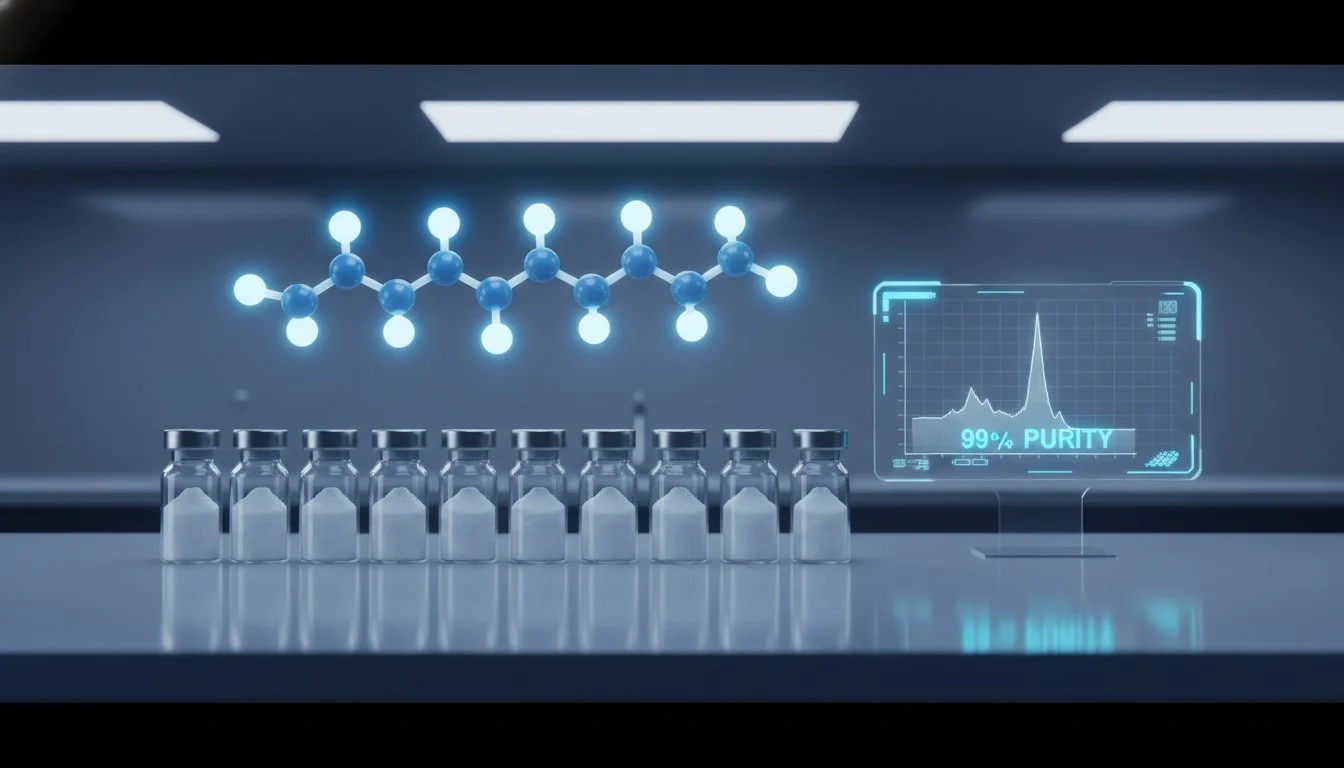
With Google searches for “peptides” increasing by 80% between April 2025 and April 2026, the scientific community faces an unprecedented influx of emerging suppliers and complex regulatory shifts. Finding reliable peptides for sale shouldn’t feel like a gamble with your laboratory’s data integrity. It’s a common frustration when inconsistent batch quality or a lack of transparent third-party testing threatens the reproducibility of your results. You recognize that sourcing is a scientific protocol where purity verification is the only metric that truly matters for research success.
This guide provides the technical framework required to evaluate synthesis standards and verify 99%+ purity levels effectively. We’ll examine the implications of the July 2026 Pharmacy Compounding Advisory Committee reviews and analyze USP <1503> quality attributes to ensure your materials meet institutional benchmarks. You’ll learn how to secure verifiable Certificates of Analysis (COAs) and implement environmental controls to maintain the long-term stability of your research materials. By prioritizing objective data over commercial claims, you can ensure your laboratory operates with the precision and compliance required in this evolving field.
Key Takeaways
- Differentiate between research-grade chemicals and therapeutic products to ensure operational compliance within evolving regulatory frameworks.
- Identify the specific laboratory verification protocols, such as HPLC and Mass Spectrometry, required to evaluate the integrity of peptides for sale in the 2026 market.
- Learn to interpret batch-specific Certificates of Analysis to confirm that materials meet the 99% purity benchmark necessary for reproducible data.
- Implement standardized environmental controls, including precise temperature ranges and UV protection, to prevent the degradation of lyophilized vials.
- Establish a reliable procurement chain by vetting suppliers on third-party testing and logistical transparency.
Understanding the Market for Research Peptides for Sale
Modern biochemical investigation relies on the availability of high-purity synthetic compounds. Peptides are short chains of amino acids linked by peptide bonds; their ability to modulate biological pathways makes them indispensable for cellular study. When sourcing peptides for sale, researchers must distinguish between materials intended for laboratory analysis and finished drug products. This distinction isn’t merely semantic. It’s a fundamental regulatory boundary that dictates manufacturing standards, handling protocols, and legal eligibility. Precision is the only acceptable standard.
The global supply chain for these compounds has matured significantly over the last decade. While the market was once fragmented, it’s now a disciplined ecosystem of specialized manufacturers and analytical laboratories. This evolution ensures that institutions can access standardized materials with documented purity levels. Procurement is no longer a simple transaction; it’s a scientific protocol that demands verification of molecular identity and chemical integrity. As the industry moves through 2026, the emphasis has shifted from simple availability to the absolute verification of synthesis standards.
The Legal Framework of Research Peptides
The strict mandate against human or veterinary consumption serves as the primary legal anchor for this sector. “Research Use Only” (RUO) labels aren’t suggestions. They represent a critical regulatory requirement that exempts these chemicals from the clinical trial processes required for pharmaceuticals. Compliance for institutional procurement involves verifying that every compound is used strictly for in vitro or animal modeling. Reputable suppliers prioritize transparency in legal disclaimers to protect the integrity of the scientific community. They don’t offer medical advice or prescriptions. They provide laboratory reagents under rigorous quality control protocols.
Common Applications in Laboratory Settings
High-purity peptides facilitate a broad spectrum of scientific inquiries across academic and private sectors. Researchers utilize these compounds for specific experimental objectives:
- In vitro studies: These experiments allow for the observation of cellular signaling, protein-protein interactions, and enzymatic activity in controlled environments.
- Metabolic modeling: Utilizing animal subjects helps scientists understand physiological responses to specific amino acid sequences and potential metabolic pathways.
- Drug Discovery: High-purity materials serve as the baseline for molecular engineering and the development of future therapeutic candidates.
Procuring peptides for sale requires a nuanced understanding of these applications. Every experiment depends on the material’s stability and purity. Without these standards, data becomes unreliable and results cannot be reproduced. You must ensure that your sourcing partners provide the transparency required to maintain these institutional benchmarks.
The Science of Purity: HPLC, Mass Spectrometry, and Lyophilisation
Accuracy in scientific investigation depends entirely on the chemical integrity of the reagents used. When evaluating peptides for sale, the 99% purity benchmark serves as the critical threshold for reliable data. Anything less introduces exogenous variables that can compromise cellular signaling studies or animal modeling. High-Performance Liquid Chromatography (HPLC) is the primary analytical tool used to isolate the target peptide from synthesis byproducts. By passing the crude material through a stationary phase under high pressure, laboratories can achieve the refined isolation required for academic-grade research. Precision is the only acceptable standard.
While HPLC confirms purity, Mass Spectrometry (MS) verifies the sequence’s identity. This process measures the mass-to-charge ratio of ionized particles, providing a definitive molecular weight that matches the theoretical profile of the peptide. It’s the only way to ensure the synthesized material is exactly what the researcher ordered. Detailed peptide purity and analysis protocols are essential for maintaining these standards across every production cycle. Without this dual-layer verification, a batch might appear pure but contain the wrong molecular structure. This is why verifiable data must accompany every procurement action.
The Synthesis Process and Quality Control
Most modern research materials are produced via Solid-Phase Peptide Synthesis (SPPS). This method allows for the precise assembly of amino acid chains on a resin substrate. However, the process generates truncated sequences and residual reagents that must be meticulously removed. Quality control protocols focus on these purification stages to ensure batch-to-batch consistency. For longitudinal studies, even minor variations in contaminant profiles can lead to divergent outcomes. Maintaining a disciplined manufacturing environment is the only way to guarantee the longevity of a research project.
Why Lyophilisation Matters for Researchers
Lyophilisation, or freeze-drying, is the gold standard for preserving peptide integrity. By removing solvents through sublimation under a vacuum, the peptide is converted into a stable, porous cake. This state is far more resistant to thermal degradation than liquid solutions. It’s especially vital for international logistics. Vials of peptides for sale that have been properly lyophilised can withstand temperature fluctuations during transit without losing biological activity. Once the material reaches the laboratory, researchers can perform reconstitution using sterile diluents to return the powder to a usable liquid form. This transition requires precision to avoid mechanical stress on the delicate molecular chains. Researchers seeking materials that adhere to these rigorous analytical standards often source from Nexa Peptide Store to ensure experimental reproducibility.

Establishing Quality Benchmarks: How to Evaluate Suppliers
Identifying a dependable source for laboratory reagents requires a systematic audit of a supplier’s analytical documentation and operational history. In a market where many entities offer peptides for sale, the burden of verification rests with the researcher to ensure the integrity of their experimental models. You shouldn’t accept surface-level assurances regarding quality. Instead, institutional procurement protocols must demand evidence of rigorous quality control and a transparent chain of custody. A supplier’s longevity often serves as a foundational trust marker, indicating a sustained commitment to these professional standards. The same scrutiny applies when researchers seek to buy Melanotan II for research, where the FDA issued 14 warning letters to online suppliers in early 2026 alone for misrepresenting peptide products.
Transparency in manufacturing locations and environmental controls is equally vital. Reliable suppliers maintain disciplined facilities where light exposure, moisture ingress, and temperature fluctuations are strictly managed. These protocols prevent the premature degradation of sensitive amino acid chains before they even leave the laboratory. When you evaluate a potential partner, look for established institutional partnerships and a clear history of serving the scientific community. Precision in manufacturing must be matched by precision in logistics.
Interpreting the Certificate of Analysis
The Certificate of Analysis (COA) is the most critical document in your procurement file. When you review an HPLC chromatogram, focus on the primary peak’s sharpness and the absence of significant baseline noise. A broad or “shouldered” peak often suggests the presence of truncated sequences or residual reagents. Furthermore, the Mass Spectrometry (MS) data must show a mass-to-charge ratio that aligns perfectly with the theoretical molecular weight of the sequence. Red flags include generic reports that lack specific batch numbers, outdated testing dates, or results that appear digitally altered. If a supplier can’t provide a batch-specific COA, the material’s purity is unverified.
Supplier Logistics and Reliability
Logistical efficiency is a direct extension of laboratory standards. High-purity peptides for sale must be vacuum-sealed in medical-grade vials and protected from UV light to maintain stability during transit. You should also assess the quality of technical support provided by the supplier. A reputable entity employs staff who understand the nuances of peptide chemistry and can answer specific questions regarding reconstitution and storage. The ideal supplier prioritizes quantifiable analytical data and verifiable laboratory standards over subjective marketing claims or unverified testimonials. This disciplined approach ensures that the materials you receive are capable of producing reproducible, high-fidelity results in any research setting.
Protocols for Maintaining Peptide Stability and Integrity
Maintaining the molecular integrity of research materials requires a disciplined approach to environmental control. When you acquire peptides for sale, the stability of the lyophilized powder depends on preventing hydrolysis and photo-degradation. Lyophilized vials should be stored at temperatures below -20°C for long-term preservation. However, for studies extending beyond several months, cryogenic storage at -80°C is the preferred institutional standard to halt all metabolic and chemical activity. Ambient light exposure can catalyze the breakdown of sensitive amino acid sequences, making opaque storage containers or amber vials a necessity in the laboratory. Precision in storage isn’t a suggestion; it’s a requirement for high-fidelity research results.
Moisture ingress is the primary enemy of peptide stability. Even microscopic amounts of water vapor can initiate the degradation of the peptide bonds within a vacuum-sealed vial. Researchers must ensure that vials reach room temperature before opening or reconstituting to prevent atmospheric moisture from condensing on the cold powder. This simple protocol protects the sample from premature hydrolysis. You shouldn’t overlook these minor technical steps, as they directly impact the reproducibility of your data. A disciplined handling environment ensures that the chemical profile of the material remains identical from the first day of the study to the last.
Reconstitution Best Practices
The transition from a vacuum-sealed powder to a liquid reagent is a delicate phase. Choosing the correct solvent is essential for maintaining a sterile environment. Bacteriostatic Water is the standard choice for most research applications because it contains 0.9% benzyl alcohol, which effectively inhibits microbial growth during the study duration. You must avoid vigorous agitation when mixing the solution. Instead, use a gentle swirling motion to prevent mechanical shear, which can physically break the delicate peptide chains and render the sample useless. To ensure accuracy in your experimental design, utilize a peptide calculator to determine the exact volume of diluent required for your specific concentration needs.
Long-Term Storage Logistics
Managing the freeze-thaw cycle is a critical handling protocol that many vendors overlook. Repeatedly warming and cooling a vial introduces thermal stress and moisture condensation, both of which accelerate molecular degradation. Researchers should aliquot reconstituted peptides into single-use volumes before freezing. This prevents the need to thaw the entire stock for every session, thereby preserving the integrity of the remaining material. You’ll need to monitor vial integrity over months-long research durations, ensuring that caps remain airtight and labels stay legible. Maintaining a strictly controlled environment is the only way to ensure your data remains consistent across longitudinal observations. You can order high-purity research materials that are vacuum-sealed to provide the highest baseline of stability before they ever reach your facility.
Sourcing High-Purity Peptides for Reliable Outcomes
Securing high-quality peptides for sale represents the final, critical phase of the laboratory procurement protocol. While previous sections detailed the analytical requirements of HPLC and Mass Spectrometry, the practical application of these standards depends on a supplier’s ability to maintain them across a vast inventory. Nexa Peptide Store operates with a disciplined commitment to these benchmarks, ensuring a minimum of 99% purity across a catalog of more than 100 compounds. This consistency is vital for large-scale studies where batch-to-batch variation could otherwise introduce unacceptable variables into long-term data sets.
Logistical efficiency is a core component of this operational model. Research institutions require a supply chain that can navigate global shipping complexities without compromising the environmental controls required for molecular stability. Nexa utilizes specialized packaging and expedited transit routes to ensure that vacuum-sealed vials arrive at their destination with chemical integrity intact. For organizations conducting high-volume investigations, wholesale and bulk procurement options provide a streamlined path to obtaining necessary reagents while maintaining strict adherence to laboratory standards. Precision in manufacturing must be supported by precision in delivery.
A Diverse Catalog for Specialized Research
The breadth of available compounds allows researchers to address highly specific metabolic and physiological questions. From advanced triple-agonist models like Retatrutide to established foundational sequences, the inventory is designed to support diverse experimental protocols. High-concentration vials and specialized blends, such as CJC-1295 paired with Ipamorelin, offer researchers the flexibility required for complex animal modeling. The availability of BPC-157 remains a core research pillar, serving as a baseline for studies involving tissue repair and regenerative signaling. This diversity ensures that specialized laboratories don’t have to compromise on purity when seeking niche or emerging compounds.
Beyond the scope of laboratory research, the principles of chemical skin regeneration are utilized in specialized treatments such as the Skin Culture Home Skin Peel, which applies calibrated formulations for dermatological renewal.
The Nexa Quality Assurance Commitment
The intersection of e-commerce efficiency and clinical precision defines our approach to the research market. We recognize that institutional verification requires more than just a summary of results; it demands access to the raw analytical data. Nexa provides the necessary HPLC and Mass Spectrometry documentation for every batch of peptides for sale, allowing independent labs to confirm molecular identity and purity levels before beginning their work. This level of transparency has established the brand as a primary supplier for global research organizations that value data fidelity above all else. By prioritizing these rigorous laboratory standards, we ensure that every procurement action contributes to the advancement of reliable scientific outcomes.
Advancing Scientific Discovery with Analytical Precision
Successful research outcomes in 2026 depend on the uncompromising quality of your laboratory reagents. You’ve seen that sourcing high-purity peptides for sale requires a disciplined audit of HPLC chromatograms and Mass Spectrometry data to ensure every sequence matches its theoretical profile. By implementing standardized environmental controls and precise reconstitution protocols, you protect your experimental models from the variables of molecular degradation. These technical safeguards are the foundation of reproducible data and institutional credibility.
Reliability in procurement is achieved through transparent manufacturing and verifiable laboratory standards. Nexa Peptide Store facilitates this process by offering 99%+ purity across our entire inventory, supported by batch-specific, third-party lab testing and comprehensive Certificates of Analysis. We maintain an established history of providing global shipping for research institutions, ensuring your materials arrive with the stability required for complex studies. Browse our catalog of high-purity research peptides to secure the precision your laboratory demands. Your commitment to rigorous methodology deserves materials that meet the highest benchmarks of the scientific community.
Frequently Asked Questions
Are these peptides for sale intended for human consumption?
No, these materials are strictly for laboratory research and are not intended for human or veterinary consumption. All peptides for sale through this platform are classified as research-grade chemicals and must be used in compliance with institutional safety protocols. Marketing these compounds for therapeutic use is prohibited. Researchers are responsible for ensuring that their laboratory practices align with the intended “Research Use Only” designation.
What is the minimum purity level for research peptides at Nexa?
The minimum purity benchmark for all catalog compounds is 99% as verified by independent analytical testing. We utilize High-Performance Liquid Chromatography (HPLC) to isolate contaminants and Mass Spectrometry to confirm the molecular identity of each batch. This high threshold ensures that exogenous variables don’t compromise your experimental results. Maintaining these standards is essential for producing reproducible data in complex biochemical studies.
How should I store my peptides once they arrive at the lab?
Lyophilized vials should be stored in a freezer at -20°C to ensure maximum stability and longevity. For longitudinal studies requiring storage beyond several months, cryogenic preservation at -80°C is recommended to prevent any molecular degradation. It’s also vital to protect the vials from UV light exposure and moisture ingress by keeping them in their original, vacuum-sealed packaging until the moment of reconstitution.
Do you provide a Certificate of Analysis (COA) for every order?
Yes, a batch-specific Certificate of Analysis (COA) is provided to ensure transparency and institutional verification. Every report includes the HPLC chromatogram and Mass Spectrometry data required to confirm both purity and sequence identity. We don’t provide generic or outdated documentation. Every order is linked to a specific production cycle to maintain a clear chain of custody and analytical integrity for your lab.
What is the difference between lyophilised powder and liquid peptides?
Lyophilized powder is the stable, freeze-dried state of the compound, whereas liquid peptides are already reconstituted and highly susceptible to rapid degradation. Lyophilization is the industry standard for peptides for sale because it allows for international shipping and long-term storage without loss of biological activity. Once a peptide is in liquid form, its shelf life is significantly reduced, making the powder form superior for procurement.
Can I buy peptides in bulk for institutional research?
Institutional procurement for large-scale studies is supported through our wholesale and bulk purchasing options. These programs allow research organizations to secure consistent batches of high-purity materials at a scale that matches their experimental requirements. Every bulk order maintains the same 99%+ purity guarantee and includes the necessary analytical documentation. This ensures that even the largest longitudinal studies benefit from batch-to-batch consistency.
What solvents should be used for peptide reconstitution?
Bacteriostatic Water is the preferred solvent for most reconstitution protocols because it contains 0.9% benzyl alcohol to inhibit microbial growth. In specific cases where alcohol might interfere with cellular signaling, sterile water for injection may be used. The selection of the diluent must be based on the specific requirements of your in vitro or animal model to avoid introducing unwanted chemical variables.
How long do peptides remain stable after being reconstituted?
Reconstituted peptides generally remain stable for 14 to 28 days when stored in a controlled refrigeration environment between 2°C and 8°C. Stability varies depending on the specific amino acid sequence and the pH of the solvent used. To preserve the integrity of the material, avoid repeated freeze-thaw cycles and aliquot the solution into single-use volumes immediately after the initial reconstitution process.
