- Your cart is empty
- Continue shopping
-
Dr Hoffman
- Posted on
- Categories:Uncategorized
- 0 comments
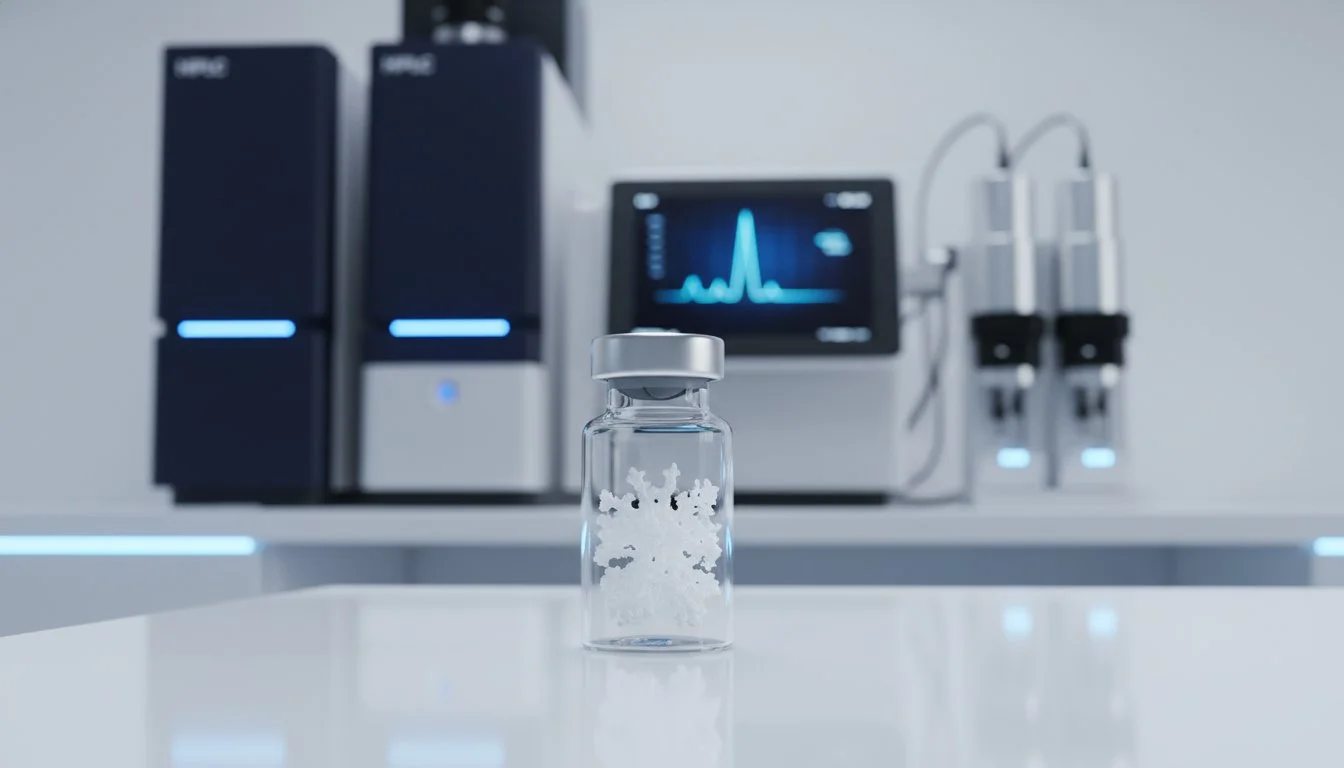
Recent laboratory data indicates that 73% of peptides currently on the market exhibit measurable discrepancies between the supplier’s Certificate of Analysis and independent results. For researchers utilizing compounds like Tirzepatide or IGF-1 LR3, the risk of compromised results due to impure sequences is a constant concern that can lead to wasted budgets and invalid data. Mastering how to verify peptide supplier testing is the only way to ensure that your materials meet the 98% purity standard established by USP General Chapters 1503 and 1504. You likely recognize that high-quality research depends on the absolute integrity of your chemical inputs, yet interpreting complex HPLC and mass spectrometry data remains a significant hurdle for many organizations.
This article establishes a repeatable protocol for verifying peptide integrity, debunking the myths of home-based testing while providing the tools to identify fraudulent laboratory reports. We will examine the specific equipment required for authentic chemical verification and provide a structured approach to auditing third-party documentation. By the end of this guide, you will possess the technical knowledge to navigate the procurement process with the precision of a professional laboratory officer, ensuring your research is built on a foundation of chemical accuracy.
Key Takeaways
- Understand why visual inspection and home methods fail to detect microscopic impurities, making professional laboratory analysis the only valid verification method.
- Learn to differentiate between High-Performance Liquid Chromatography (HPLC) for purity levels and Mass Spectrometry (MS) for sequence identity verification.
- Master how to verify peptide supplier testing by cross-referencing batch IDs and authenticating Certificates of Analysis directly with the issuing laboratory.
- Identify critical physical indicators of substandard materials, including oxidation-related discoloration and moisture intrusion in lyophilized cakes.
- Discover how professional quality protocols, such as maintaining a 99% minimum purity threshold, eliminate the risk of compromised research materials.
Can You Actually Verify Peptide Purity at Home? (The Reality Check)
Peptide purity is defined as the percentage of the specific target amino acid sequence relative to the total mass of the material. In a high-precision research environment, maintaining a 98% or higher purity standard is non-negotiable for ensuring valid data integrity. Many researchers mistakenly believe they can assess quality through sensory observation or anecdotal markers found in online forums. However, understanding how to verify peptide supplier testing requires moving beyond surface-level aesthetics. Microscopic impurities, manufacturing residues, or truncated sequences cannot be detected by the naked eye, regardless of how clean a sample looks under a microscope.
The Limitations of Physical Observation
While “white powder” is the industry standard for appearance, it isn’t a definitive proof of sequence integrity. Peptides are typically processed through lyophilization, or freeze-drying, to ensure long-term stability and shelf life. This technical process creates a “puck” or “cake” within the vial. The appearance of this cake is a result of the specific freezing rate and vacuum sealing pressure, not the chemical purity of the active ingredient. A vial containing loose powder instead of a solid puck might indicate a minor variation in the freeze-drying cycle or a slight loss of vacuum, but it reveals nothing about the actual molecular structure. Physical observation remains a purely superficial check that provides zero quantifiable data.
The “solubility myth” is another common trap that can compromise research results. Some suggest that the speed of dissolution or the clarity of the resulting solution indicates a 99% purity level. This is a scientific impossibility. Solubility is a physical property governed by the amino acid sequence’s hydrophobic or hydrophilic characteristics and the pH of the solvent used. An impure sample containing leftover salts or manufacturing byproducts can dissolve instantly and appear perfectly clear. Conversely, a high-purity peptide might require specific buffers or controlled agitation to reach a stable solution. Clarity doesn’t equate to quality.
Why Reagents and Home Kits Fail for Peptides
Peptides are complex, long-chain structures that differ significantly from the simple alkaloids or small molecules found in other chemical fields. Simple reagent kits, often used for basic chemical identification, rely on colorimetric changes that lack the sensitivity to analyze amino acid sequences. They can’t distinguish between a full-length peptide and truncated fragments or isomers. True verification demands the resolution provided by professional laboratory equipment like HPLC. Relying on “DIY” purity markers in a controlled research setting is a significant risk that can lead to wasted budgets. Professional researchers recognize that only independent laboratory services provide the quantifiable, reproducible data required for legitimate scientific inquiry. Mastering how to verify peptide supplier testing means prioritizing laboratory results over unreliable home-based chemistry sets.
The Gold Standard: How Independent Peptide Testing Services Work
Analytical verification is the only objective method for assessing chemical integrity in a research setting. While visual checks offer no real data, professional laboratories utilize a two-pronged approach to validate research materials. This process involves High-Performance Liquid Chromatography (HPLC) and Mass Spectrometry (MS). For researchers, knowing how to verify peptide supplier testing involves distinguishing between quantitative analysis, which measures how much of a substance is present, and qualitative analysis, which confirms exactly what the substance is. Utilizing a third-party laboratory is essential to eliminate conflicts of interest, as these facilities have no financial stake in the commercial success of the supplier.
Decoding HPLC: The Purity Chromatogram
HPLC is the separation of compounds based on their interaction with a stationary phase. During this process, the sample is pushed through a column under high pressure. Different molecules move at different speeds, creating a chromatogram with various peaks. The primary peak represents the target peptide, while smaller secondary signals indicate impurities or manufacturing byproducts. Researchers look at the Area Under the Curve (AUC) to calculate the purity percentage. The FDA guidance on peptide purity highlights the necessity of these rigorous analytical methods to ensure synthetic materials meet strict quality benchmarks. If the AUC for the primary peak is 99%, it means 99% of the detected mass consists of the target compound.
Mass Spectrometry: Confirming Molecular Identity
Mass Spectrometry acts as a molecular fingerprint. While HPLC tells you how pure a sample is, MS confirms that the sample is actually the intended sequence, such as BPC-157 or Tirzepatide. The laboratory compares the observed mass found during the test against the theoretical mass of the peptide sequence. If these numbers don’t align, the sample is either mislabeled or contains a cheaper analog. This step is critical because 81% of GLP-1 peptides fail at least one quality metric when subjected to independent testing.
Mass Spectrometry prevents the accidental use of substituted sequences that could invalidate months of research data. By verifying the exact molecular weight, labs ensure the sequence hasn’t been truncated or altered during synthesis. These independent reports provide the transparency needed to maintain high laboratory standards. Researchers who prioritize accuracy often source from suppliers who provide verified third-party reports for every batch before it enters the supply chain.

Red Flags: Identifying Substandard Research Peptides Without a Lab
Physical inspection serves as a preliminary screen in a laboratory’s quality control protocol. While it can’t replace HPLC analysis, it helps researchers disqualify materials that show obvious signs of degradation or contamination. High-purity research peptides, such as BPC-157 or Melanotan II, should remain virtually odorless and appear as a clean white solid. If you encounter a distinct chemical odor upon opening a vial, it’s a strong indicator of volatile organic compounds or residual solvents that weren’t properly removed during the purification stage.
Common physical red flags include:
- Discoloration: Yellow or brown tints suggesting oxidation or manufacturing residues.
- Moisture Intrusion: Clumping or a “melted” appearance in the lyophilized cake that suggests a breach in vial integrity.
- Seal Failure: Damaged flip-top caps or a lack of vacuum pressure during the initial introduction of a diluent.
Signs of Degradation Post-Manufacturing
Environmental factors during international transit often compromise the integrity of sensitive sequences. A properly lyophilized peptide should form a stable “cake” or “puck” at the bottom of the vial. While earlier sections established that a loose powder isn’t always a sign of low purity, a collapsed or sticky-looking mass usually indicates moisture intrusion. These physical changes suggest the vacuum seal has failed, allowing atmospheric humidity to interact with the material. Researchers must understand regulatory guidelines for peptide analysis to recognize that even a pure sequence becomes useless if its structural stability is compromised. Damaged packaging or compromised flip-tops should be treated as an automatic disqualifier for any controlled laboratory investigation.
Evaluating Supplier Transparency
Beyond the physical vial, the logistics of the procurement process reveal much about a vendor’s standards. A critical component of how to verify peptide supplier testing is the rigorous examination of the documentation provided. Reliable suppliers provide batch-specific reports rather than generic, outdated templates recycled across multiple lots. You should always verify that the supplier maintains a physical laboratory address and offers technical support to answer specific questions about their analytical data. For a deeper understanding of these requirements, researchers should consult this Research Peptides: A Comprehensive Guide to establish baseline standards for their procurement protocols. Transparency isn’t just a marketing claim; it’s a verifiable metric demonstrated through consistent, accessible, and authentic data.
How to Evaluate a Third-Party Certificate of Analysis (COA)
A Certificate of Analysis is the most critical document in the research procurement process. However, a report is only as valuable as its authenticity. Learning how to verify peptide supplier testing requires a disciplined, step-by-step audit of the documentation provided. Researchers shouldn’t accept a COA at face value without performing due diligence to ensure the data is batch-specific and current. A valid report serves as a legal and scientific guarantee of the material’s integrity.
The following protocol ensures the integrity of your analytical data:
- Step 1: Cross-reference the Batch ID printed on the physical vial with the ID listed on the COA. Discrepancies here indicate a total failure in chain-of-custody and should be treated as a critical red flag.
- Step 2: Authenticate the laboratory’s credentials. Don’t rely on the PDF alone; contact facilities like Janoshik or MZ Biolabs directly to verify that the report number exists in their official database.
- Step 3: Analyze the testing date. Peptides are subject to degradation over time. Any report exceeding 6 to 12 months is considered outdated and unreliable for active laboratory research.
- Step 4: Inspect the chromatogram for digital editing. Look for “noise” or baseline fluctuations consistent with real-world laboratory equipment. Perfectly smooth, idealized lines often suggest digital manipulation or “Photoshopping.”
- Step 5: Confirm the purity percentage. For high-stakes research, the material must meet or exceed the 99% industry standard to ensure reproducible results.
Spotting Fraudulent or Altered Documents
Digital manipulation of PDF reports is a documented issue in the research chemical industry. Common indicators of altered documents include font inconsistencies, blurred logos, or mismatched dates between the header and the footer. Generic COAs provided by a manufacturer’s internal lab are often unreliable because they lack the objectivity of an independent third-party audit. Professional researchers prioritize verification from recognized, independent facilities to ensure that the data hasn’t been skewed to favor the vendor. If a supplier refuses to provide a verifiable report number that can be checked on a lab’s website, the material should be rejected immediately.
Purity vs. Quantity: Understanding the Difference
It’s vital to distinguish between purity and quantity. Purity refers to the quality of the amino acid sequence, while quantity refers to the total mass of the peptide present in the vial. A sample can be 99% pure but only contain 60% of the stated milligram content due to poor manufacturing or excessive filler. Independent testing services measure “Net Peptide Content” to reveal the true mass versus the total weight of the lyophilized cake. To ensure your research is supported by accurate dosing and high-purity sequences, you can access our library of verified third-party reports for every product in our inventory.
Nexa’s Quality Protocol: Eliminating the Need for Individual Testing
Establishing a rigorous quality control framework is essential for maintaining the integrity of the research supply chain. We maintain an uncompromising commitment to a 99% minimum purity threshold for all research chemicals in our inventory. This standard exceeds the general 98% benchmark accepted by many academic institutions. By the time a researcher evaluates how to verify peptide supplier testing, our internal protocols have already subjected the material to multiple layers of analytical scrutiny. We utilize independent peptide testing services for every batch before it is approved for inventory listing, ensuring that the raw data is available for review prior to procurement.
Our quality assurance includes:
- Mandatory Pre-Listing Audits: No compound is made available for research until a third-party laboratory confirms its identity and purity.
- Advanced Lyophilization: We utilize professional freeze-drying techniques to ensure long-term chemical stability during global transit.
- Raw Data Transparency: We provide full HPLC and Mass Spectrometry reports to eliminate the need for expensive, redundant testing by individual investigators.
Our Multi-Stage Verification Process
Quality control begins at the point of synthesis and continues until the material is dispatched to the laboratory. Initial synthesis verification is followed by secondary independent third-party audits to ensure objectivity. We implement strict environmental controls during storage to prevent oxidation and chemical degradation. These measures are particularly critical for sensitive sequences that are prone to structural changes if exposed to light or temperature fluctuations. For researchers seeking technical depth on specific molecular standards, our BPC-157 Peptide: A Comprehensive Scientific Review provides an example of the rigorous data we maintain for our catalog. This multi-stage approach ensures that the “puck” or “cake” in your vial represents the highest possible standard of chemical excellence.
Empowering Scientific Discovery with Reliable Supplies
Consistent, verified supplies are the foundation of reproducible laboratory research. When an investigator can rely on the supplier’s data, they can allocate more of their budget toward active experimentation rather than preliminary chemical validation. We support academic institutions and independent investigators by providing transparent, batch-specific documentation that meets professional auditing standards. This eliminates the guesswork often associated with the research chemical market. By providing the tools and data necessary to understand how to verify peptide supplier testing, we empower researchers to focus on their primary objective: scientific discovery. You can view our verified research peptides and batch-specific COAs to see our commitment to transparency in action.
Establishing a Foundation of Chemical Integrity
Scientific advancement relies on the absolute precision of your laboratory reagents. As established throughout this guide, sensory observations and anecdotal home tests are scientifically insufficient for determining molecular purity or sequence identity. Genuine verification requires the analytical resolution of HPLC and Mass Spectrometry to identify microscopic impurities and manufacturing residues. By mastering the audit of Certificates of Analysis and understanding how to verify peptide supplier testing, you protect your research from the variables introduced by substandard chemical materials.
We remain dedicated to supporting the global scientific community through rigorous quality control and transparent data. Every compound in our catalog is 99%+ purity guaranteed and undergoes independent third-party lab testing before it’s approved for distribution. With established global logistics for research institutions, we ensure that your materials arrive with their structural integrity fully intact. You can now bypass the risks of chemical uncertainty and focus your resources on active discovery.
Secure High-Purity Research Peptides with Verified COAs
Precise research begins with verified inputs. We encourage you to maintain these high standards in every stage of your procurement and experimentation.
Frequently Asked Questions
Can I use a melting point test to verify peptide purity at home?
No, a melting point test is not a valid method for verifying peptide purity. Because peptides are complex chains of amino acids, they typically undergo thermal decomposition before reaching a definitive melting point. This makes visual melting observations unreliable for detecting microscopic impurities or sequence errors. Professional researchers rely exclusively on HPLC and Mass Spectrometry to establish chemical integrity and ensure their data remains reproducible.
What is the most reliable independent lab for third-party peptide testing?
Facilities such as Janoshik and MZ Biolabs are widely recognized as industry standards for independent peptide verification. These laboratories provide searchable databases where researchers can authenticate report numbers. Using these recognized entities is a core part of how to verify peptide supplier testing, as they maintain the high-resolution equipment necessary for accurate molecular characterization. These labs operate independently of the supply chain to provide objective, third-party data.
How much does it typically cost to have a single peptide vial tested independently?
Independent analysis costs vary based on the complexity of the required protocol and the regulatory standards involved. As of late 2025, characterization services typically range from $800 to $5,000 per sample depending on the depth of the audit. Specifically, HPLC-UV analysis costs between $300 and $800, while LC-MS ranges from $600 to $1,500. One specialized lab offers UHPLC testing at a flat rate of $200 per sample as of February 2025.
Why does my peptide look like a solid puck in some vials and loose powder in others?
The physical appearance of the material is determined by the specific parameters used during the lyophilization process. A solid puck indicates a stable freeze-drying cycle with maintained vacuum pressure. Loose powder occurs when the cake is physically disrupted or when the freezing rate differs during manufacturing. Neither state is a definitive indicator of chemical purity. You must rely on analytical laboratory testing rather than visual aesthetics to confirm sequence quality.
Is a 98% purity rating acceptable for most laboratory research applications?
A 98% purity rating is generally accepted as the minimum standard for research peptides according to USP General Chapters 1503 and 1504. However, for high-precision investigations or sensitive cellular assays, a threshold of 99% or higher is preferred to minimize the influence of manufacturing byproducts. Higher purity levels ensure that observed experimental outcomes are directly attributable to the target sequence. This reduces the risk of interference from residual contaminants.
How can I tell if a Certificate of Analysis (COA) has been digitally altered?
Digitally altered reports often exhibit font inconsistencies, blurred logos, or mismatched dates between the document header and the final signature. The most effective way to identify fraud is to cross-reference the report number on the testing facility’s official website. Understanding how to verify peptide supplier testing involves this direct authentication step to ensure the data hasn’t been manipulated. If the lab cannot confirm the report, the material should be rejected.
Do independent testing services also check for heavy metals and residual solvents?
Independent testing services can verify the presence of heavy metals and residual solvents if specific USP protocols are requested. While standard purity tests focus on the amino acid sequence, comprehensive safety audits include Elemental Impurities testing and Residual Solvent analysis. These additional metrics are essential for researchers who must ensure their materials comply with updated May 2026 USP rules. These rules specifically target trace metal limits in pharmaceutical and chemical substances.
How does peptide purity degrade if the vial is stored at room temperature?
Peptides stored at room temperature are susceptible to degradation through oxidation and hydrolysis, which reduces the effective concentration of the active sequence. While lyophilized cakes are more stable than reconstituted solutions, prolonged exposure to heat can cause structural changes or truncated fragments. Maintaining a temperature-controlled environment, typically between -20°C and 4°C, is vital for preserving the long-term integrity of sensitive amino acid chains. This prevents the loss of sequence integrity over time.
