- Your cart is empty
- Continue shopping
-
Dr Hoffman
- Posted on
- Categories:Uncategorized
- 0 comments
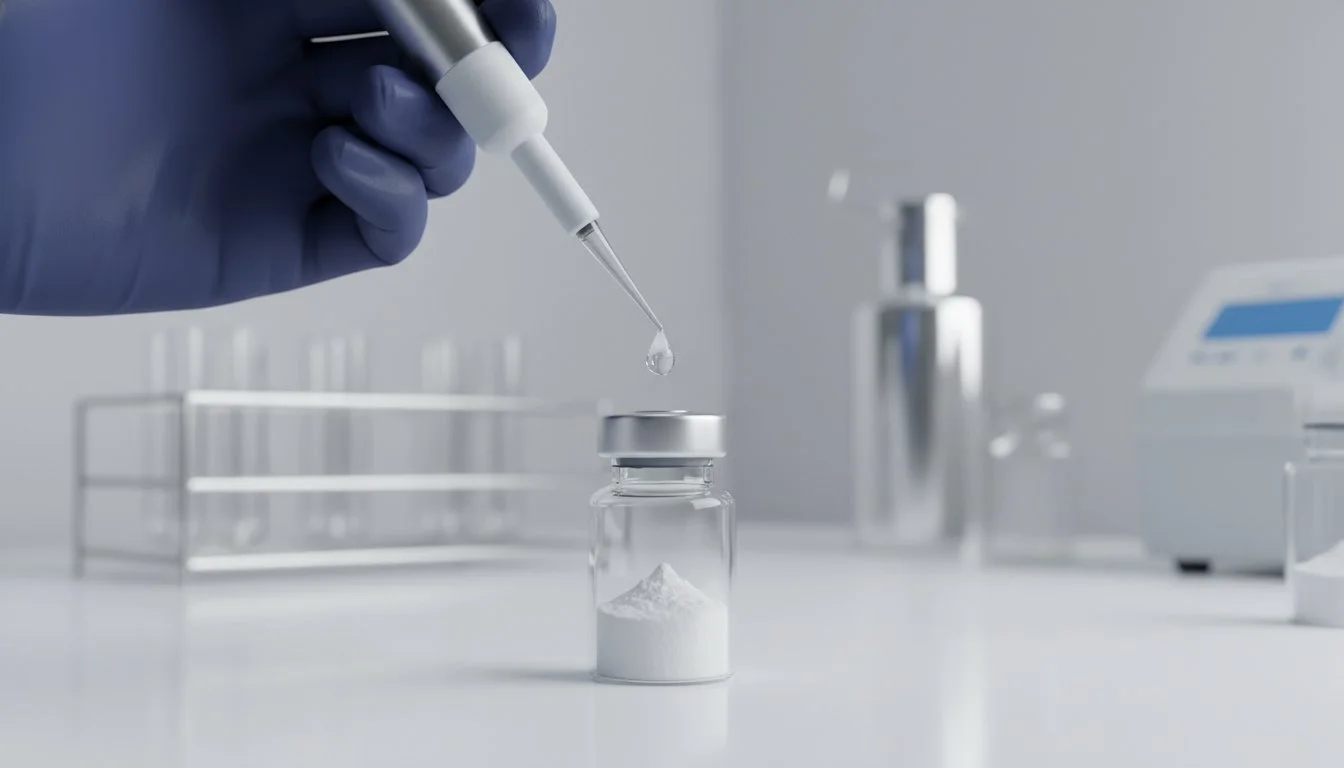
Peptide integrity is a mechanical and chemical variable that fails most often during the first 30 seconds of solvation. It’s understood that even a minor procedural lapse can render a high-purity lyophilized powder biologically inactive. You’ve likely experienced the frustration of cloudy solutions or inconsistent data across batches when protocols require absolute precision. These issues often stem from common peptide reconstitution mistakes that occur before the first pipette tip touches the vial. Achieving reproducible results requires an uncompromising stance on laboratory standards, especially as revised USP <797> regulations demand stricter environmental monitoring and personnel training throughout 2026.
This guide identifies the specific procedural errors that lead to peptide degradation and provides the technical framework needed to eliminate them. You’ll gain a clear understanding of how to achieve zero-waste reconstitution and maintain the maximum shelf-life for your research materials. We’ll preview a comprehensive laboratory checklist that covers solvent compatibility, proper mechanical handling, and the latest 2026 compliance benchmarks for maintaining research integrity. By refining these foundational steps, you ensure that every vial of research material delivers the reliable data your institution expects.
Key Takeaways
- Learn why high-speed agitation and direct solvent impact cause irreversible structural shear to delicate peptide chains during the solvation process.
- Understand the critical distinction between sterile and bacteriostatic water to prevent rapid microbial degradation and ensure long term stability.
- Identify and eliminate common peptide reconstitution mistakes that occur during the high-risk window of initial solvation to preserve biological activity.
- Implement a standardized laboratory protocol including thermal equilibrium steps and pH verification to maintain maximum peptide shelf-life.
- Discover how utilizing research materials with verified 99% purity and third-party COAs minimizes reconstitution artifacts and ensures highly reproducible results.
Understanding the Molecular Fragility of Lyophilized Peptides
Lyophilization, or freeze-drying, is the industrial standard for preserving the chemical integrity of research peptides. This process removes water through sublimation under vacuum, which results in a stable, porous “cake” that resists thermal degradation. Understanding Lyophilized Peptides is essential for any laboratory professional because the very state that ensures shelf-life also creates a moment of extreme vulnerability during reconstitution.
The transition from a solid lyophilized state to a liquid solution represents a high-risk thermodynamic event. When a solvent is introduced, the peptide molecules must rapidly rehydrate and reorganize their spatial orientation. This is where common peptide reconstitution mistakes frequently occur. If the solvation process is too aggressive or chemically mismatched, the peptide bonds can suffer from mechanical or oxidative stress. This vulnerability is particularly pronounced in complex sequences like retatrutide peptide, where the maintenance of specific secondary and tertiary structures is required for biological activity.
In high-precision analysis, a “mostly dissolved” vial is considered a failure state. Residual micro-particulates or undissolved aggregates indicate that the peptide hasn’t reached a true monomeric solution. These aggregates can mask the actual concentration of the active compound, leading to skewed data and failed experiments.
The Chemistry of Peptide Stability
During rapid solvation, the delicate network of hydrogen bonds that maintains a peptide’s shape is under immense pressure. Introducing a solvent to a highly concentrated lyophilized cake can cause localized pH shifts that exceed the peptide’s stability range. These shifts can lead to reversible precipitation, where the peptide might eventually dissolve, or irreversible molecular degradation, where the primary sequence remains intact but the functional spatial conformation is lost forever.
Why Precision Matters in Laboratory Settings
Minor degradation isn’t just a technical oversight; it fundamentally alters the molarity of your working solution. Avoiding common peptide reconstitution mistakes ensures that your calculated concentrations remain accurate across different batches. When a portion of the material is inactive, experimental reproducibility becomes impossible, and the financial cost of wasted materials and lost research hours mounts quickly. Peptide stability is the maintenance of the primary amino acid sequence and its intended spatial conformation. Precision in the first thirty seconds of reconstitution determines whether your data reflects the peptide’s true potential or merely the artifacts of a compromised batch.
Critical Mechanical Mistakes: Agitation, Pressure, and Structural Shear
Mechanical integrity is often compromised by the physical handling of the vial during the first few seconds of solvent introduction. One of the most prevalent common peptide reconstitution mistakes involves the “direct hit” method, where the researcher aims the solvent stream directly onto the lyophilized cake. This creates high-velocity mechanical shear that can disrupt the peptide’s delicate structure before it has the opportunity to hydrate. Instead, the solvent should be directed down the interior glass wall of the vial, allowing it to gently cascade onto the powder. This controlled entry minimizes the kinetic energy transferred to the lyophilized material.
Temperature shock also presents a significant risk to structural integrity. Moving a vial directly from -20°C storage to an active laboratory bench without a gradual acclimation period can lead to internal condensation and structural stress. Vials must reach controlled room temperature, typically between 20-25°C, before the septum is breached to ensure consistent solubility and prevent moisture-induced degradation. Precise environmental control is a hallmark of disciplined laboratory practice.
Managing Vial Vacuum and Pressure
The internal environment of a professional research vial is typically vacuum-sealed to prevent oxidation and maintain sterility. If the syringe plunger is allowed to “fly” forward under the force of this vacuum, the resulting pressure spike can effectively shatter the peptide cake, causing immediate denaturation. Precision requires manual resistance against the vacuum’s pull. Utilizing a peptide calculator helps in determining the exact solvent volume required to maintain concentration accuracy despite “dead volume” errors, which refer to the minute amount of solution retained in the syringe hub. To avoid pressure-related degradation, researchers should follow these steps:
- Draw a volume of air into the syringe equivalent to the intended solvent volume.
- Insert the needle and allow the air to equalize the internal pressure.
- Slowly depress the plunger, ensuring the solvent trickles down the vial wall.
The Dangers of Excessive Agitation
High-speed agitation is a catastrophic error in peptide handling. Vortexing or vigorous shaking introduces air bubbles into the solution, leading to molecular foaming. This foam is a visual indicator of denatured proteins, as the air-liquid interface forces the peptide chains to unfold and lose their spatial conformation. While some compounds are more resilient, shaking is the primary cause of activity loss in sensitive sequences like bpc 157. The correct approach is the “gentle swirl” technique. By slowly rotating the vial between the palms, the researcher facilitates solvation without mechanical trauma. Completion is signaled when the solution is perfectly clear and devoid of particulates. Maintaining these standards is vital for any laboratory prioritizing high-quality research materials and reproducible data.

Solvent and Environmental Errors: Avoiding Chemical Degradation
Chemical stability in a liquid state is significantly more volatile than in a lyophilized powder. While mechanical handling protects the physical structure, the chemical environment determines the longevity of the peptide’s biological activity. One of the most persistent common peptide reconstitution mistakes involves the selection of a suboptimal solvent. Many researchers fall into the sterile water trap, assuming that standard sterile water is sufficient for multi-dose vials. Without an antimicrobial agent, a solution reconstituted with plain sterile water is highly susceptible to microbial growth, often leading to total degradation within 48 hours. For any study requiring multiple withdrawals from a single vial, a bacteriostatic medium is the laboratory standard.
Chemical degradation also occurs when the solution’s pH deviates from the peptide’s isoelectric point (pI). If the buffer is too acidic or too basic, the resulting charge imbalance can lead to immediate precipitation or slow hydrolysis. Environmental factors like UV exposure also play a role. Many peptide sequences contain light-sensitive amino acids, such as tryptophan or tyrosine, which undergo oxidative degradation when exposed to ambient laboratory lighting during the solvation process. Researchers should also avoid overly concentrated solutions. High molarity increases the frequency of molecular collisions, which significantly elevates the risk of peptide aggregation and irreversible folding errors.
Selecting the Correct Reconstitution Buffer
The use of bacteriostatic water, which contains 0.9% Benzyl Alcohol, is required for multi-use research vials to inhibit bacterial proliferation. However, solvent choice must be tailored to the peptide’s specific solubility profile. Hydrophobic sequences often require a shift in pH to achieve full solvation; in these instances, minute additions of sterile 1% acetic acid for basic peptides or ammonium hydroxide for acidic peptides are standard protocols. Researchers should exercise caution with 0.9% Sodium Chloride (saline). While common in clinical settings, the high ionic strength of saline can cause certain research peptides to “salt out,” resulting in visible cloudiness and loss of monomeric consistency.
Storage Failures Post-Reconstitution
Once a peptide is in solution, its thermal sensitivity increases exponentially. A frequent error is the “freeze-thaw” cycle, where a single vial is repeatedly frozen and thawed for sequential experiments. This process creates massive ice crystals that physically tear the peptide chains apart. Aliquoting is the practice of dividing a reconstituted solution into single-use volumes to prevent thermal degradation. These aliquots should be stored in a dedicated laboratory refrigerator maintained strictly between 2°C and 8°C. Deviations from this narrow temperature range can accelerate the rate of deamidation and oxidation, compromising the integrity of the research data. By maintaining a disciplined approach to solvent selection and storage, laboratories can eliminate common peptide reconstitution mistakes that lead to material waste.
The Laboratory Standard Checklist for Error-Free Reconstitution
Adopting a systematic audit of your workflow is the only reliable method to eliminate common peptide reconstitution mistakes that jeopardize research integrity. Before any solvent is introduced, the researcher must verify the peptide identity against the batch-specific Certificate of Analysis (COA) and ensure the lyophilized powder has reached thermal equilibrium. Cold vials are prone to atmospheric condensation upon opening, which introduces moisture that can initiate premature degradation. Aseptic preparation is equally vital. Sanitization of the vial stopper and work surface with 70% isopropyl alcohol must be performed with a minimum 30-second contact time to ensure a sterile field for needle entry.
Controlled solvation requires a disciplined management of the vial’s internal vacuum. As previously discussed, allowing the vacuum to pull the solvent in too rapidly creates mechanical stress. By manually controlling the plunger, you ensure a slow, wall-directed flow rate that facilitates a gentle transition from powder to solution. Final verification involves a visual inspection under high-intensity light to confirm the absence of undissolved particulates or micro-aggregates.
The 10-Point Reconstitution Audit
This audit serves as a final gatekeeper for laboratory quality control. Before proceeding, confirm the following points:
- Has the peptide reached a room temperature of 20-25°C?
- Is the batch-specific COA verified for a purity of ≥99%?
- Has the vial septum been sanitized with an appropriate antimicrobial agent?
- Is the syringe gauge selected (typically 22-27G) to minimize the risk of stopper coring?
- Has the required solvent volume been calculated using a precision peptide calculator?
- Is the air-to-solvent ratio balanced to equalize internal vial pressure?
- Is the solvent being directed toward the glass wall rather than the powder?
- Is the agitation limited to a gentle manual swirl?
- Is the final concentration verified for molar accuracy?
- Are the storage aliquots prepared for immediate refrigeration?
Troubleshooting Cloudiness and Precipitation
If a solution remains turbid after 15 minutes of gentle swirling, it doesn’t always indicate a failed batch. Some hydrophobic sequences require a “wait and see” approach, needing up to 24 hours at 4°C to reach full hydration. While sonication is a valid tool for breaking up persistent aggregates, it must be used with caution. High-frequency sonication generates localized heat and free radicals that can be destructive to sensitive peptide bonds. If cloudiness persists despite proper pH adjustment and hydration time, it may indicate a purity artifact or a common peptide reconstitution mistake during the initial solvation phase. To ensure your experiments begin with the highest possible baseline of quality, source your research peptides from suppliers who provide comprehensive third-party verification for every batch.
Preserving Research Integrity with Nexa Quality Controls
Eliminating common peptide reconstitution mistakes begins long before a vial reaches the laboratory bench. It starts with the manufacturer’s commitment to chemical purity and mechanical stability. Nexa Peptide Store prioritizes a purity standard of ≥99%, as verified by third-party High-Performance Liquid Chromatography (HPLC) and Mass Spectrometry (MS) testing. This uncompromising stance on quality ensures that research materials are free from synthesis byproducts that often act as nucleation sites for aggregation during solvation. When a peptide is manufactured to this level of precision, the researcher encounters fewer artifacts and a more predictable rehydration curve.
The physical state of the lyophilized material is equally critical to experimental success. High-quality lyophilization creates a porous, uniform cake that facilitates rapid, even penetration of the solvent. In contrast, inferior freeze-drying processes can result in “sticky” or collapsed cakes that resist rehydration and increase the risk of mechanical degradation through over-agitation. By providing consistent, professional-grade cakes, Nexa ensures that the transition from powder to solution is as seamless as your laboratory protocol requires. This technical reliability is backed by an established history of serving the scientific community with disciplined operational standards.
Sourcing Verified Research Compounds
Precision in complex studies, such as those investigating the tirzepatide mechanism of action, requires materials that behave exactly as predicted by their molecular weight and isoelectric point. Nexa supports these requirements by providing not only the peptides themselves but also the necessary laboratory-grade solvents. Utilizing bacteriostatic water from a trusted source ensures that the antimicrobial environment remains consistent across all batches. Working with a supplier that understands these laboratory-specific requirements allows investigators to focus on data acquisition rather than troubleshooting solubility failures caused by common peptide reconstitution mistakes.
Final Directives for Scientific Investigators
All products supplied by Nexa are strictly for Research Use Only (RUO) and are not intended for human consumption or medical use. This boundary is fundamental to our operational protocols and ensures that we remain a compliant partner to academic and private research institutions. We encourage investigators to document every variable of the reconstitution process, including solvent lot numbers and rehydration times, to foster the highest degree of peer-reviewed reproducibility. This disciplined approach to documentation, combined with our verified purity standards, preserves the integrity of your research data. Secure your experimental outcomes by starting with professional-grade materials.
Order High-Purity Peptides and Reconstitution Supplies from Nexa Peptide Store
Advancing Laboratory Precision through Standardized Protocols
Achieving highly reproducible research results requires an uncompromising stance on every procedural variable. By identifying and eliminating the common peptide reconstitution mistakes discussed in this guide, you ensure that your laboratory maintains the highest standards of data integrity. Precision in mechanical handling, solvent selection, and thermal equilibrium protects the molecular fragility of your compounds. These steps prevent the premature degradation that often leads to wasted material and inconsistent results across different batches.
Nexa Peptide Store supports your institutional goals by providing access to over 100 high-purity peptides and specialized blends, each third-party lab tested for a 99% minimum purity. We facilitate global shipping for research institutions and universities, ensuring that high-quality lyophilized materials are available whenever your project demands them. Utilizing verified compounds and following a standardized checklist allows your team to focus on meaningful scientific discovery rather than procedural troubleshooting. Reliability in your supply chain is the foundation of reliable research data.
Browse Our Catalog of 99%+ Pure Research Peptides
Your commitment to precise laboratory standards ensures that every data point reflects the true potential of your research.
Frequently Asked Questions
Can I shake a peptide vial to speed up the reconstitution process?
No, you should never shake a peptide vial because the resulting air-liquid interface causes molecular foaming and denaturation. This mechanical trauma physically unfolds the peptide chains and renders the compound biologically inactive. Always utilize a gentle manual swirl to facilitate solvation without compromising the structural integrity of the research material.
Why did my peptide solution turn cloudy immediately after adding the solvent?
Cloudiness typically indicates a solubility failure caused by a pH mismatch or the “salting out” effect. If the solvent’s pH falls outside the peptide’s isoelectric point, the molecules may aggregate instead of reaching a monomeric state. This is one of the most visible results of common peptide reconstitution mistakes and requires an immediate assessment of the buffer’s ionic strength.
Is it safe to use regular sterile water for peptide reconstitution?
Regular sterile water is only suitable for single-use applications because it lacks the antimicrobial properties needed for multi-dose vials. Bacteriostatic water, which contains 0.9% benzyl alcohol, is the laboratory standard for preventing microbial proliferation over extended periods. Using plain sterile water for a multi-use vial frequently results in rapid microbial degradation within 48 hours.
How long can a reconstituted peptide remain stable at room temperature?
Reconstituted peptides shouldn’t remain at room temperature for more than a few hours as thermal degradation begins immediately upon solvation. While some sequences are more resilient, the rate of oxidation and deamidation increases significantly outside of a controlled 2°C to 8°C environment. Immediate refrigeration or aliquoting is the only way to ensure the longevity of your research data.
What happens if I accidentally inject the solvent too quickly into the vial?
Injecting solvent too rapidly creates high-velocity mechanical shear that can shatter the delicate lyophilized cake and denature the peptide bonds. This pressure spike is a frequent procedural error that compromises the compound’s functional conformation. You must manually resist the vial’s vacuum to ensure the solvent trickles gently down the interior glass wall rather than hitting the powder directly.
Can I re-freeze a peptide after it has been reconstituted with bacteriostatic water?
Re-freezing a reconstituted peptide is highly discouraged because the formation of ice crystals can physically tear the peptide chains apart. Repeated freeze-thaw cycles result in a cumulative loss of activity that skews experimental results and compromises molar accuracy. To avoid this, researchers should divide the solution into single-use aliquots before initial refrigeration to prevent thermal stress.
Why is there a vacuum in my peptide vial, and should I remove it?
The internal vacuum is a quality control marker that indicates the vial’s seal remains intact and the lyophilized powder is protected from oxidation. You shouldn’t simply remove it; instead, equalize the pressure by introducing a volume of air equal to your intended solvent volume. This prevents the plunger from moving too quickly and causing mechanical damage to the peptide during the solvation phase.
Does the concentration of the peptide affect its stability after mixing?
Yes, higher concentrations significantly increase the risk of peptide aggregation and molecular collisions that lead to precipitation. Overly concentrated solutions are more prone to these common peptide reconstitution mistakes, making it difficult to maintain a stable, monomeric solution. Adhering to the recommended molarity ensures that the peptide remains properly hydrated and biologically active throughout your study.
