- Your cart is empty
- Continue shopping
-
Dr Hoffman
- Posted on
- Categories:Uncategorized
- 0 comments
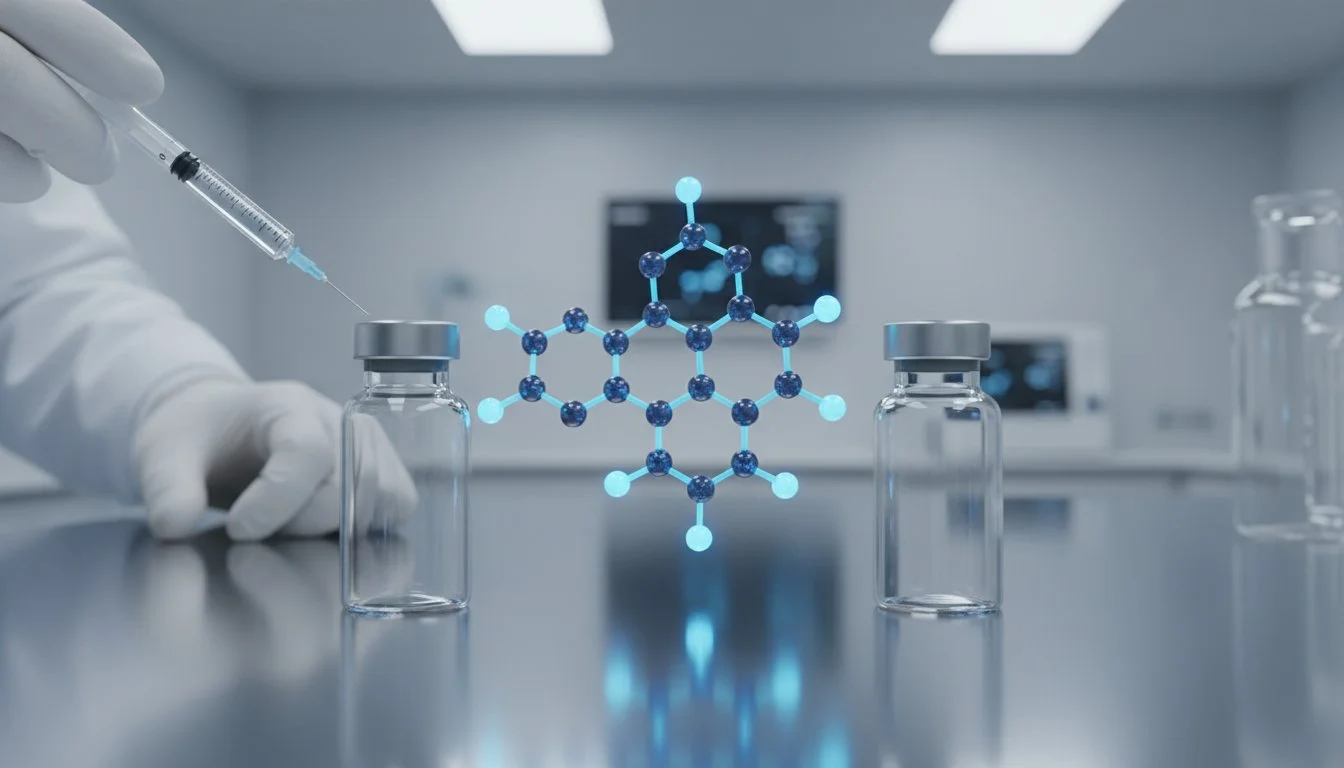
Choosing the wrong solvent is the fastest way to compromise months of laboratory work and thousands of dollars in research materials. The decision between bacteriostatic water vs sterile water for peptides isn’t merely a matter of preference; it’s a fundamental determination regarding the chemical stability and longevity of your compounds. You’ve likely felt the frustration of uncertain degradation rates or the risk of microbial contamination when managing multi-dose vials in a precise laboratory environment. Confusion over USP standards for solvents shouldn’t be the factor that undermines your data.
We understand that maintaining maximum peptide purity is critical for reliable results. This 2026 research guide provides the technical clarity you need to navigate these molecular differences and ensure your peptides remain viable for the duration of your study. We’ll examine the specific role of 0.9% benzyl alcohol, compare USP standards for single-use versus multi-dose applications, and establish clear safety protocols to ensure your research meets the highest institutional standards. By the end of this analysis, you’ll have a definitive framework for solvent selection that prioritizes both peptide integrity and laboratory efficiency.
Key Takeaways
- Identify the molecular distinctions between preserved and non-preserved solvents to determine the appropriate bacteriostatic water vs sterile water for peptides selection for your specific research model.
- Establish a 28-day viability timeline for reconstituted multi-dose vials by leveraging the antimicrobial properties of 0.9% benzyl alcohol.
- Prevent the loss of high-value compounds by understanding how unpreserved sterile water can accelerate oxidative stress and peptide degradation.
- Optimize laboratory safety by implementing standardized storage protocols for opened and unopened solvent vials, including temperature and light-exposure controls.
- Apply a professional decision framework that balances study duration and peptide sensitivity to maintain maximum purity throughout the research lifecycle.
Defining Bacteriostatic and Sterile Water in Laboratory Environments
Precision is non-negotiable in biochemical research. While both solutions undergo rigorous purification to eliminate pyrogens and contaminants, their functional architectures differ significantly. The comparison of bacteriostatic water vs sterile water for peptides begins with their core classification under United States Pharmacopeia (USP) standards. Bacteriostatic water is a sterile, non-pyrogenic preparation of distilled water that contains a specific antimicrobial preservative. In contrast, Sterile Water for Injection (SWFI) is a single-dose solvent characterized by the total absence of additives. Understanding these definitions is the first step in protecting the structural integrity of your compounds.
The primary differentiator is the presence of a Bacteriostatic agent. This component doesn’t necessarily kill existing bacteria on contact but instead inhibits their metabolic processes and reproductive capabilities. This allows the solvent to remain viable through multiple vial punctures. Sterile water lacks this protective mechanism. Once the seal of an SWFI vial is compromised, the solution is vulnerable to immediate environmental contamination. For researchers, this distinction dictates whether a reconstituted peptide remains a valid data point or becomes a degraded liability.
Chemical Composition of Bacteriostatic Water
The standard formulation for bacteriostatic water requires a 0.9% (9 mg/mL) concentration of benzyl alcohol. This precise level is mandated by USP guidelines to ensure effective preservation without destabilizing the solutes. Maintaining a stable environment for research peptides also depends on the solution’s acidity. The pH of bacteriostatic water typically ranges between 4.5 and 7.0. This slightly acidic to neutral range is critical because shifts in pH can trigger peptide aggregation or premature cleavage of the amino acid chain. Its solubility characteristics make it an ideal aqueous vehicle for most lyophilized research materials intended for longitudinal studies.
The Purity Profile of Sterile Water for Injection (SWFI)
Sterile water is produced through intensive distillation or reverse osmosis processes to achieve a “blank slate” chemical profile. It contains no bacteriostatic agents, preservatives, or added buffers. While this provides a high degree of initial purity, it also means the solvent has no defense against microbial growth after the first entry. SWFI is strictly intended for single-use applications where the entire volume is utilized or discarded immediately. It’s often chosen for specific protocols where the presence of benzyl alcohol might interfere with sensitive analytical equipment or specific cellular assays that require a completely additive-free environment.
The Bacteriostatic Advantage: Benzyl Alcohol as a Research Stabilizer
The integration of a preservative agent is what fundamentally distinguishes bacteriostatic water vs sterile water for peptides in a professional laboratory setting. While sterile water is a high-purity solvent, it lacks the chemical defense necessary to withstand repeated entries. Bacteriostatic water is engineered specifically for multi-dose applications. According to the National Library of Medicine, Bacteriostatic Water for Injection is a preparation that allows researchers to maintain the sterility of a vial for up to 28 days after the initial puncture. This viability window is essential for longitudinal studies where a single peptide batch must be utilized over several weeks.
Mechanism of Action: How Benzyl Alcohol Inhibits Microbial Proliferation
The bacteriostatic effect is achieved through the interaction of benzyl alcohol with the lipid bilayer of bacterial cell membranes. This interaction increases membrane permeability, which leads to a leakage of essential intracellular components and the subsequent cessation of cellular reproduction. Specifically, 0.9% benzyl alcohol disrupts bacterial protein synthesis without altering the delicate amino acid sequences or the tertiary structure of the research peptides. It’s a targeted inhibition that stops growth without killing the bacteria outright through lysis, which could release endotoxins into the solution. Researchers must recognize that these agents are primarily effective against vegetative bacteria. They don’t provide the same level of protection against certain viral strains or fungal spores.
Multi-Dose vs. Single-Dose Protocols
Choosing between bacteriostatic water vs sterile water for peptides often comes down to the frequency of access required for a single reconstituted vial. Protocol requirements dictate the choice of diluent based on the intended duration of the study. For instance, in cjc 1295 ipamorelin research, the synergy between the compounds is often observed over extended periods, requiring multiple draws from the same vial. Using sterile water in this context would necessitate discarding the entire vial after the first dose to prevent microbial proliferation. This creates a significant economic burden and risks the loss of expensive research materials.
The risk of using preservative-free environments for multi-use vials is substantial. Without an antimicrobial agent, any bacteria introduced during the draw process can multiply exponentially within hours. This contamination doesn’t just ruin the peptide; it compromises the entire data set of the study. For laboratories focused on long-term precision, maintaining a stock of high-quality Bacteriostatic Water 30ml is a standard operational requirement that ensures both safety and fiscal responsibility.

Peptide Degradation and Solvency: Why Sterile Water Risks Integrity
Solvency involves more than a simple transition from a lyophilized powder to a liquid state. It represents a critical phase where the chemical environment determines the half-life of the compound. In the debate of bacteriostatic water vs sterile water for peptides, the absence of a preservative in sterile water introduces immediate risks of oxidative stress and hydrolysis. These processes occur when water molecules interact with the peptide’s amide bonds, leading to a gradual breakdown of the amino acid sequence. Without the stabilizing presence of 0.9% benzyl alcohol, the peptide is exposed to a pure aqueous environment that can accelerate these degradative pathways, particularly during the initial reconstitution phase when the solute concentration is at its highest.
Temperature fluctuations further exacerbate these molecular risks. Sterile water solutions lack the chemical resilience found in preserved alternatives; even minor deviations from refrigerated storage can trigger rapid destabilization. This vulnerability is especially pronounced in laboratories where equipment access or ambient conditions vary throughout the study cycle.
Oxidation and Hydrolysis in Preservative-Free Solvents
Pure distilled water acts as a highly reactive medium for many synthetic compounds. Hydrolysis is a primary concern. It involves the cleavage of chemical bonds by the addition of water, a process that can render a research peptide biologically inactive. While Bacteriostatic Water for Injection, USP is primarily valued for its antimicrobial properties, the 0.9% benzyl alcohol concentration also influences the solvent’s polarity. This shift can subtly improve the solubility of hydrophobic peptides, ensuring a more uniform distribution within the vial. For instance, the stability of bpc 157 is well-documented, yet when exposed to non-preserved solvents for extended periods, even this resilient compound faces an increased risk of structural cleavage.
The 24-Hour Rule: Shelf-Life Limitations of Sterile Water
The scientific justification for discarding sterile water after 24 hours is rooted in microbial growth kinetics. Without a preservative, a vial punctured in a laboratory environment becomes a nutrient-rich incubator for opportunistic bacteria. Microbial growth curves show that once a single colony-forming unit enters a preservative-free peptide solution, proliferation occurs at an exponential rate. This contamination doesn’t just present a safety risk. It introduces foreign proteins and metabolic byproducts that interfere with analytical results. Researchers must prioritize data consistency. Using a degraded or contaminated sample introduces variables that can invalidate months of observation. For multi-dose protocols, the short shelf-life of sterile water makes it a suboptimal choice compared to the 28-day viability offered by bacteriostatic solutions.
Establishing a standardized reconstitution protocol is vital for data reproducibility. Precision is the baseline. The choice between bacteriostatic water vs sterile water for peptides depends on the specific parameters of your research design. If the study requires a series of micro-doses over several weeks, the preservative-based stability of bacteriostatic water is mandatory. Conversely, if the assay demands a single, immediate application in a highly sensitive cellular environment, sterile water may serve as a viable one-time vehicle. Utilizing a peptide calculator ensures that these dilution ratios remain consistent across all experimental groups, minimizing human error in the calculation of molarity and volume.
Decision Matrix: Short-Term vs. Long-Term Storage
The following matrix outlines the operational boundaries for solvent selection. Researchers must align their selection with the intended duration of the peptide’s exposure to the aqueous state. Deviating from these standards introduces unnecessary variables into the metabolic data.
| Feature | Bacteriostatic Water | Sterile Water (SWFI) |
|---|---|---|
| Preservative Content | 0.9% Benzyl Alcohol | None (Additive-free) |
| Shelf Life (Opened) | 28 Days | Discard Immediately |
| Multi-dose Capability | High (Multiple Punctures) | None (Single Use) |
| Recommended Use | Longitudinal Research | Immediate Assay/Single Dose |
Ensure your laboratory is equipped for long-term studies by sourcing Bacteriostatic Water 30ml for your next project.
Handling Accidental Reconstitution with Sterile Water
Laboratory errors can lead to significant material loss. If a multi-dose vial is accidentally reconstituted with sterile water, the risk of microbial contamination begins the moment the stopper is punctured. You shouldn’t attempt to use this vial over several days. One potential mitigation strategy involves the “aliquot and freeze” method. Researchers immediately divide the solution into single-use syringes and store them at -20°C to inhibit bacterial growth. However, this isn’t a perfect solution. Repeated temperature shifts can damage the peptide’s tertiary structure. If the sample’s integrity is even slightly in question, institutional protocols generally mandate discarding the material. Maintaining strict separation between your solvent stocks is the only way to prevent compromised research data.
Best Practices for Sourcing and Handling Laboratory-Grade Solvents
Procurement standards dictate the final success of any biochemical analysis. While the previous sections established the functional differences between bacteriostatic water vs sterile water for peptides, the logistical handling of these solvents is equally critical. High-stakes research demands reagents with 99%+ purity to eliminate confounding variables. Before any reconstitution occurs, a rigorous verification protocol must be executed. This includes a visual inspection of the vial against a high-contrast background to detect particulate matter, cloudiness, or any discoloration that indicates chemical instability. If the solution isn’t perfectly clear, it must be discarded to protect the integrity of the study.
While laboratory standards focus on research integrity, clinical applications of sterile solutions require specialized handling and oversight; for those seeking professional home infusion services, check out Vital Care of Syracuse.
Light protection is a frequently overlooked variable in solvent integrity. Benzyl alcohol, the primary preservative in bacteriostatic water, is susceptible to degradation when exposed to ultraviolet (UV) radiation. Extended exposure can lead to the formation of benzaldehyde. This byproduct alters the pH and compromises the antimicrobial efficacy of the solution. Vials should be stored in their original secondary packaging or within opaque containers to mitigate this risk. Maintaining these environmental controls is a standard operational requirement for any disciplined laboratory environment.
Solvent Storage and Temperature Control
Maintaining precise temperature control is a fundamental requirement for laboratory facilities; for those interested in energy-efficient climate systems, you can discover Vesinimas.LT for professional heat pump and cooling solutions.
Temperature regulation is the cornerstone of solvent longevity. Unopened vials of bacteriostatic water should be maintained at a controlled room temperature between 20°C and 25°C. Once the seal is compromised, the solution must be transferred to a refrigerated environment maintained at 2°C to 8°C. Freezing should be avoided. Crystallization during the freezing process can lead to the chemical separation of the benzyl alcohol from the aqueous base. This separation results in an uneven distribution of the preservative, which leaves portions of the solution unprotected. It also risks creating localized areas of high alcohol concentration that could damage the tertiary structure of sensitive research peptides.
Nexa Peptide Store: Ensuring High-Purity Reconstitution Supplies
Institutional credibility relies on the consistency of laboratory reagents. At Nexa Peptide Store, we recognize that the quality of the diluent is as important as the peptide itself. We provide research-grade Bacteriostatic Water 30ml specifically formulated to complement our extensive catalog, which includes compounds like BPC-157, Tirzepatide, and Retatrutide. Sourcing your solvent from the same provider as your research materials ensures chemical compatibility and simplifies the procurement process. Our standard remains uncompromising. We ensure 99%+ purity for all laboratory reagents to protect the integrity of your data and the longevity of your research materials. Precision in sourcing is the only way to ensure precision in results.
Optimizing Your Laboratory Reconstitution Standards
The integrity of your biochemical research depends on the absolute stability of your reagents. Selecting the appropriate solvent is a fundamental decision that determines the half-life and purity of your compounds. This guide has established that the choice between bacteriostatic water vs sterile water for peptides is governed by your study’s duration and the necessity for repeated vial access. You’ve now secured the framework for maintaining 28-day viability through preserved solvents and the specific storage protocols required to prevent oxidative stress. They’re non-negotiable standards for researchers who value data reproducibility and the preservation of high-value materials.
Precision in the laboratory is only achievable when you utilize reagents that meet rigorous verification criteria. Nexa Peptide Store provides 99%+ purity verification and third-party lab-tested reagents to ensure your experimental data remains consistent across all study groups. Our global shipping infrastructure supports research institutions by providing a reliable supply of laboratory-grade solvents and peptides. Secure High-Purity Bacteriostatic Water for Your Research at Nexa Peptide Store. We look forward to supporting your next breakthrough with reagents that meet the most disciplined institutional standards.
Frequently Asked Questions
Can I use sterile water instead of bacteriostatic water for peptides?
Sterile water is only suitable for single-dose applications where the peptide is used immediately after reconstitution. It lacks the antimicrobial preservatives found in bacteriostatic water, making it unable to inhibit bacterial growth once the vial’s seal is punctured. When comparing bacteriostatic water vs sterile water for peptides, researchers must choose the bacteriostatic option for any multi-dose protocol to prevent microbial contamination and ensure the integrity of the research data over several days.
How long do peptides last in bacteriostatic water vs sterile water?
Research peptides typically remain stable for up to 28 days in bacteriostatic water when stored in a refrigerated environment at 2°C to 8°C. In contrast, peptides reconstituted in sterile water have a much shorter viability window and must be utilized or discarded within 24 hours. This rapid expiration is due to the absence of benzyl alcohol, which leaves the solution unprotected against opportunistic bacteria and accelerated hydrolysis once exposed to the environment.
Does bacteriostatic water degrade peptides over time?
The 0.9% benzyl alcohol in bacteriostatic water is specifically designed to inhibit microbial growth without damaging the molecular structure of the research peptides. While all peptides undergo a natural process of degradation once they’re in an aqueous state, the preservative itself doesn’t accelerate this breakdown. Maintaining proper storage temperatures is the most critical factor in slowing natural degradation and ensuring the compound remains viable for the duration of the 28-day window.
What happens if I accidentally use sterile water for my research peptides?
Accidental reconstitution with sterile water means the solution must be used immediately or prepared for single-use storage to avoid contamination. You can attempt to save the material by immediately dividing the solution into single-use aliquots and storing them at -20°C. If the vial remains at room temperature or is used for multiple draws over 24 hours, the risk of bacterial proliferation becomes too high, and the sample must be discarded to maintain laboratory safety.
Is it safe to use bacteriostatic water for all types of research peptides?
Bacteriostatic water is the laboratory standard for the majority of lyophilized research peptides due to its effective preservation properties. However, some highly sensitive or specialized compounds may have specific solubility requirements that favor additive-free solvents. Researchers should always review the manufacturer’s technical data sheet for each specific peptide. For most longitudinal studies, the stability provided by bacteriostatic water is essential for maintaining a consistent chemical environment throughout the study cycle.
Why does bacteriostatic water contain 0.9% benzyl alcohol?
The 0.9% concentration of benzyl alcohol is the precise United States Pharmacopeia (USP) standard required to ensure effective antimicrobial preservation. This specific ratio is high enough to disrupt bacterial metabolic processes and inhibit reproduction without being so concentrated that it alters the pH or the tertiary structure of the solute. It provides a reliable defense mechanism for multi-dose vials, allowing for repeated entries while keeping the solution non-pyrogenic and sterile.
Can I make my own bacteriostatic water in a laboratory setting?
Producing bacteriostatic water in a standard lab setting isn’t recommended because it requires specialized equipment to ensure the solution is completely non-pyrogenic. Precise filtration and sterilization processes are necessary to meet the strict USP standards required for high-stakes research. Using an improperly mixed or non-sterile solution can introduce contaminants that ruin expensive peptides and invalidate experimental results. It’s safer to procure commercially prepared solvents that have undergone rigorous quality control.
Where can I buy high-purity bacteriostatic water for research?
High-purity bacteriostatic water should be purchased from established suppliers like Nexa Peptide Store to ensure the reagent meets 99%+ purity standards. When deciding on bacteriostatic water vs sterile water for peptides, it’s vital to source reagents that are third-party lab tested for sterility and chemical composition. We provide 30ml multi-dose vials that are specifically formulated for research use, ensuring that your laboratory reagents support the longevity and accuracy of your biochemical studies.
