- Your cart is empty
- Continue shopping
-
Dr Hoffman
- Posted on
- Categories:Uncategorized
- 0 comments
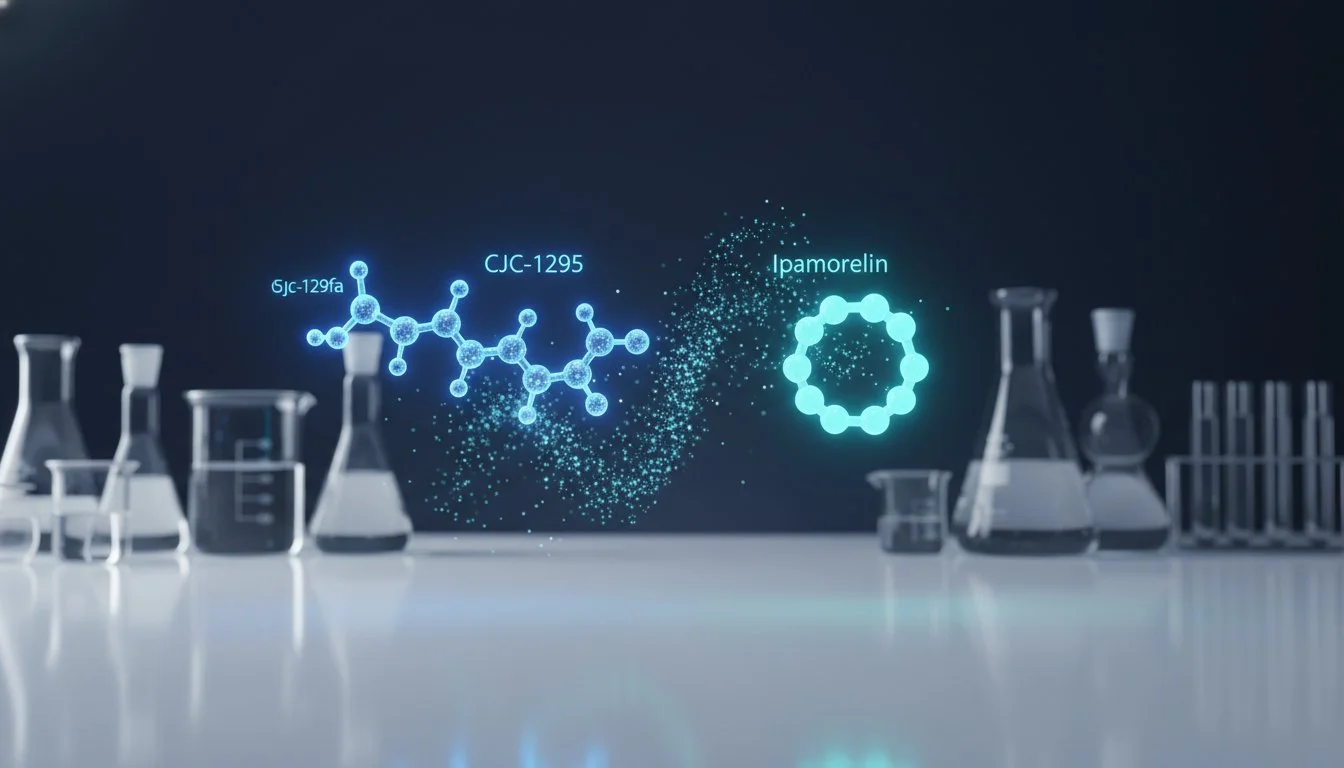
The assumption that you must choose a single growth hormone secretagogue for your laboratory protocols might actually be hindering your experimental outcomes. While many investigators frame the cjc-1295 vs ipamorelin for research debate as a binary competition, these peptides function as complementary tools that address distinct pulsatile requirements in growth hormone modulation. You’ve likely encountered the frustration of inconsistent purity levels and the technical confusion surrounding DAC versus non-DAC nomenclature. It’s a common hurdle that can compromise the integrity of longitudinal data and complicate the replication of results.
This analysis provides a definitive scientific comparison of CJC-1295 and Ipamorelin to equip your laboratory with the precise pharmacological data required for informed selection. We’ll examine the critical half-life differences and the physiological rationale for utilizing a 5mg/5mg blend versus individual peptides. Given the HHS Secretary’s February 2026 announcement and the upcoming July 23-24, 2026, PCAC review, understanding these distinctions is vital for maintaining compliant and rigorous research standards. You’ll gain a clear understanding of how to source 99% purity vials and calculate synergy in your experimental designs.
Key Takeaways
- Differentiate between GHRH analogs and selective ghrelin receptor agonists to optimize pituitary stimulation models within your laboratory environment.
- Analyze metabolic half-life variations to determine whether your specific study requires acute pulsatile release or sustained growth hormone elevation.
- Evaluate the technical data behind cjc-1295 vs ipamorelin for research to understand how the dual-signal hypothesis leads to significant GH pulse amplification.
- Establish rigorous procurement protocols that prioritize 99% purity and verified laboratory standards to maintain the integrity of your experimental results.
- Determine the logistical advantages of utilizing a standardized 5mg/5mg blend to ensure consistent synergy and simplify complex calculation requirements during administration.
Navigating Growth Hormone Secretagogues in Laboratory Research
Growth hormone secretagogues (GHS) represent a specialized class of synthetic compounds designed to mimic the action of endogenous ligands within the endocrine system. These peptides don’t replace growth hormone directly. Instead, they signal the anterior pituitary gland to release stored GH through specific receptor pathways. This mechanism makes them indispensable tools for investigating metabolic regulation, cellular regeneration, and the complex feedback loops of the hypothalamic-pituitary-somatotropic axis.
The transition from native GHRH sequences to advanced analogs like CJC-1295 involved precise molecular engineering. Specifically, the tetra-substitution of the first 29 amino acids of GHRH protects the peptide from rapid enzymatic degradation by dipeptidyl peptidase-4. This modification is a central point in the cjc-1295 vs ipamorelin for research discussion, as it fundamentally alters the pharmacokinetic profile of the molecule compared to native sequences. While early research focused on simple hormone replacement, modern studies utilize these synthetic mimetics to achieve more targeted, predictable endocrine responses.
Maintaining 99% purity is not a mere marketing claim; it’s a baseline requirement for scientific validity. Contaminants in lower-grade chemicals can induce off-target effects or inflammatory responses that skew metabolic data. For researchers, the integrity of the peptide sequence is the difference between repeatable results and failed experiments. These substances are categorized strictly as research chemicals and are not intended for human consumption or medical prescriptions.
The Role of Somatotrophs in GH Modulation
Somatotrophs in the anterior pituitary are the primary targets for GH modulation. GHS peptides interact with GHRH receptors or ghrelin receptors to trigger a secondary messenger cascade. This endogenous stimulation is often preferred in research models because it preserves the natural negative feedback loops of the body. Studying these pathways helps clarify how metabolic signaling influences cellular repair and lipid oxidation. It also provides a framework for understanding how different secretagogues can amplify or dampen the natural pulsatile release of growth hormone.
Regulatory Standards for Research Peptides
The “Research Use Only” (RUO) designation is a critical legal and operational boundary for laboratory supplies. Suppliers must provide rigorous documentation, including High-Performance Liquid Chromatography (HPLC) and Mass Spectrometry (MS) results, to verify sequence identity and purity levels. Nexa Peptide Store maintains an uncompromising stance on these protocols, providing research peptides that meet institutional standards for stability. This transparency ensures that laboratory investigators can focus on data collection without the variable of inconsistent reagent quality. Reliable sourcing is the foundation of any disciplined longitudinal study.
Mechanism of Action: GHRH Mimetics vs. Ghrelin Receptor Agonists
Understanding the functional divergence between these two compounds is essential for precise endocrine modeling. CJC-1295 acts as a synthetic GHRH analog. It targets the GHRH receptor (GHRHr) on the somatotroph cells of the anterior pituitary. Ipamorelin, conversely, is a selective growth hormone secretagogue that functions as a second-generation agonist of the ghrelin receptor (GHS-R1a). This dual-pathway approach defines the primary distinction in cjc-1295 vs ipamorelin for research: one amplifies the existing signal, while the other initiates a new secretory pulse.
CJC-1295: Sustained GHRH Receptor Activation
The molecular stability of CJC-1295 is derived from its unique tetra-substituted structure. By modifying the 2nd, 8th, 15th, and 27th amino acid residues, the peptide becomes resistant to rapid enzymatic degradation by dipeptidyl peptidase-4 (DPP-IV). This structural integrity allows for a significantly longer duration of action compared to native GHRH sequences. Researchers must distinguish between the version with Drug Affinity Complex (DAC) and the version without it. The DAC variant binds to serum albumin, extending the half-life to several days, whereas the non-DAC version (often referred to as Mod GRF 1-29) provides a more transient, acute signal. This choice fundamentally dictates whether a study observes sustained GH elevation or rhythmic pulsatility.
Ipamorelin: Selective Ghrelin Mimicry
Ipamorelin is frequently cited as the most selective GHS in its class. Unlike earlier compounds such as GHRP-2 or GHRP-6, Ipamorelin does not induce significant increases in cortisol, prolactin, or aldosterone. This high degree of specificity is vital for metabolic research where confounding variables from other hormonal axes must be eliminated. By selectively binding to the GHS-R1a receptor, Ipamorelin triggers an acute GH release pulse that mimics the natural physiological rhythm. Its pharmacological profile allows for detailed observation of GH-dependent signaling without the metabolic interference typically associated with non-selective ghrelin mimetics.
The intersection of these two mechanisms provides a unique opportunity for investigating endocrine synergy. While CJC-1295 ensures the pituitary somatotrophs are sensitized and ready to release, Ipamorelin provides the definitive trigger for the pulse itself. Laboratory investigators often find that utilizing a pre-calculated CJC-1295 + Ipamorelin 5mg/5mg Blend allows for more consistent pulse amplification than administering the peptides in isolation. This synergistic relationship is a cornerstone of modern GH modulation research, offering a level of control that single-pathway agonists cannot replicate.

Comparative Pharmacokinetics: CJC-1295 vs. Ipamorelin vs. Compound Tirzepatide
The temporal dynamics of growth hormone release are dictated by the pharmacokinetic profile of the chosen secretagogue. In any rigorous cjc-1295 vs ipamorelin for research analysis, the primary variable is the duration of receptor occupancy. Ipamorelin exhibits a relatively short half-life of approximately two hours, resulting in an acute secretory pulse that mimics the natural physiological rhythm. Conversely, CJC-1295 with DAC (Drug Affinity Complex) provides a sustained signal. According to a 2006 clinical study on CJC-1295, this compound can maintain elevated growth hormone and IGF-I levels for several days due to its ability to bind to serum albumin. This fundamental difference requires investigators to choose between a model of rhythmic pulsatility or one of continuous endocrine elevation.
Half-Life and Receptor Binding Affinity
Quantifying the duration of action is vital for experimental design. Ipamorelin provides rapid onset with a clear peak and decline, which is ideal for studies focusing on the immediate metabolic effects of GH pulses. CJC-1295 DAC creates what is often termed a “GH bleed,” where the basal level of growth hormone remains consistently high. While this sustained elevation is useful for longitudinal studies on tissue regeneration, it lacks the rhythmic nature of endogenous release. Reconstitution variables also play a significant role in peptide longevity. Once a lyophilized vial is reconstituted with bacteriostatic water, the molecular stability begins to degrade. Maintaining a controlled environment at 2°C to 8°C is essential to prevent premature peptide cleavage and ensure the integrity of the pharmacokinetic data.
Metabolic Research Intersections
Modern endocrine research frequently explores the intersection between GH secretagogues and incretin mimetics. While GHS compounds primarily drive lipolysis through growth hormone pathways, investigations into compound tirzepatide focus on dual GIP and GLP-1 receptor agonism to regulate glucose and lipid metabolism. These are distinct biological axes. However, the scientific community is increasingly interested in how GH modulation might complement the metabolic shifts induced by multi-receptor agonists. For example, the study of retatrutide peptide as a triple agonist (GIP/GLP-1/Glucagon) represents the current frontier of metabolic synergy. Understanding the pharmacokinetic differences between these classes is necessary for developing complex co-administration protocols. Stability is paramount; therefore, high-purity lyophilized vials must be stored in light-protected, temperature-controlled environments to maintain their chemical potency during long-term research projects.
Synergistic Protocols: The Rationale for CJC-1295 + Ipamorelin Blends
The dual-signal hypothesis posits that simultaneous activation of GHRH and GHS-R1a receptors results in a synergistic surge of endogenous growth hormone. While individual components provide measurable results, the technical nuances of cjc-1295 vs ipamorelin for research often lead investigators toward blended protocols. GHRH mimetics like CJC-1295 sensitize the somatotroph cells in the anterior pituitary. Ipamorelin then provides the definitive stimulus for the pulse. This interaction causes a quantitative amplification of GH release that significantly exceeds the additive sum of the individual peptides’ effects. By bypassing somatostatin inhibition more effectively, this combination allows for a more robust endocrine response in laboratory models.
Optimizing nitrogen balance and lean mass markers is a primary objective in secretagogue investigations. Research indicates that the combined signal of GHRH and ghrelin receptor agonists enhances protein synthesis and cellular repair mechanisms. For those developing specific laboratory workflows, our detailed guide on cjc 1295 ipamorelin research provides step-by-step guidance on establishing these synergistic protocols. These methods are designed to ensure that the pituitary response is both predictable and reproducible across different experimental cohorts.
Reconstitution and Handling of Lyophilized Blends
Proper handling of lyophilized blends is critical for maintaining molecular integrity. Investigators must use bacteriostatic water and avoid aggressive agitation during the dissolution process to prevent peptide shearing. Temperature control is equally vital; reconstituted vials must be kept between 2°C and 8°C to prevent rapid degradation. Precision is mandatory for valid data collection. Utilizing a peptide calculator ensures that concentration measurements remain accurate across different vial volumes, reducing the risk of dosing errors that could compromise the study.
Experimental Design for Synergistic Studies
Scientific rigor requires establishing clear baseline levels for GH and IGF-1 in control groups prior to the introduction of secretagogues. Monitoring for off-target effects, such as changes in insulin sensitivity or localized inflammation, is necessary for long-term research. While GH pulses are transient and difficult to capture, measuring IGF-1 levels provides a more stable metric for assessing the cumulative impact of endocrine modulation. Batch consistency remains a significant challenge for cross-institutional studies. Standardizing procurement from a single, verified source reduces variables and ensures that data remains comparable across different laboratory environments. To ensure your laboratory utilizes only the highest standard reagents, you can buy 99% purity CJC-1295 and Ipamorelin for your next study.
Procurement Standards for High-Purity Research Peptides
The integrity of endocrine data depends entirely on the chemical fidelity of the reagents used. In the context of cjc-1295 vs ipamorelin for research, even minor impurities can lead to significant baseline shifts in growth hormone assays. Selecting a supplier requires a rigorous assessment of their verification protocols and logistical reliability. Unverified research chemicals often contain truncated peptide sequences or residual solvents that introduce uncontrolled variables into laboratory environments. This risk is particularly high when sourcing from vendors that lack transparent third-party testing or established operational history. Reliable data requires reliable reagents.
Nexa Peptide Store addresses these concerns through an uncompromising commitment to 99%+ purity. Every batch undergoes exhaustive verification to ensure it meets the highest institutional standards for molecular accuracy. This level of precision is essential for long-term studies where batch-to-batch consistency determines the reliability of longitudinal results. Our logistical framework supports the specialized needs of institutional research departments, ensuring that temperature-sensitive peptides arrive with their molecular structure intact. We don’t just supply chemicals; we provide the foundation for scientific discovery.
Quality Control and Purity Verification
Interpreting High-Performance Liquid Chromatography (HPLC) and Mass Spectrometry (MS) reports is a fundamental skill for any laboratory investigator. These documents provide the quantitative proof of a peptide’s identity and purity level. Lyophilization, or freeze-drying, is the industry standard for stabilizing peptides during international transit. It removes moisture while preserving the secondary and tertiary structures of the molecule. This process is critical for maintaining the integrity of complex sequences, such as the tb-500 research peptide, which is sensitive to environmental fluctuations. Without these standards, the stability of the compound during shipping remains a significant vulnerability.
Secure Institutional Procurement
Independent laboratories and universities require streamlined procurement processes to maintain project timelines. We provide specialized support for these entities, including bulk purchase options for extensive research projects that require high-volume consistency. Selecting the right GHS for 2026 laboratory standards involves balancing pharmacological intent with procurement security. Whether your study focuses on the acute pulses of Ipamorelin or the sustained elevation provided by CJC-1295, the quality of the starting material is the most important factor. By prioritizing verified purity and professional logistics, researchers can ensure their findings contribute meaningful, reproducible data to the evolving field of peptide science.
Advancing Endocrine Research with Standardized Peptide Protocols
The choice between cjc-1295 vs ipamorelin for research depends on whether the study requires sustained GH elevation or rhythmic pulsatility. While CJC-1295 provides a stable GHRH signal, Ipamorelin offers a highly selective trigger for acute secretory pulses. Combining these mechanisms through a standardized 5mg/5mg blend allows investigators to achieve superior pulse amplification through the dual-signal hypothesis. This synergistic approach provides a more robust endocrine response than administering either peptide in isolation.
Nexa Peptide Store supports these rigorous laboratory standards by maintaining a catalog of over 100+ research peptides. Every vial is third-party lab tested for sequence verification. This ensures that your data remains accurate and reproducible. We provide an uncompromising 99%+ purity guarantee to protect the integrity of your longitudinal results. It’s essential to utilize reagents that meet these strict verification criteria to avoid off-target experimental variables and ensure the validity of your metabolic signaling data.
Browse Our High-Purity CJC-1295 + Ipamorelin Research Blends to secure the reagents needed for your next experimental phase. Precision in procurement is the first step toward breakthrough findings in metabolic signaling.
Frequently Asked Questions
What is the primary difference between CJC-1295 and Ipamorelin in a research setting?
The primary difference in cjc-1295 vs ipamorelin for research lies in their receptor targets and pharmacokinetic durations. CJC-1295 acts as a GHRH analog that sensitizes the pituitary somatotrophs for sustained release, while Ipamorelin is a selective ghrelin receptor agonist that triggers acute pulses of growth hormone. This functional divergence allows researchers to choose between a model of continuous endocrine elevation or one that mimics natural rhythmic pulsatility.
Is CJC-1295 with DAC or without DAC better for GH research?
The selection depends entirely on the specific endocrine model being studied within the laboratory. CJC-1295 with DAC is utilized for investigating the effects of sustained, dose-dependent increases in GH and IGF-I over several days due to its albumin-binding properties. Research focusing on mimicking natural physiological pulses should utilize the version without DAC, which provides a much shorter half-life and more transient receptor activation.
Can Ipamorelin and CJC-1295 be reconstituted in the same vial?
Yes, these peptides are frequently reconstituted together, and investigators often utilize a standardized CJC-1295 + Ipamorelin 5mg/5mg Blend to ensure consistent synergy. Combining them in a single vial simplifies the laboratory protocol and ensures that both the GHRH and ghrelin receptor pathways are stimulated simultaneously. This co-administration is necessary to maximize the secretory response through the dual-signal hypothesis discussed in earlier sections.
How does compound tirzepatide research compare to GH secretagogue research?
Compound tirzepatide research focuses on dual GIP and GLP-1 receptor agonism to regulate glucose metabolism and lipid profiles, whereas GH secretagogue research targets the pituitary axis for cellular repair and lipolysis. While both classes are vital for understanding metabolic health, they operate through distinct biological pathways. Secretagogues primarily influence the somatotropic axis, while tirzepatide targets the incretin system to manage insulin sensitivity and energy balance.
What is the recommended storage temperature for lyophilized peptides?
Lyophilized research peptides should be stored at -20°C for long-term stability or 2°C to 8°C for immediate laboratory use. Once the researcher adds bacteriostatic water, the vials must be maintained in a refrigerated environment between 2°C and 8°C to prevent molecular degradation. Maintaining these strict temperature controls is essential to ensure the integrity of the peptide sequence and the reliability of the resulting experimental data.
Why is 99% purity essential for peptide research?
Achieving 99% purity is essential to eliminate confounding variables that could compromise the integrity of scientific data. Impurities in lower-grade chemicals may induce inflammatory responses or off-target effects, making it difficult to attribute observed results solely to the peptide being studied. High-purity reagents ensure that the cjc-1295 vs ipamorelin for research findings remain accurate, reproducible, and suitable for peer-reviewed publication.
Does Ipamorelin affect other pituitary hormones like cortisol or prolactin?
Ipamorelin is uniquely selective and does not significantly impact cortisol, prolactin, or aldosterone levels during growth hormone stimulation. This high degree of specificity distinguishes it from earlier generation secretagogues, such as GHRP-2 or GHRP-6, which often cause unintended elevations in these other hormonal axes. For researchers, this selectivity is vital for isolating the effects of growth hormone without introducing confounding endocrine variables.
How do I calculate the correct concentration for my research protocol?
Concentration is calculated by dividing the total mass of the peptide in milligrams by the volume of bacteriostatic water used for reconstitution. For example, adding 2ml of diluent to a 5mg vial results in a concentration of 2.5mg per ml. Utilizing a precision peptide calculator is the most reliable method to ensure accuracy across various vial sizes and complex research protocols, reducing the risk of calculation errors during laboratory preparation.
