
- Your cart is empty
- Continue shopping
-
Dr Hoffman
- Posted on
- Categories:Uncategorized
- 0 comments
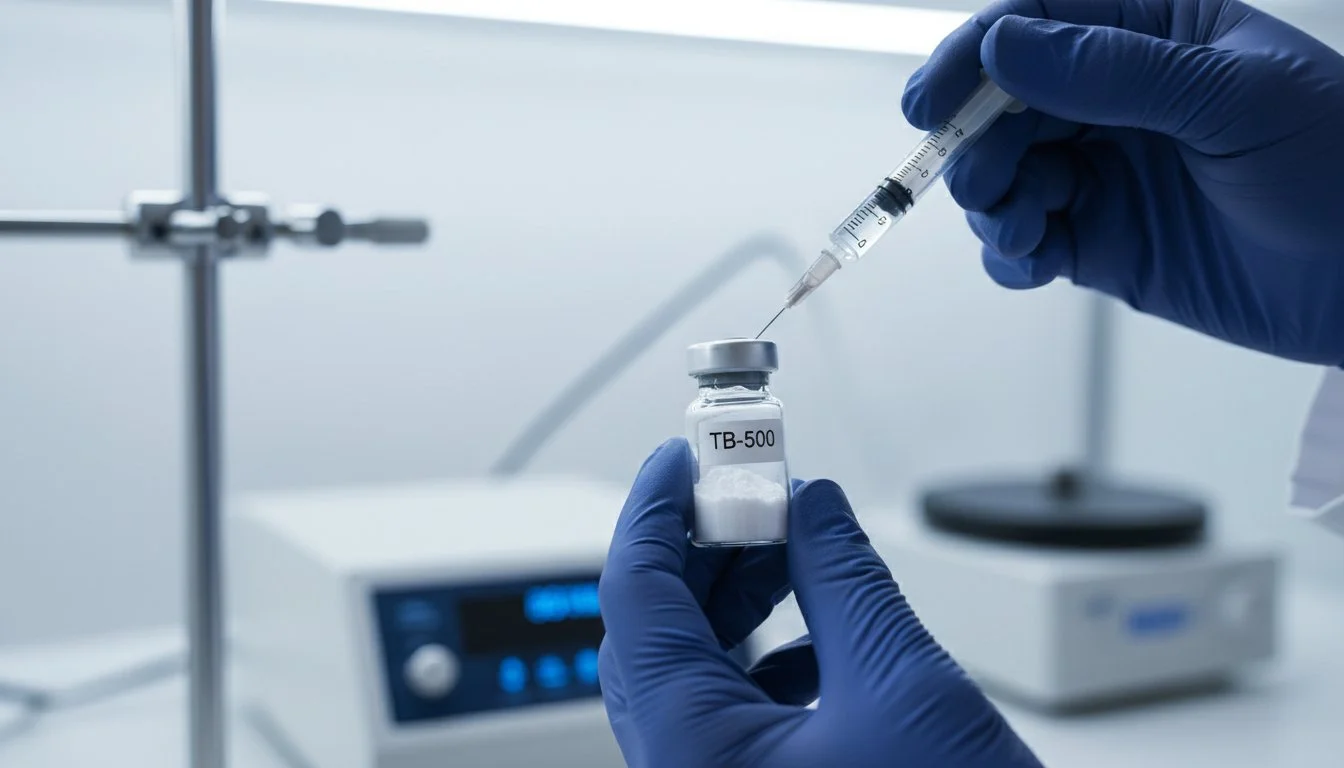
The validity of your cellular repair data hinges entirely on the intersection of pharmaceutical-grade purity and rigorous handling protocols. Researchers often struggle with the inherent fragility of the tb-500 research peptide, fearing that a single error in reconstitution or a minor fluctuation in storage temperature could compromise months of laboratory work. You understand that in a high-stakes environment, uncertainty regarding chemical integrity is an unacceptable variable that can lead to skewed results and wasted resources. Nexa Peptide Store has observed these challenges within the scientific community since 2012, emphasizing that data integrity starts with the reliability of the compound.
This guide provides the technical clarity you need to master the scientific protocols for TB-500 research, moving beyond guesswork to achieve standardized, reproducible results. We will examine the biological mechanisms of this synthetic analog, establish precise laboratory reconstitution ratios using bacteriostatic water, and outline the storage requirements necessary to maintain a purity of 99% or higher. With the FDA scheduled to formally review this peptide in July 2026, maintaining disciplined laboratory standards is more critical than ever. It’s essential to remember that these materials are strictly intended for research use only and must be handled according to established safety benchmarks.
Key Takeaways
- Understand the biological function of the Ac-LKKTETQ sequence and its role in facilitating angiogenesis and cellular migration within controlled research models.
- Implement precise laboratory protocols for the tb-500 research peptide, focusing on correct reconstitution with bacteriostatic water and handling techniques that prevent peptide denaturation.
- Analyze the comparative synergy between TB-500’s systemic actin-sequestering mechanisms and the localized nitric oxide modulation offered by BPC-157.
- Establish rigorous sourcing standards by prioritizing batch-specific Certificates of Analysis and industry-standard purity levels exceeding 99% to ensure data integrity.
What is TB-500 Research Peptide?
TB-500 is a synthetic version of the active region of Thymosin Beta-4 (Tβ4), a naturally occurring protein found in high concentrations within mammalian tissues. While Tβ4 consists of 43 amino acids, the TB-500 (synthetic peptide) focuses exclusively on the short 17-23 sequence. This specific sequence, identified as Ac-LKKTETQ, is the domain responsible for the protein’s regenerative properties, particularly its interaction with actin. Researchers utilize this fragment because it isolates the biological activity of interest without the structural complexity of the full-length protein. This isolation allows for more precise data collection regarding cellular movement and repair mechanisms.
Achieving standardized data in cellular repair models requires the use of pharma grade peptides. Impurities within a research chemical can introduce confounding variables that compromise the integrity of the entire study. Since 2012, Nexa Peptide Store has maintained that a purity level of >99% is the only acceptable standard for institutional research. Lower grade chemicals often contain residual solvents or truncated peptide sequences that can lead to inconsistent cellular responses or unintended toxicity in a laboratory setting. Precision is non-negotiable in this field.
The Molecular Structure of the 17-23 Fragment
The 17-23 fragment is characterized by its exceptionally low molecular weight. This compact structure is a primary reason why the tb-500 research peptide exhibits such high tissue penetration capabilities in experimental models. The acetylated N-terminus provides a critical layer of protection against enzymatic degradation, allowing the peptide to remain stable for longer durations during laboratory observation. TB-500 is a 7-amino acid peptide fragment essential for actin sequestering research. By isolating this segment, scientists can more accurately observe how the peptide influences cell migration and tissue remodeling without the interference of other Tβ4 domains.
Research Use Only: Legal and Scientific Boundaries
Strict adherence to safety protocols is mandatory when handling these compounds. The tb-500 research peptide is not for human or veterinary consumption; it’s produced exclusively for laboratory experimentation. Maintaining a lab-only environment is necessary for studying peptide interactions under controlled conditions where variables like pH and temperature are strictly monitored. As of 2026, compliance with international research chemical regulations has become increasingly stringent. Our commitment to these standards ensures that every vial dispatched from our facility meets the legal and scientific requirements necessary for university and private research applications.
The Biological Mechanism: How TB-500 Facilitates Cellular Repair
The biological efficacy of the tb-500 research peptide is centered on its unique ability to regulate actin, a structural protein essential for cell motility and structural integrity. Unlike other regenerative compounds that may only stimulate growth factors, TB-500 acts as a molecular chaperone. It coordinates the movement of cells to the site of an injury, which is a process fundamental to wound healing and tissue regeneration. Scientific observation confirms that this peptide facilitates repair by upregulating matrix metalloproteinases (MMPs). These enzymes are responsible for remodeling the extracellular matrix, creating the necessary pathways for new cells to populate damaged areas and ensuring the structural reconstruction of the tissue model.
Beyond structural remodeling, the peptide influences the inflammatory environment during the repair phase. It modulates specific inflammation markers to ensure that the transition from acute injury to cellular resolution proceeds without the interference of chronic inflammatory signaling. This balanced approach is critical in laboratory settings where researchers study the delicate timing of tissue recovery. For institutions focused on high-precision data, utilizing certified TB-500 research vials ensures that these biological interactions are not skewed by chemical impurities or degradation.
Actin Polymerization and Cell Migration
The primary mechanism of the tb-500 research peptide involves sequestering globular actin (G-actin) in a precise 1:1 ratio. By binding to G-actin, the peptide prevents its premature polymerization into filamentous actin (F-actin). This sequestering maintains a pool of available actin monomers that the cell uses to extend its membrane and move toward chemical signals at the injury site. In dermal repair studies, this increased motility is a key metric for evaluating the speed of wound closure. Maintaining a purity level of >99% is essential for observing these subtle actin-binding changes; even minor contaminants can inhibit the peptide’s ability to interact with the G-actin molecule effectively.
Angiogenesis and Vascular Growth Factors
Angiogenesis, the formation of new blood vessels, is another pillar of TB-500 research. The peptide stimulates the expression of vascular endothelial growth factor (VEGF), a signal protein that promotes the growth of new capillaries from pre-existing vessels. Researchers typically measure this growth in vitro by observing endothelial cell tube formation. This vascular expansion is vital for delivering oxygen and nutrients to regenerating tissues in ischemic models. For a broader understanding of how different peptides influence vascularity, researchers often consult the BPC-157 scientific review to compare TB-500’s systemic actin-driven mechanism with the localized nitric oxide modulation of other compounds. These comparative studies help define the optimal conditions for multi-peptide research protocols.

Laboratory Protocol: Reconstitution and Storage of TB-500
Maintaining the molecular integrity of the tb-500 research peptide during the transition from lyophilized powder to aqueous solution is a critical phase of laboratory preparation. Precision in this stage ensures that the biological mechanisms described in previous sections remain intact for cellular observation. Since 2012, Nexa Peptide Store has advocated for standardized preparation protocols to eliminate handling errors that could lead to peptide denaturation or compromised data. Every step must be executed with a focus on stability and sterility.
The following protocol establishes a baseline for professional laboratory handling:
- Step 1: Calculating Solvent Volume. Determine the required concentration for your specific study. Utilizing Bacteriostatic Water 30ml is the industry standard for preventing microbial growth during the research period.
- Step 2: Gentle Reconstitution. Aim the solvent stream at the glass wall of the vial rather than directly onto the lyophilized cake. Use a gentle “swirling” technique to encourage dissolution. Never shake the vial, as the resulting shear force can break the delicate peptide bonds.
- Step 3: Verifying Dissolution. Inspect the vial against a light source to ensure the solution is completely clear. Any cloudiness or visible particulates indicate incomplete dissolution or potential contamination.
- Step 4: Laboratory Traceability. Immediately label the vial with the date of reconstitution, the concentration, and the researcher’s initials. Log this data into your laboratory management system to maintain strict traceability standards.
Reconstitution Best Practices
Mechanical stress is a primary cause of peptide degradation in a lab setting. Direct high-pressure streams of liquid can damage the delicate peptide bonds, rendering the sample useless for precise actin-sequestering studies. For a standard 5mg vial, adding 5mL of solvent creates a 1mg/mL concentration, which is a common baseline for most in vitro models. TB-500 should be reconstituted only when ready for immediate research use to prevent degradation. This disciplined approach ensures that the tb-500 research peptide retains its full biological potency during the observation window.
Temperature Control and Storage Longevity
Thermal stability is the cornerstone of peptide integrity. While lyophilized vials should be stored in a temperature-controlled environment at -20°C for long-term stability, reconstituted peptides require immediate refrigeration at 2-8°C. The shelf-life of TB-500 in a liquid state is significantly limited compared to its powdered form. Researchers must avoid repeated freeze-thaw cycles; these fluctuations cause ice crystal formation that can physically shear the peptide molecules. Adhering to these storage benchmarks is essential for maintaining the purity and reliability that Nexa Peptide Store has provided to the scientific community for over 14 years.
TB-500 vs. BPC-157: Comparative Framework for Researchers
The distinction between the tb-500 research peptide and BPC-157 begins at their biological origins. TB-500 is a synthetic analog of a protein primarily produced in the thymus gland. In contrast, BPC-157 is derived from a protective protein found in gastric juice. These different points of origin lead to divergent research applications. While both compounds are studied for their regenerative properties, they influence cellular repair through entirely different signaling pathways. Researchers must understand these nuances to select the appropriate model for their specific experimental goals.
Synergy between these two peptides is a frequent subject of musculoskeletal research. TB-500 facilitates repair through actin-sequestering and cell migration. BPC-157 operates largely through the modulation of nitric oxide and the upregulation of growth factor receptors. Studying these mechanisms simultaneously allows scientists to observe how cell motility and vascular signaling interact to accelerate tissue resolution. Using premium-grade TB-500 5mg alongside BPC-157 5mg ensures that the data reflects true biological synergy rather than interference from manufacturing byproducts.
Systemic Migration vs. Localized Repair
TB-500 is characterized by its systemic reach. Its low molecular weight allows the peptide to move through the circulatory system and penetrate various tissue types effectively. This makes it an ideal candidate for research involving widespread cellular migration. BPC-157 is typically studied for its localized effects, particularly within the gastrointestinal tract and the connective tissue axis of tendons and ligaments. Choosing between them depends on whether the study aims to observe systemic regenerative signals or site-specific healing mechanisms. Nexa Peptide Store has supplied both compounds for these specialized studies since 2012, maintaining the rigorous standards required for institutional data integrity.
Researching Peptide Synergies
Designing a study that incorporates both peptides requires a disciplined approach to laboratory variables. Combined protocols often focus on how the actin-driven motility of TB-500 complements the angiogenic signaling of BPC-157. This dual-peptide approach can provide a more comprehensive view of the repair phase in complex injury models. High purity is essential in these multi-peptide environments. A purity level of >99% reduces background noise and prevents unintended chemical cross-reactivity. It’s essential to maintain strict “Research Use Only” boundaries during these trials to stay compliant with international laboratory regulations. Results depend on the precision of your source and the discipline of your protocol.
Shop premium-grade TB-500 5mg to ensure your comparative research meets the highest industry standards for purity and reliability.
Sourcing Pharma Grade Peptides for Institutional Research
The transition from a theoretical research model to empirical data collection requires a foundation of chemical absolute. In 2026, the scientific community has moved toward a zero-tolerance policy regarding unverified research chemicals. Sourcing the tb-500 research peptide from a supplier that provides batch-specific Certificates of Analysis (COAs) is no longer a luxury; it’s a requirement for publication in high-impact journals. A COA serves as the primary document of trust, detailing the exact profile of the compound and ensuring that the substance being studied is precisely what is claimed on the vial. Without this documentation, the validity of cellular migration data remains questionable.
A purity level of >99% is the recognized industry standard for scientific reliability. When a peptide falls below this threshold, the remaining 1% often consists of residual solvents, salts, or truncated peptide sequences. These contaminants can trigger unintended cellular responses, effectively compromising the data and making it impossible to isolate the effects of the 17-23 fragment. Institutional researchers must prioritize suppliers that utilize advanced lyophilization techniques to preserve the structural integrity of the peptide during long-term storage and transit. Precision in manufacturing is the only way to ensure that the actin-sequestering mechanisms observed in the lab are accurate.
Verifying Purity via HPLC and MS
High-Performance Liquid Chromatography (HPLC) is the gold standard for ensuring peptide identity and purity. This process separates the components of a sample, allowing researchers to see a quantitative breakdown of the peptide’s composition. While HPLC confirms the amount of the target peptide, Mass Spectrometry (MS) is utilized to identify the molecular mass of the compound. This dual-verification method ensures that no heavy metals or synthesis byproducts have compromised the sample. You shouldn’t settle for less than 99% purity, as even a minor deviation can lead to inconsistent results in sensitive actin-binding assays. Reliable data depends on this level of analytical transparency. Researchers evaluating tb-500 peptide for sale should consult a comprehensive procurement guide to validate supplier analytical standards and navigate the current regulatory landscape before committing to a source.
Nexa Peptide Store: 14 Years of Pioneering Excellence
Establishing a relationship with a dependable supplier requires evaluating their history within the evolving regulatory landscape. Nexa Peptide Store has been an industry leader since our establishment in 2012, representing 14 years of pioneering excellence in the research chemical market. We prioritize logistical precision, utilizing temperature-controlled dispatch and advanced vacuum-sealing to protect molecular integrity during worldwide shipping. Our peptides are strictly manufactured in state-of-the-art laboratories to meet the rigorous needs of universities and global research institutes. Procure high-purity TB-500 for your next research project. We remain committed to a firm “Research Use Only” policy, ensuring that every dispatched batch meets the highest benchmarks for purity and institutional trust.
Advancing Cellular Repair Research through Technical Precision
The success of your experimental findings depends on the intersection of pharmaceutical-grade chemical integrity and disciplined laboratory handling. By mastering the actin-sequestering mechanisms of the 17-23 fragment and adhering to rigorous reconstitution protocols, you ensure that your data reflects true biological activity rather than environmental interference. The tb-500 research peptide remains a cornerstone of cellular repair studies, yet its fragility requires a commitment to standardized storage and preparation to prevent molecular denaturation. Precision is paramount.
Since 2012, Nexa Peptide Store has supported institutional objectives by providing the highest-quality materials available in the research market. We’ve focused on 14 years of pioneering excellence, ensuring every batch meets a purity of >99% as verified by HPLC and Mass Spectrometry. Our worldwide temperature-controlled shipping protects your compounds from the moment they leave our state-of-the-art laboratory until they reach your facility. Shop High-Purity TB-500 Research Peptides and secure the reliability your research demands. Your next scientific breakthrough begins with standardized excellence and uncompromising quality control.
Frequently Asked Questions
What is the primary difference between TB-500 and Thymosin Beta-4?
TB-500 is a specialized synthetic analog representing the 17-23 region of the Thymosin Beta-4 protein. While the full-length protein contains 43 amino acids, TB-500 isolates the specific Ac-LKKTETQ sequence responsible for actin-sequestering and cellular repair. This fragment is preferred in laboratory settings due to its lower molecular weight and enhanced tissue penetration capabilities during experimental observation.
How should TB-500 be stored to prevent degradation in a lab setting?
Lyophilized powder must be stored at -20°C for long-term stability and to prevent chemical degradation. Once the peptide is reconstituted, it requires immediate refrigeration at 2-8°C. It’s critical to avoid repeated freeze-thaw cycles; the resulting mechanical stress can physically shear the peptide bonds and compromise your study’s integrity. Proper temperature control is the foundation of reliable data.
What is the recommended reconstitution liquid for TB-500 research?
Bacteriostatic water is the standard reconstitution liquid for most laboratory protocols. It contains 0.9% benzyl alcohol, which inhibits microbial growth and extends the stability of the solution during the research window. Sterile saline is an alternative for short-term studies, though it doesn’t provide the same antimicrobial protection as bacteriostatic water. Always aim the liquid at the vial wall to prevent denaturation.
Can TB-500 and BPC-157 be studied in the same research model?
Researchers frequently study these compounds within the same model to observe their synergistic effects. TB-500 facilitates cellular migration through actin-binding, while BPC-157 modulates nitric oxide and growth factor receptors. Combining these peptides allows for a more comprehensive analysis of tissue resolution in complex musculoskeletal injury models. This dual-peptide approach often yields deeper insights into regenerative signaling pathways.
Why is >99% purity essential for TB-500 research peptides?
A purity level of >99% is essential to ensure that the results of your study are attributed solely to the tb-500 research peptide. Impurities such as residual solvents or truncated sequences can trigger unintended cellular responses, effectively invalidating the research data. Nexa Peptide Store utilizes HPLC and Mass Spectrometry to verify this standard for every batch dispatched to our institutional partners.
How long does a reconstituted TB-500 vial remain stable?
Reconstituted TB-500 typically remains stable for 7 to 14 days when stored correctly at 2-8°C. After this period, the peptide begins to undergo gradual degradation, which can lead to inconsistent experimental results. For maximum data integrity, researchers should only reconstitute the specific amount of peptide required for immediate laboratory use. Stability is a primary concern for maintaining a 99% purity standard.
Is TB-500 available for institutional bulk purchase?
Nexa Peptide Store provides institutional bulk procurement options for universities and private research organizations. Since 2012, we’ve specialized in supplying high-purity peptides to facilitate large-scale scientific studies across the globe. Our logistics team ensures that bulk orders are dispatched with the same temperature-controlled precision as individual vials to maintain molecular integrity. Contact our procurement department for specific institutional requirements.
What are the legal requirements for purchasing research peptides in 2026?
Purchasing the tb-500 research peptide in 2026 requires strict adherence to “Research Use Only” regulations. These compounds are intended exclusively for laboratory experimentation and are strictly prohibited for human or veterinary consumption. Buyers must ensure they are compliant with international research chemical laws and maintain proper laboratory environments for storage and handling. Every transaction is governed by these rigorous safety and legal boundaries.
