
- Your cart is empty
- Continue shopping
-
Dr Hoffman
- Posted on
- Categories:Uncategorized
- 0 comments
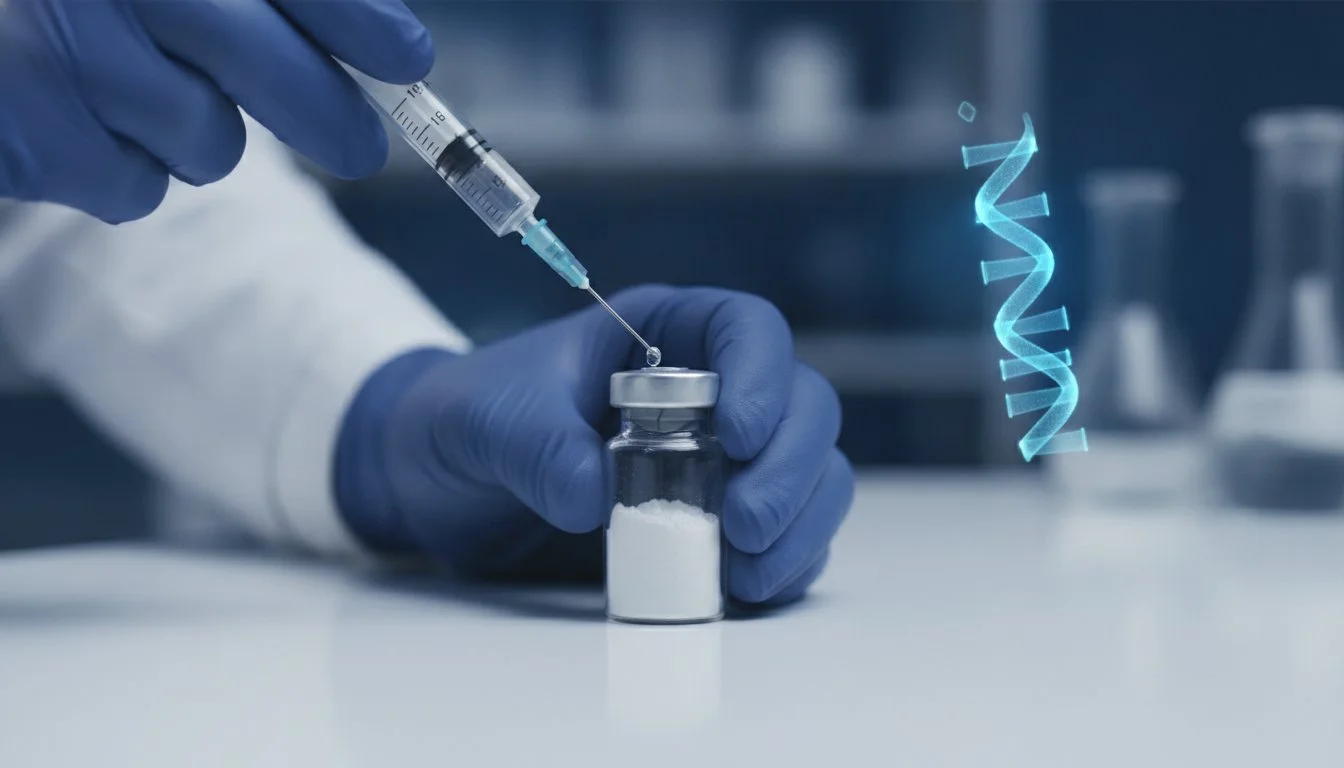
The moment a solvent touches a lyophilized powder, a countdown begins that can jeopardize months of laboratory preparation. While the global peptide market was valued at $4.1 billion in 2025, the internal reality for many researchers remains a struggle with the volatile nature of peptide stability after mixing. You likely recognize that even slight deviations in handling can lead to degraded samples and inconsistent data. It’s a common pain point that creates unnecessary uncertainty in the lab, especially when high-purity compounds are at stake.
This guide serves as a technical foundation to help you master the variables of post-reconstitution integrity. By understanding specific degradation pathways, you’ll be able to ensure experimental accuracy and prevent the premature loss of bioactive materials. We’ll provide a clear timeline for stability across various storage temperatures and examine how different solvents, such as bacteriostatic water with its 0.9% benzyl alcohol preservative, influence the life of your vial. From thermal control to mechanical care, this overview outlines the best practices required to maintain rigorous laboratory standards.
Key Takeaways
- Define the technical threshold of stability as the critical window where a peptide maintains at least 98% of its primary structure after transitioning to an aqueous state.
- Identify the specific environmental catalysts, such as kinetic energy from heat and UV radiation, that compromise peptide stability after mixing.
- Distinguish between Bacteriostatic Water for extended multi-dose research and Sterile Water for Injection intended for immediate, single-use applications.
- Adopt high-discipline handling protocols, including the “no-shake” rule and amber-vial storage, to mitigate the risk of irreversible mechanical denaturation.
- Establish a foundation for experimental accuracy by utilizing 99%+ purity samples that feature a resilient, professionally lyophilized lattice.
The Chemistry of Reconstitution: What Happens Post-Mixing?
The process of reconstitution initiates a significant chemical transition that alters the physical state of a compound. In its lyophilized form, a peptide exists within a stable crystalline lattice, protected from many of the environmental factors that catalyze degradation. Once a solvent is introduced, this lattice dissolves into a reactive aqueous state. Laboratory standards define peptide stability after mixing as the specific duration during which the primary structure of the compound remains ≥98% intact. This threshold is critical for laboratory research because even a 2% variance in purity can alter experimental outcomes or introduce unwanted artifacts into the final data set.
Researchers must recognize the “Stability Window,” which represents the timeframe where the peptide maintains its intended chemical identity and molecular integrity. Liquid peptides are exponentially more vulnerable to stressors than their powdered counterparts. While a lyophilized vial might remain stable for years at -20°C, the reconstituted version may only last days or weeks depending on the specific peptide structure and chemistry. Because the transition to a liquid environment increases kinetic energy, it creates a reactive medium that accelerates the loss of peptide stability after mixing.
Hydrolysis: The Primary Threat to Liquid Peptides
Hydrolysis is the chemical breakdown of a compound due to reaction with water. In an aqueous solution, water molecules actively interact with the amide bonds that hold amino acids together. This interaction often leads to peptide bond cleavage, resulting in shorter, inactive fragments that can interfere with assay results. The susceptibility of a chain to this process often depends on its sequence length and the specific amino acids present. Longer sequences frequently possess more potential cleavage sites, making them inherently less stable over time. Managing the pH of the solvent is a primary method for mitigating these hydrolytic reactions during the stability window.
Bioactivity vs. Purity: Understanding the Difference
It’s possible for a sample to maintain high chemical purity while losing its biological function. Purity refers to the presence of the correct primary sequence, whereas bioactivity depends on the precise secondary and tertiary folding of the chain. If a peptide denatures, its physical shape changes. This prevents it from binding to the intended receptors in a laboratory model. Researchers should monitor vials for visual indicators of degradation. Cloudiness, precipitation, or the formation of visible particulates often suggest that the peptide has aggregated or fallen out of solution. These physical changes serve as an absolute signal that the sample’s integrity has been compromised.
Critical Factors Influencing Post-Mix Degradation
Maintaining peptide stability after mixing requires strict adherence to environmental controls. Once the lyophilized lattice is breached by a solvent, the resulting solution becomes highly susceptible to thermal, photolytic, and chemical stressors. Kinetic energy plays a decisive role here. As temperatures rise, the rate of molecular collisions increases, which directly accelerates the chemical reactions responsible for structural breakdown. For this reason, laboratory professionals must prioritize immediate environmental stabilization following reconstitution to prevent data skewing.
Temperature Thresholds for Reconstituted Vials
The “Room Temperature Rule” serves as a critical boundary for laboratory efficiency. Most reconstituted peptides shouldn’t remain at ambient temperatures for longer than 24 to 48 hours without risking significant degradation. To extend the viability of a sample, refrigeration at 2°C to 8°C is the industry standard. This controlled environment typically preserves peptide stability after mixing for a duration of 4 to 8 weeks. While freezing might seem like a solution for long-term storage, repeated freeze-thaw cycles often cause irreversible damage. The mechanical stress of ice crystal formation can shear delicate peptide chains, rendering the sample useless for precise research applications.
Beyond thermal dynamics, light exposure and oxidation present ongoing risks. UV radiation can catalyze the breakdown of specific amino acid residues, while the air trapped in a vial’s headspace may initiate oxidation pathways. Adhering to established Peptide dissolution and storage protocols is essential to mitigate these effects. This includes minimizing the volume of air introduced during the mixing process and using light-shielding storage containers to protect photolytically sensitive residues.
Vulnerable Amino Acid Residues
A peptide’s primary sequence determines its inherent vulnerability. Compounds containing Methionine, Cysteine, or Tryptophan are particularly prone to rapid oxidation when in liquid form. Additionally, residues like Asparagine and Glutamine are susceptible to deamidation, a process that can alter the peptide’s charge and bioactivity. This is especially relevant for complex research blends. For instance, maintaining the integrity of a CJC-1295 + Ipamorelin 5mg/5mg Blend requires meticulous care because the interaction between different peptide chains can complicate the stability profile. For researchers prioritizing data accuracy, sourcing high-purity compounds from a disciplined supplier ensures that the starting material is optimized for post-mix resilience. You can find high-quality research components at the Nexa Peptide Store to ensure baseline purity.
Finally, the pH of the solvent acts as a catalyst for bond cleavage. If the environment is too acidic or too basic, the amide bonds within the peptide structure may undergo accelerated hydrolysis. Utilizing a buffered solvent or high-quality bacteriostatic water helps maintain a stable pH, effectively bridging the gap between immediate use and long-term storage viability.

Solvent Selection: Bacteriostatic Water vs. Sterile Water
Solvent selection is the most critical decision a researcher makes after choosing a high-purity peptide. The choice between Bacteriostatic Water and Sterile Water for Injection (SWFI) dictates the viable lifespan of the sample. Bacteriostatic Water contains 0.9% benzyl alcohol, which serves as a potent preservative to inhibit microbial proliferation in multi-dose vials. In contrast, SWFI is a solute-free preparation intended for immediate, single-dose applications. Once the seal of an SWFI vial is breached, the lack of an antimicrobial agent means the solution must be utilized or discarded within a very narrow window to prevent contamination. This makes Bacteriostatic Water the standard for most long-term laboratory studies.
The preservative in Bacteriostatic Water significantly extends peptide stability after mixing, allowing for refrigerated storage over several weeks. However, researchers must verify compatibility before beginning the process. Some specific sequences may require specialized buffers or a small concentration of acetic acid to achieve complete dissolution without compromising structural integrity. If the pH shifts too far from the peptide’s isoelectric point, the compound may precipitate. This renders the concentration inaccurate for laboratory models and complicates the peptide stability after mixing by introducing physical instability into the solution.
Comparing Stability Windows by Solvent Type
Stability timelines vary drastically between peptide classes. GLP-1 agonists like Semaglutide 5mg demonstrate relatively high resilience when reconstituted with Bacteriostatic Water, often maintaining integrity for up to 56 days under refrigeration. Conversely, BPC-157 5mg is known for its robust molecular structure compared to more fragile growth hormone secretagogues. While BPC-157 remains stable for extended periods, growth hormone-related peptides are prone to rapid degradation if the solvent-to-solute ratio is not precisely managed. Higher concentrations often lead to faster aggregation, making volume selection a key variable in maintaining the intended bioactivity of the sample.
Precision Reconstitution Protocols
Precision is the hallmark of reliable laboratory research. To ensure exact dosing, utilize a peptide calculator to determine the correct volume of solvent required for your specific vial. When introducing the liquid, aim the needle at the side of the glass vial. Let the solvent trickle down the wall to avoid foaming, which can cause mechanical denaturation. You must also manage vacuum pressure. If the vial has a strong internal vacuum, the solvent may rush in too quickly, aerosolizing the lyophilized powder and leading to sample loss. Slowly venting the vial with a clean needle before or during reconstitution prevents this risk and preserves the intended concentration. Following these disciplined steps ensures that the resulting solution remains a viable tool for data collection.
Optimized Handling and Storage Protocols
Handling protocols represent the secondary line of defense in preserving peptide stability after mixing. While solvent choice and temperature controls are foundational, physical management determines the final outcome of the research. Mechanical stress is frequently the most overlooked factor in laboratory environments. The “No-Shake” Rule is absolute when dealing with reconstituted compounds. Peptides are held together by relatively weak bonds that define their complex tertiary structure. Vigorous shaking introduces air bubbles and high shear forces that cause irreversible denaturation. Once a peptide denatures, it loses its conformational shape, which renders it biologically inactive for research purposes.
Light exposure presents another significant risk to structural integrity. UV radiation provides sufficient energy to break covalent bonds within the peptide chain, specifically targeting aromatic amino acid residues. Utilizing amber vials or storing reconstituted samples in dark, opaque boxes is a necessary precaution to mitigate this risk. Additionally, researchers should minimize the air-to-liquid ratio within the vial. Excessive headspace increases the surface area exposed to oxygen, which accelerates oxidative pathways. Finally, meticulous documentation is mandatory. Every vial must be labeled with the exact date and time of reconstitution to ensure the stability window is never exceeded and peptide stability after mixing is tracked with precision.
The Proper Reconstitution Technique
Achieving a homogenous solution without compromising structural integrity requires a specific technical approach. Angle the syringe needle so the solvent flows slowly down the interior wall of the glass vial. This prevents the liquid from crashing directly onto the lyophilized powder, which can cause foaming and mechanical stress. Use the “Gentle Swirl” method by rotating the vial between your palms or moving it in a slow, circular motion on a flat surface. Avoid any vertical movement or aggressive agitation. After the powder appears dissolved, allow a wait time of 5 to 10 minutes for the peptide to fully hydrate before withdrawing any solution for analysis.
Long-Term Storage Logistics
Organize laboratory refrigeration to maintain a constant thermal environment. Vials should be placed in the center or rear of the unit rather than the door, where temperature fluctuations are most frequent due to the seal being breached during daily operations. If a large volume is reconstituted, consider aliquoting the solution into smaller, single-use vials. This prevents the entire batch from being subjected to multiple temperature shifts and potential contamination. For detailed safety parameters on specific compounds, refer to the safety guidelines in our BPC-157 research guide.
Maintaining the highest standards of laboratory precision requires more than just technique; it requires premium-grade starting materials. You can secure high-purity compounds for your next project at the Nexa Peptide Store.
Nexa Peptide Store: Integrity from Synthesis to Reconstitution
The foundation of reliable data starts long before the solvent meets the vial. At Nexa Peptide Store, we recognize that 99%+ purity isn’t just a technical metric; it’s the primary determinant of peptide stability after mixing. When a compound contains even trace impurities from the synthesis process, these contaminants often act as catalysts that accelerate oxidative and hydrolytic degradation. By ensuring a near-absolute purity level, we provide researchers with a more resilient starting material that maintains its structural integrity throughout the critical stability window. This discipline in manufacturing reduces the risk of experimental failure due to premature sample breakdown.
Professional lyophilization is equally vital to long-term viability. This process creates a sophisticated crystalline lattice that protects the peptide from thermal energy during transit and storage. A poorly lyophilized sample may contain residual moisture, which initiates degradation before the researcher even opens the vial. Our commitment to rigorous third-party testing ensures that every batch meets these exacting standards. This provides the consistency required for multi-phase laboratory investigations where variables must be tightly controlled. Verified peptides ensure that the results collected on day one are comparable to those collected on day thirty.
Starting with High-Purity Lyophilized Vials
Low-grade peptides often harbor residual solvents or truncated sequences that compromise experimental outcomes. These impurities significantly reduce peptide stability after mixing, leading to unpredictable bioactivity and inconsistent concentrations. The Nexa advantage lies in our transparent supply chain. We provide research peptides accompanied by verified Certificates of Analysis (COAs) to confirm both identity and purity. To further preserve these standards, we maintain a strict cold chain during global shipping. This ensures that the environmental controls discussed in previous sections are respected from the moment of synthesis until the product reaches your facility.
Professional Support for Your Research
Complex laboratory investigations often require more than just high-quality chemicals; they require depth of data. We provide comprehensive technical information for advanced compounds, such as Retatrutide, to assist in protocol development and stability management. For academic institutions and large-scale organizations, we offer dedicated wholesale support to facilitate high-volume procurement without sacrificing our uncompromising quality control protocols. This institutional reliability positions Nexa as a peer to the scientific community, valuing precision and results above all else.
Explore our full range of 99%+ purity research peptides to secure the integrity of your next laboratory study.
Advancing Laboratory Precision Through Rigorous Standards
Mastering the variables of post-reconstitution integrity is essential for any researcher committed to data accuracy. As established, the transition from a stable lyophilized lattice to a reactive solution necessitates strict environmental controls. By prioritizing thermal regulation, light shielding, and the no-shake protocol, you can effectively manage peptide stability after mixing and prevent the premature degradation of critical bioactive samples. These disciplined handling techniques ensure that the primary structure of your research material remains intact throughout the duration of your study.
Reliable results begin with high-purity starting materials. Nexa Peptide Store offers over 100 high-purity peptides in stock, each third-party lab tested to ensure 99%+ purity. We facilitate global international shipping for research institutions to maintain the integrity of our compounds from synthesis to arrival. By combining premium chemicals with the storage protocols outlined in this reference, you establish a foundation for consistent, reproducible data in every research cycle.
Shop Laboratory-Grade Research Peptides with 99%+ Purity to elevate the standards of your next institutional investigation.
Frequently Asked Questions
How long does BPC-157 stay stable after being mixed with bacteriostatic water?
BPC-157 typically maintains structural integrity for up to 8 weeks when reconstituted with bacteriostatic water and stored at temperatures between 2°C and 8°C. While BPC-157 is known for its relative resilience compared to more delicate growth hormone secretagogues, researchers should still monitor for degradation after the two-month mark. Proper refrigeration is the primary factor in extending the life of the vial beyond the initial 48-hour room temperature threshold.
Can I freeze a peptide once it has already been reconstituted?
Freezing a reconstituted peptide is generally discouraged due to the mechanical stress caused by ice crystal formation. These crystals can shear the delicate peptide bonds, leading to irreversible denaturation and a loss of bioactivity. If long-term storage is required, it’s more effective to keep the peptide in its lyophilized powder form at -20°C until the moment of reconstitution is necessary for your laboratory research.
What are the visual signs that a peptide has degraded after mixing?
The most common visual indicators of degradation include cloudiness, precipitation, or the formation of visible particulates within the solution. A high-purity peptide should remain clear and colorless after reconstitution. If the solution becomes turbid or shows sediment, it’s an absolute signal that the compound has aggregated or undergone significant chemical breakdown. Such changes compromise the accuracy of your laboratory data and indicate a failure in peptide stability after mixing.
Is it safe to use sterile water instead of bacteriostatic water for long-term storage?
Sterile water is not suitable for long-term storage because it lacks an antimicrobial preservative like benzyl alcohol. Without a bacteriostatic agent, the solution is highly susceptible to microbial proliferation once the vial seal is breached. Sterile water for injection is intended for immediate, single-use applications. For studies requiring multiple withdrawals over several weeks, bacteriostatic water is the mandatory industry standard to ensure the sample remains uncontaminated.
How does shaking a reconstituted vial affect the peptide’s stability?
Shaking a reconstituted vial causes mechanical denaturation by introducing high shear forces and air bubbles into the solution. These forces disrupt the weak non-covalent bonds that maintain the peptide’s specific three-dimensional shape. Once this tertiary structure is lost, the peptide is rendered biologically inactive. Researchers must use a gentle swirling motion to achieve dissolution, as aggressive agitation is one of the most frequent causes of premature sample failure.
Does the concentration of the peptide in the solution affect how fast it degrades?
Higher concentrations of a peptide in solution can accelerate the rate of degradation through increased molecular aggregation. When more peptide molecules are present in a limited volume of solvent, the probability of intermolecular collisions and subsequent bonding increases. This can lead to the formation of precipitates or inactive dimers. Precision in determining the solvent-to-solute ratio is vital to balancing experimental needs with long-term peptide stability after mixing.
What is the ideal temperature for storing reconstituted Tirzepatide?
Reconstituted Tirzepatide should be stored in a controlled refrigerated environment between 2°C and 8°C. Maintaining this temperature range is critical for preserving the integrity of the peptide’s complex structure over a multi-week research period. Vials should be placed toward the back of the refrigerator to avoid the temperature fluctuations that occur near the door. Protecting the sample from thermal stress is the most effective way to ensure consistent bioactivity.
Can light exposure really damage a mixed peptide in a few hours?
Light exposure, particularly UV radiation, can cause significant structural damage to a mixed peptide within a few hours. UV rays provide the energy required to break covalent bonds in sensitive amino acid residues like tryptophan or methionine. This photolytic degradation can occur rapidly if vials are left on a laboratory bench under fluorescent lighting or in direct sunlight. Utilizing amber vials or opaque storage containers is a standard protocol to prevent this rapid chemical breakdown.
