
- Your cart is empty
- Continue shopping
-
Dr Hoffman
- Posted on
- Categories:Uncategorized
- 0 comments
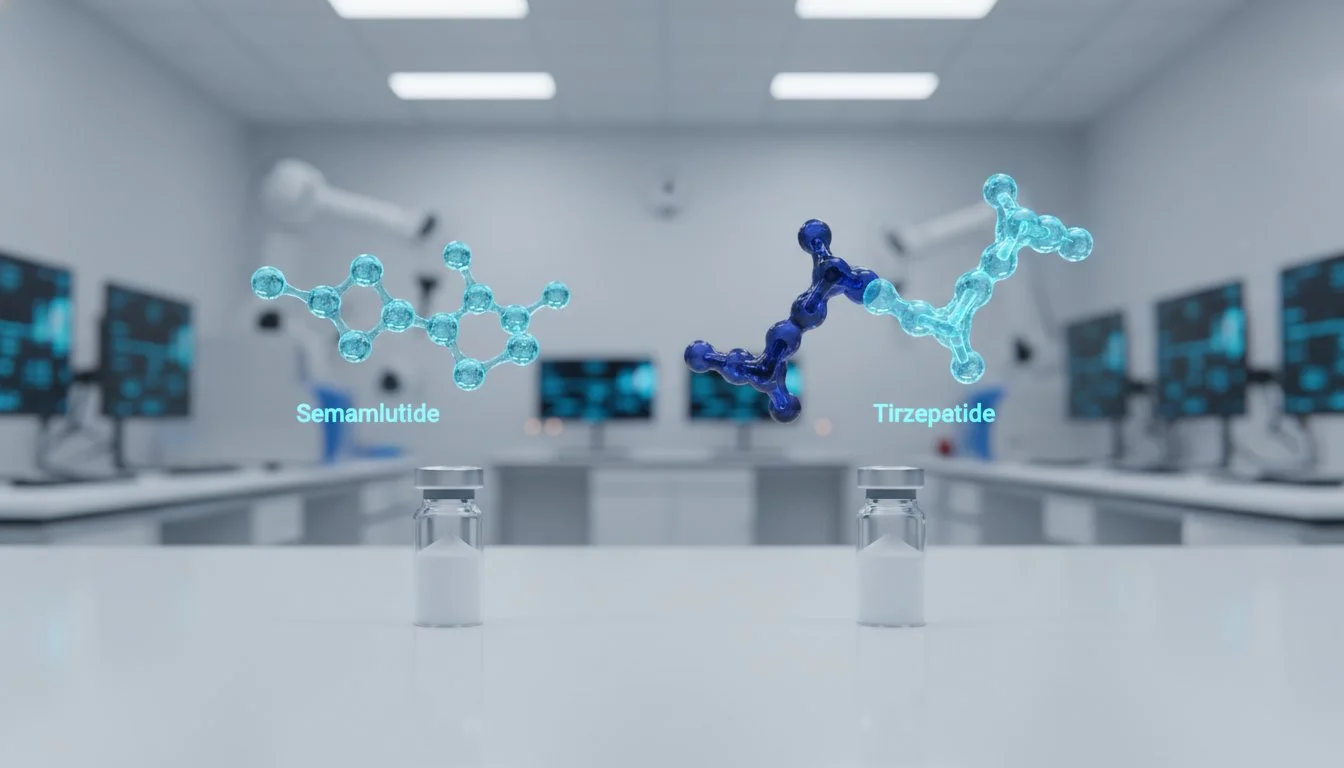
While many laboratories view Semaglutide as the definitive standard for metabolic research, data from the May 2025 SURMOUNT-5 trial reveals that Tirzepatide offers a superior efficacy profile with a 20.2% mean weight reduction compared to 13.7% for its single-agonist counterpart. Deciding between Tirzepatide vs Semaglutide for research requires a precise understanding of how dual GIP and GLP-1 agonism creates a synergistic metabolic response that a single-receptor agonist cannot replicate. You’re likely aware that clinical brand data often obscures the technical utility of raw peptides in a laboratory setting; this ambiguity makes it difficult to establish rigorous protocols for molecular studies.
We’ll provide a technical comparison of these peptides to help you select the optimal compound for your specific metabolic models. This FAQ covers the fundamental mechanism divergence between single and dual agonists and provides a data-backed rationale for peptide selection. You’ll also find standardized protocols for handling and reconstitution to ensure your research maintains the highest integrity. We conclude with an analysis of the 2026 regulatory environment to ensure your sourcing of high-purity lyophilized vials remains compliant with current laboratory standards.
Key Takeaways
- Differentiate between selective GLP-1 receptor agonism and dual GIP/GLP-1 “twincretin” activation to determine the most effective biological pathway for your metabolic study.
- Analyze the latest 2025-2026 head-to-head data regarding Tirzepatide vs Semaglutide for research to establish precise benchmarks for weight reduction and glycemic control models.
- Implement rigorous laboratory protocols for the reconstitution and storage of lyophilized peptides to maintain molecular stability and ensure the reproducibility of your experimental data.
- Identify the essential criteria for sourcing high-purity research materials from established chemical suppliers while strictly adhering to institutional and legal compliance for laboratory-use-only substances.
Molecular Divergence: GLP-1 vs. GIP/GLP-1 Dual Agonism in Research
The primary distinction between Tirzepatide vs Semaglutide for research lies in their molecular architecture and receptor affinity profiles. Semaglutide is a highly selective Glucagon-Like Peptide-1 (GLP-1) receptor agonist. It’s engineered to mimic the native GLP-1 hormone while resisting dipeptidyl peptidase-4 (DPP-4) degradation. In contrast, Tirzepatide functions as a “twincretin,” a synthetic 39-amino acid peptide that acts as a dual agonist at both GLP-1 and Glucose-dependent Insulinotropic Polypeptide (GIP) receptors. This dual-pathway approach represents a significant departure from traditional incretin research, as it attempts to harness the synergistic effects of two distinct metabolic hormones.
The Single Agonist Mechanism of Semaglutide
Semaglutide’s research utility is centered on its potent binding to the GLP-1 receptor (GLP-1R). This interaction stimulates glucose-dependent insulin secretion and inhibits glucagon release in various metabolic models. Researchers frequently utilize this peptide to study the “ileal brake” effect, where GLP-1 activation slows gastric emptying and modulates central appetite signals in the hypothalamus. Unlike the complex tirzepatide mechanism of action, which targets multiple pathways, Semaglutide provides a clean, single-receptor model for isolating GLP-1 mediated effects on beta-cell function and cardiovascular biomarkers. Its extended half-life, achieved through a C18 fatty diacid addition at position 26, makes it an ideal benchmark for long-term glycemic control studies.
The Dual Agonist Synergy of Tirzepatide
Tirzepatide introduces a more complex signaling environment by incorporating GIP receptor (GIPR) activation into the research protocol. While GIP was historically viewed as a simple insulinotropic hormone, modern research suggests it plays a critical role in lipid metabolism and energy balance. Tirzepatide’s mechanism of action is characterized by biased agonism; it possesses a higher affinity for the GIP receptor than for the GLP-1 receptor. This bias is intentional. GIPR activation in the central nervous system and adipose tissue is theorized to enhance the metabolic efficacy of GLP-1, potentially mitigating the nausea often associated with high-dose GLP-1R signaling. For investigators analyzing Tirzepatide vs Semaglutide for research, the dual agonist’s ability to modulate systemic inflammation and adipose tissue sensitivity provides a broader scope for investigating multi-organ metabolic responses. The inclusion of GIP signaling allows for a more comprehensive analysis of nutrient-stimulated hormone responses compared to single-agonist models.
Comparative Research Efficacy: Analyzing Head-to-Head Data for 2026
The landscape of metabolic study has shifted significantly following the publication of long-term head-to-head clinical trial data. When evaluating Tirzepatide vs Semaglutide for research, the primary differentiator is the magnitude of weight reduction and glycemic control achieved within controlled laboratory models. As of May 2025, the SURMOUNT-5 trial established that Tirzepatide yields a mean weight reduction of 20.2% over 72 weeks, substantially outperforming the 13.7% observed in Semaglutide cohorts. This 6.5 percentage point delta in efficacy highlights the potentiation effect of GIP receptor activation when paired with a GLP-1 backbone. Data from 2026 suggests these differences are consistent across various physiological models.
Primary Metabolic Research Outcomes
In obesity models, 19.7% of subjects utilizing Tirzepatide reached a 30% reduction in body weight, a threshold achieved by only 6.9% of those in Semaglutide groups. Beyond mass reduction, improvements in insulin sensitivity are markedly more pronounced with the dual-agonist. Tirzepatide protocols (15mg) consistently demonstrate an average body-weight reduction of 20-22.5%, whereas Semaglutide (2.4mg) typically plateaus at 15-17%. According to 2025 NEJM data, Tirzepatide demonstrates a statistically significant 32% efficacy gap in total body mass reduction compared to Semaglutide over a 72-week duration; to explore how these findings are integrated into comprehensive fat loss protocols, you can check out PeptivaFit.
Secondary Biomarker Observations
Longitudinal data from 2025 and 2026 emphasize the renal and cardiovascular protective markers associated with these peptides. The SURMOUNT-MMO trial (2025) indicated that Tirzepatide led to a 20% reduction in Major Adverse Cardiovascular Events (MACE) in high-risk subjects. For researchers focusing on lipid modulation, both compounds effectively lower LDL and triglycerides, though Tirzepatide shows superior results in increasing HDL levels. Those investigating non-alcoholic fatty liver disease (NAFLD) should consult the research tirzepatide guide for specific benchmarks regarding hepatic fat fraction reduction.
Dose-dependent responses remain a critical area of inquiry when analyzing Tirzepatide vs Semaglutide for research. While 5mg and 10mg protocols provide stable glycemic control, the 15mg Tirzepatide concentration is necessary to observe the maximal metabolic impact. The approval of Wegovy HD (7.2mg) in March 2026 provides a new high-dose benchmark for GLP-1 isolated studies, allowing for more aggressive single-agonist modeling. For laboratories requiring high-purity materials to replicate these findings, sourcing research-grade peptides ensures precise dosing and stability throughout the study duration. This precision is vital for maintaining the integrity of longitudinal metabolic data.

Selecting the Optimal Peptide for Specific Research Protocols
Selecting the correct compound depends on the specific metabolic endpoints of your study. When evaluating Tirzepatide vs Semaglutide for research, investigators must weigh the requirement for receptor selectivity against the demand for maximal metabolic impact. Semaglutide remains the preferred choice for protocols requiring a pure GLP-1 receptor agonist to establish clear baseline data without the confounding variables of GIP activation. Its extensive history in laboratory settings provides a wealth of historical benchmarks, making it a reliable and cost-effective option for large-cohort studies. Conversely, Tirzepatide is essential for researchers investigating the synergy of the incretin system or those attempting to model the physiological limits of weight reduction.
A recent comparative effectiveness study on tirzepatide vs semaglutide published in JAMA highlights that while both are effective, the dual agonist’s potency is significantly higher. This increased potency often justifies the higher procurement costs associated with complex dual-agonists. Researchers must determine if the objective is to isolate a single hormonal pathway or to observe systemic metabolic shifts. Study duration also dictates peptide choice; long-term administration models may benefit from the stable, established benchmarks of Semaglutide, whereas short-term, high-impact studies often utilize the dual-agonist to reach metabolic thresholds quickly.
Criteria for Metabolic Syndrome Modeling
Investigators studying advanced obesity or resistant type 2 diabetes models typically favor Tirzepatide due to its superior lipid modulation and glycemic control markers. Maintaining consistent baseline data across these complex models requires high-purity research peptides to avoid impurities that could skew metabolic readings. If the study focuses on gastric emptying or appetite suppression in isolation, the selective nature of Semaglutide provides a more controlled environment for mechanistic analysis. Choosing the wrong peptide can lead to data that fails to isolate the intended hormonal triggers.
Distinguishing Research Objectives: Potency vs. Selectivity
The presence of GIP agonism in Tirzepatide protocols can either enhance or confound specific data points. For instance, GIP’s role in adipose tissue metabolism is a distinct variable that may interfere with studies solely focused on GLP-1’s impact on the ileal brake. Independent investigators should use a selection framework that prioritizes selectivity for mechanistic studies and potency for outcome-based metabolic modeling. When comparing Tirzepatide vs Semaglutide for research, the cost-benefit analysis often favors the dual-agonist for studies where the primary goal is to observe the maximum possible reduction in metabolic biomarkers within a compressed timeframe.
To better understand how these metabolic shifts correlate with broader physiological outcomes, researchers can explore Weight Management Research via the technical reviews hosted by EuroLab Peptides.
Laboratory Handling: Stability, Reconstitution, and Storage
The physical integrity of Tirzepatide vs Semaglutide for research depends entirely on the stabilization process known as lyophilization. Freeze-drying removes moisture through sublimation, which effectively prevents the hydrolytic degradation common in liquid-state peptides. For long-term preservation, vials must be maintained at -20°C in a light-shielded environment to prevent thermal and oxidative stress. Once a vial is transitioned to 4°C for immediate use, it should ideally be utilized within a 30-day window to minimize the risk of aggregate formation. Researchers must strictly avoid multiple freeze-thaw cycles. These cycles induce significant mechanical stress on the peptide chain, leading to denaturation and a measurable loss of biological activity in metabolic models.
Degradation is often accelerated by environmental factors that are easily overlooked in a busy laboratory setting. UV light exposure can catalyze oxidative reactions at specific amino acid residues, potentially altering the binding affinity for GLP-1 or GIP receptors. For this reason, peptides should remain in opaque storage containers until the moment of reconstitution. Maintaining a 99%+ purity level is the absolute baseline for ensuring that observed metabolic shifts are attributable to the peptide itself rather than residual solvents or truncated sequences. High-purity standards are essential for the reproducibility of data across different laboratory cohorts.
Reconstitution Best Practices
Precision during reconstitution is vital for maintaining the intended concentration of the study compound. For most in vivo studies, researchers utilize bacteriostatic water to inhibit microbial growth and extend the stability of the reconstituted solution. The diluent should be introduced slowly, allowing it to run down the side of the glass vial to avoid agitation and subsequent foaming. For exact milligram-to-milliliter ratios, investigators should utilize a peptide calculator to ensure dosing accuracy. Typical concentrations for laboratory research range from 2mg/ml to 5mg/ml, depending on the specific requirements of the delivery system being modeled.
Purity and Quality Control Standards
Every batch of Tirzepatide vs Semaglutide for research must be accompanied by a Certificate of Analysis (CoA) that verifies the material’s identity and purity. High-Performance Liquid Chromatography (HPLC) is used to confirm the purity percentage, while Mass Spectrometry (MS) verifies the molecular weight and sequence integrity. These verification processes ensure that the compound matches the theoretical profile required for rigorous scientific inquiry. Achieving a minimum of 99% purity ensures that experimental results are reproducible and free from the interference of manufacturing byproducts or biological contaminants. To maintain these standards in your facility, ensure you have a reliable supply of Bacteriostatic Water 30ml for all reconstitution protocols.
Sourcing High-Purity Tirzepatide Peptide for Sale in 2026
The procurement of Tirzepatide vs Semaglutide for research in 2026 requires strict adherence to institutional and regulatory protocols. Following the FDA’s April 2026 proposal to exclude these peptides from the 503B bulk drug substances list, the distinction between clinical compounding and laboratory sourcing has become a primary concern for investigators. Researchers must source materials from dedicated chemical suppliers that provide lyophilized peptides specifically for in vitro and in vivo studies. Retail pharmacies and telehealth platforms provide FDA-approved branded products for human use, but these are often incompatible with precise laboratory reconstitution and dosing requirements. Accurate research demands raw, high-purity peptides that are free from the additives found in clinical pens.
Legal compliance is a foundational requirement for any reputable research institution. All materials procured for scientific inquiry must be labeled and treated as strictly for laboratory research use only. This designation ensures that the peptides are handled under chemical safety protocols rather than clinical pharmacy regulations. Institutions engaging in bulk procurement or international research must also consider the logistical challenges of cold-chain integrity. Maintaining the stability of these compounds during global transit is essential for preserving the molecular structure of Tirzepatide 10mg or Semaglutide 5mg vials, as any thermal excursion can compromise the integrity of the study’s results.
Identifying Verified Research Suppliers
A professional peptide supplier is defined by its commitment to transparency and its established history in the industry. Professional stores prioritize the distribution of high-purity compounds, ensuring they meet the >99% purity threshold required for valid scientific results. Avoiding gray-market sellers is vital to prevent the introduction of impurities that can skew metabolic data. Nexa Peptide Store has emerged as a preferred partner for global research organizations due to its disciplined approach to quality control and its longevity in the marketplace. Reliability in this sector is built on a history of consistent manufacturing standards and logistical precision.
The Critical Role of Third-Party Testing
Batch-to-batch variability is the primary enemy of experimental reproducibility. Independent third-party testing via HPLC and Mass Spectrometry provides the objective verification necessary to confirm that each vial contains the precise peptide sequence and concentration stated. Without this verification, researchers risk publishing data based on degraded or contaminated samples, which undermines the integrity of the entire study. Independent verification acts as a technical gatekeeper, ensuring that your comparative analysis of Tirzepatide vs Semaglutide for research remains grounded in accurate chemical profiles. Secure high-purity Tirzepatide for your next research project.
Advancing Metabolic Frontiers Through Precision Peptide Selection
The technical distinction between Tirzepatide vs Semaglutide for research represents a fundamental shift from isolating single hormonal pathways to exploring the synergistic potential of dual incretin activation. While Semaglutide provides an established benchmark for selective GLP-1 receptor modeling, the dual GIP/GLP-1 mechanism of Tirzepatide offers a more complex landscape for investigating systemic metabolic regulation. Success in these studies depends on the rigorous application of laboratory protocols and the use of materials that meet uncompromising purity standards. As the regulatory environment of 2026 continues to evolve, the necessity for high-purity, laboratory-grade compounds remains the primary factor in ensuring experimental reproducibility.
Maintaining valid data requires a supply chain that values transparency as much as technical precision. To support your next metabolic model, you can Order High-Purity Research Peptides from Nexa Peptide Store. Every compound is 99% Minimum Purity Guaranteed and undergoes rigorous Third-Party HPLC and MS Testing to verify sequence integrity. With Global Institutional Shipping Support, we provide the logistical reliability necessary for sophisticated academic and private research initiatives. We look forward to facilitating your next scientific breakthrough with the industry’s most dependable laboratory materials.
Frequently Asked Questions
What is the primary difference between Tirzepatide and Semaglutide in a lab setting?
The primary difference when evaluating Tirzepatide vs Semaglutide for research is the receptor target profile. Semaglutide acts exclusively as a selective GLP-1 receptor agonist, while Tirzepatide functions as a dual agonist for both GLP-1 and GIP receptors. This distinction is critical because GIP activation introduces independent signaling pathways in adipose tissue and the central nervous system that are absent in selective GLP-1 models, leading to different metabolic outcomes.
Is Tirzepatide more stable than Semaglutide during long-term storage?
Both peptides exhibit high stability when maintained in a lyophilized state, but Tirzepatide’s larger 39-amino acid structure requires vigilant temperature control. There’s no documented evidence that one is inherently more stable than the other under identical conditions. However, the dual-agonist’s GIP component is sensitive to thermal fluctuations, making consistent -20°C storage essential for preserving the molecular integrity of the sequence over extended research periods.
How should I reconstitute Tirzepatide for metabolic research?
Reconstitution of Tirzepatide should be performed using bacteriostatic water to ensure microbial inhibition and solution longevity. The diluent must be introduced slowly against the side of the glass vial to prevent the mechanical stress of direct impact or foaming, which can denature the peptide. Typical laboratory protocols aim for a concentration of 5mg/ml, allowing for precise volumetric measurements during administration in various experimental models.
Can I use Semaglutide and Tirzepatide interchangeably in the same study?
These compounds cannot be used interchangeably within the same study because they induce fundamentally different biological responses. While both peptides lower glucose and body mass, Tirzepatide’s dual agonism triggers GIP-mediated pathways that alter the metabolic data profile. Substituting one for the other would introduce significant confounding variables and invalidate the comparative integrity of your research findings regarding receptor-specific responses.
What purity level is required for research-grade Tirzepatide?
A minimum purity level of 99% is required for research-grade Tirzepatide to ensure the validity and reproducibility of scientific data. Lower purity levels often indicate the presence of truncated peptide sequences or residual reagents that can interfere with receptor binding assays. Using high-purity materials is the only way to guarantee that observed physiological changes are a direct result of the intended peptide rather than manufacturing impurities.
Where can I find third-party tested Tirzepatide peptide for sale?
Third-party tested peptides are available through established chemical suppliers like Nexa Peptide Store. Professional suppliers provide comprehensive documentation, including HPLC and Mass Spectrometry reports, for every batch to verify identity and purity. It’s essential to prioritize vendors with a documented history of serving research institutions to ensure that the materials meet the rigorous standards necessary for peer-reviewed studies and longitudinal data collection.
What are the storage requirements for lyophilized research peptides?
Lyophilized research peptides must be stored at -20°C for long-term preservation to prevent hydrolytic degradation and maintain their secondary structure. Vials should be kept in a desiccated environment and protected from light exposure, which can catalyze oxidative reactions. Once reconstituted, the solution should be refrigerated at 4°C and used within 30 days to ensure the peptide remains biologically active and free from aggregate formation.
Does Tirzepatide require a different peptide calculator than Semaglutide?
The mathematical formula for reconstitution remains constant, but you must adjust the input values in your peptide calculator to reflect the specific vial mass. Tirzepatide is frequently supplied in 10mg vials, whereas Semaglutide is often provided in 5mg increments. Accurate dosing requires the researcher to verify the total milligram content of the lyophilized powder before calculating the required volume of bacteriostatic water to reach the target concentration.
