- Your cart is empty
- Continue shopping
-
Dr Hoffman
- Posted on
- Categories:Uncategorized
- 0 comments
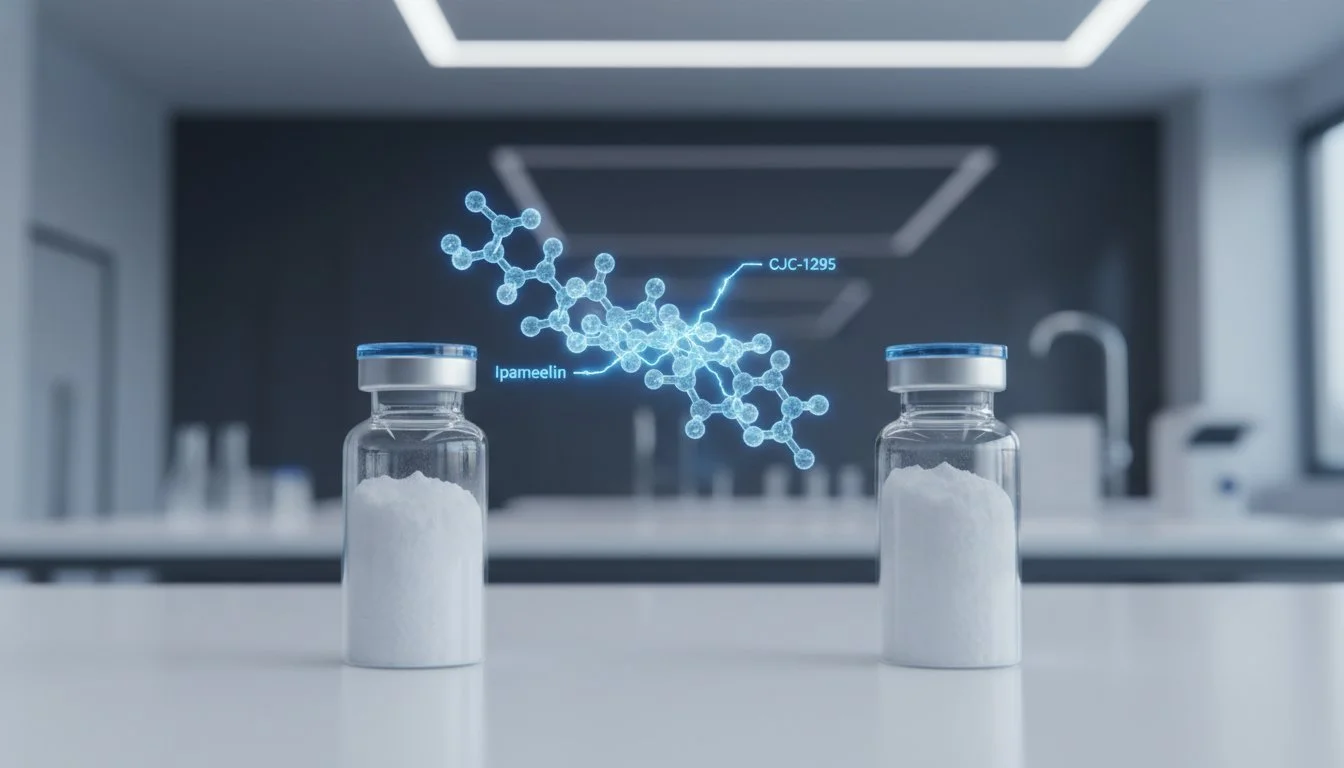
The global peptide therapeutics market is projected to reach a valuation of up to $146.34 billion by the end of 2026, yet many laboratories still encounter significant data variance due to improper handling of complex secretagogue combinations. You likely understand that achieving reproducible results in growth hormone studies requires more than just high-purity compounds. It demands a precise mastery of how different agonists interact within the pituitary and the specific environmental controls necessary to prevent degradation. This guide provides a definitive technical review of cjc 1295 ipamorelin research, focusing on the molecular synergy between GHRH and GHSR agonists alongside the rigorous protocols required for laboratory storage.
As the regulatory landscape shifts following the April 23, 2026, FDA reclassification of these compounds from the Category 2 restricted list, the need for standardized research data has never been more critical. We’ll examine the biochemical distinctions between DAC and No-DAC variants, establish precise reconstitution procedures, and verify the purity standards required for institutional experimentation. By the conclusion of this review, you’ll possess a comprehensive framework for managing these peptides with the clinical professionalism and technical precision your research demands.
Key Takeaways
- Analyze the dual-pathway mechanism where GHRH analogs prime pituitary response while GHSR agonists facilitate pulsatile secretion through the summation of signals.
- Master standardized protocols for the storage and reconstitution of lyophilized blends to preserve molecular stability and ensure experimental reproducibility in the laboratory.
- Explore the latest findings in cjc 1295 ipamorelin research concerning age-related somatopause and the modulation of the GH/IGF-1 axis in animal models.
- Establish rigorous quality control benchmarks by utilizing High-Performance Liquid Chromatography (HPLC) and Mass Spectrometry for absolute sequence and purity verification.
Molecular Fundamentals: Understanding CJC-1295 and Ipamorelin as Research Tools
Scientific investigation into the growth hormone axis often relies on the precise application of synthetic ligands to stimulate somatotroph cells. CJC-1295 and Ipamorelin represent two distinct classes of Growth hormone secretagogues that researchers utilize to model endocrine signaling. While both compounds aim to increase growth hormone (GH) output, they do so via non-overlapping molecular pathways. This distinction is foundational for any rigorous cjc 1295 ipamorelin research project, as it allows for the observation of synergistic rather than merely additive effects. By targeting different receptors, these peptides provide a more comprehensive view of pituitary capacity than single-agent studies.
CJC-1295: The GHRH Pathway
CJC-1295 is a tetrasubstituted 29-amino acid peptide that functions as a synthetic analog of endogenous Growth Hormone Releasing Hormone (GHRH). The native GHRH molecule contains 44 amino acids, but the first 29 residues are sufficient for full receptor activation. Standard GHRH 1-29 is highly susceptible to rapid enzymatic degradation by dipeptidyl peptidase-4. To resolve this, the version often referred to as “Modified GRF 1-29” incorporates four amino acid substitutions to enhance metabolic stability and affinity for GHRH receptors. CJC-1295 functions primarily as a GHRH receptor agonist that stimulates the anterior pituitary to synthesize and release endogenous growth hormone. Researchers must differentiate between the DAC (Drug Affinity Complex) version and the No-DAC version. The DAC variant includes a maleimidoproprionic acid group that binds to serum albumin, extending the half-life to several days; the No-DAC version mimics the natural GH pulse with a half-life of approximately 30 minutes. For a detailed pharmacological breakdown of how these half-life differences influence experimental design, the CJC-1295 vs. Ipamorelin for research comparative analysis provides critical data on selecting the appropriate variant for your laboratory protocols.
Ipamorelin: The Ghrelin Mimetic
Ipamorelin is a selective pentapeptide agonist of the growth hormone secretagogue receptor (GHSR-1a), which is the same receptor targeted by the hunger hormone ghrelin. It’s distinguished from other GHRPs, such as GHRP-2 or GHRP-6, by its high degree of selectivity. In various animal models, Ipamorelin doesn’t trigger significant elevations in cortisol, prolactin, or aldosterone, even at higher concentrations. This specificity makes it an ideal candidate for isolating the GHSR-1a pathway without the interference of secondary endocrine responses. Beyond its role in GH secretion, investigators often use Ipamorelin to study its prokinetic effects on gastric motility and its influence on metabolic regulation within the hypothalamus. Its primary value in cjc 1295 ipamorelin research lies in its ability to trigger a potent GH pulse that complements the priming effect of GHRH analogs, providing a dual-layered approach to pituitary stimulation.
The Mechanism of Synergy: Dual-Pathway Pituitary Stimulation
The efficacy of cjc 1295 ipamorelin research hinges on the neuroendocrine principle known as the summation of signals. In a laboratory setting, researchers observe that the simultaneous activation of the GHRH receptor and the Growth Hormone Secretagogue Receptor (GHSR-1a) produces a response far greater than the mathematical sum of their individual parts. This isn’t merely an additive effect; it’s a true biological synergy. While CJC-1295 binds to the GHRH receptor to stimulate the underlying production of growth hormone, Ipamorelin acts on the ghrelin receptor to initiate the actual secretory pulse. This dual-action approach overcomes the limitations of single-peptide models where the pituitary may become desensitized or limited by somatostatin inhibition.
Receptor cross-talk plays a vital role in this interaction. Data suggests that GHSR activation actually sensitizes the GHRH receptor. This means that when Ipamorelin is present, the pituitary somatotrophs become significantly more responsive to the signaling provided by CJC-1295. This interaction is a core focus of preclinical research on ipamorelin, where investigators analyze how these pathways converge to maximize endocrine output. By utilizing both pathways, researchers can achieve a robust GH response without the need for supra-physiological doses of a single agent. Laboratories evaluating whether to administer these peptides individually or as a combined formulation will find that the scientific comparison of CJC-1295 vs. Ipamorelin for research offers a definitive framework for understanding the physiological rationale behind a 5mg/5mg blend versus individual peptide protocols.
Mimicking Natural Pulsatile Release
Growth hormone isn’t released in a steady stream in mammalian models. It occurs in distinct, rhythmic pulses. Research models using this specific blend aim to replicate this endogenous pattern with high fidelity. CJC-1295 (specifically the No-DAC version) maintains the baseline trough levels and primes the pituitary cells for action. Ipamorelin then provides the high-amplitude peak or “pulse” that characterizes healthy endocrine function. This combination allows for higher GH amplitude and frequency than single-peptide protocols, providing a more accurate representation of natural physiological processes.
Impact on IGF-1 and Metabolic Markers
The primary downstream indicator of GH activity is the liver-mediated production of Insulin-like Growth Factor 1 (IGF-1). In metabolic studies, the synergy between these peptides is evaluated by measuring lipid oxidation rates and cellular metabolism markers. This dual-pathway approach offers a robust model for comparison with other metabolic research tools, such as the Retatrutide Peptide, which utilizes a triple-agonist mechanism to influence weight and glucose markers. For laboratories requiring high-purity compounds for these studies, sourcing a verified CJC-1295 + Ipamorelin blend ensures consistent data across longitudinal trials.

Current Trends in Peptide Research and Laboratory Applications
The landscape of cjc 1295 ipamorelin research has expanded significantly as the global peptide therapeutics market approaches a projected $146.34 billion valuation in 2026. Current investigations increasingly focus on age-related somatopause, a condition characterized by a progressive decline in pituitary GH output in animal models. Researchers utilize these secretagogues to examine how restored GH levels influence cellular senescence and the GH/IGF-1 axis. These studies are essential for understanding the biological markers of aging and the potential for modulating metabolic decline through targeted receptor activation. Much of this foundational data is supported by U.S. Government Research on CJC-1295, which details the compound’s capacity for sustained IGF-1 elevation and its interaction with endogenous signaling pathways.
Another emerging area of study involves the intersection of growth hormone secretion and circadian rhythm regulation. Because GH is naturally released in pulses throughout the sleep cycle, researchers are exploring how exogenous stimulation affects hypothalamic-pituitary-adrenal (HPA) axis stability. These trials often measure sleep-wake cycles and metabolic efficiency in murine models to determine if secretagogues can mitigate the physiological effects of circadian disruption. By examining these rhythmic patterns, laboratories aim to establish more precise dosing windows that align with natural biological clocks.
Beyond laboratory studies, understanding how natural supplements contribute to metabolic health is a key interest for many; you can learn more about Fantastic Nutrition to explore the differences between various fitness-focused nutritional tools.
Musculoskeletal and Tissue Regeneration Research
In tissue engineering studies, the combination of CJC-1295 and Ipamorelin is frequently evaluated for its impact on collagen synthesis and connective tissue repair. Investigators often pair these secretagogues with BPC-157 to analyze multi-peptide synergy in wound healing kinetics. These experiments track nitrogen retention and muscle fiber hypertrophy to quantify the anabolic response within a controlled laboratory environment. The objective is to establish clear data on how GH pulses accelerate the remodeling of damaged musculoskeletal structures without inducing systemic imbalances.
Safety Profiles and Side Effects in Research Models
Maintaining high standards of laboratory safety requires a thorough understanding of the physiological reactions observed during cjc 1295 ipamorelin research. Common observations in animal models include transient vasodilation and localized hypotension immediately following administration. Unlike earlier generations of GHRPs, Ipamorelin’s selective nature ensures that cortisol and prolactin levels remain within baseline parameters for most research subjects. This lack of cross-reactivity with the adrenal axis is a critical factor for researchers who require isolated data on GH signaling. The 2026 scientific consensus for high-purity research blends confirms that these compounds demonstrate a predictable and manageable safety profile when handled according to standardized laboratory protocols.
Standardized Laboratory Protocols: Handling, Storage, and Reconstitution
Precision in cjc 1295 ipamorelin research starts before the first assay. It begins with the preservation of peptide bond integrity. Lyophilization, or freeze-drying, is the industry standard for stabilizing these compounds. This process removes water through sublimation, which prevents the hydrolytic degradation that’d otherwise occur in aqueous environments. Without this level of environmental control, the primary sequence of the amino acids can fragment; this renders the research data invalid. Maintaining a sterile, moisture-free environment is the only way to ensure that the molecular structure remains intact from the point of manufacture to the moment of reconstitution.
When transitioning from a lyophilized state to a liquid solution, mechanical stress is a primary concern for investigators. The term “shearing” refers to the physical disruption of the peptide’s tertiary structure caused by high-pressure solvent injection or vigorous agitation. To avoid this, researchers should aim the solvent at the glass wall of the vial, allowing it to slowly saturate the powder. Gentle swirling is acceptable; aggressive shaking is not. Protecting the delicate bonds within the cjc 1295 ipamorelin research blend is vital for maintaining the potency of the secretagogues during the study’s duration. Laboratories managing multiple peptide compounds simultaneously will find that applying a consistent melanotan ii reconstitution protocol for research alongside these secretagogue procedures reinforces facility-wide standards for gentle integration and diluent selection.
Precision Reconstitution Techniques
Establishing exact molar concentrations is a requirement for longitudinal studies. Solvent volume must be calculated with precision to ensure that each aliquot contains the intended dosage. For researchers who need to verify their math, the Peptide Calculator Guide provides standardized formulas for these protocols. Utilizing 30ml Bacteriostatic Water is the preferred method for reconstitution because the included 0.9% benzyl alcohol inhibits microbial growth. This extends the stability of the solution for up to 28 days when refrigerated.
Stability and Environmental Controls
Environmental factors like temperature and light significantly impact the longevity of these compounds. Lyophilized powder remains stable for several years when stored at -20°C, though -80°C is optimal for long-term institutional archives. Once reconstituted, the solution is far more fragile. It must be kept between 2°C and 8°C and protected from UV exposure, as light can catalyze the oxidation of sensitive amino acid residues. These protocols mirror the strict TB-500 Research Peptide handling standards, ensuring that molecular integrity remains the priority. To maintain these standards in your own facility, you can source high-purity CJC-1295 + Ipamorelin blends manufactured to withstand logistical transport without compromising quality.
Sourcing and Quality Control: Why 99%+ Purity is the Research Standard
High-Performance Liquid Chromatography (HPLC) is the non-negotiable benchmark for assessing chemical purity in modern endocrinology studies. In cjc 1295 ipamorelin research, even a 1% variance in purity can introduce confounding variables that compromise the integrity of metabolic data. Mass Spectrometry (MS) serves as the necessary companion to HPLC; while HPLC confirms the concentration of the target molecule, MS verifies the exact amino acid sequence. This dual-verification process ensures that the synthesized peptide matches the theoretical molecular weight and structure. Without these rigorous checks, researchers risk introducing contaminants like Trifluoroacetic acid (TFA), a common byproduct of solid-phase peptide synthesis that can induce cellular toxicity in animal models if residual levels aren’t strictly controlled.
The danger of low-grade peptides extends beyond simple potency loss. Contaminants can trigger unexpected immune responses in research models, leading to data that suggests a safety issue where none exists in high-purity variants. Institutional-grade quality requires an uncompromising approach to purification that removes these synthesis byproducts. By 2026 standards, any compound utilized for pituitary somatotroph investigation must undergo multiple stages of filtration to ensure the resulting lyophilized powder is free from organic solvents and heavy metals. This concern over market-wide quality is underscored by recent FDA testing data, which found that up to 40% of online peptide products contained incorrect dosages or undeclared ingredients — a finding that reinforces why following a rigorous melanotan ii reconstitution protocol for research and sourcing from verified manufacturers are non-negotiable standards across all peptide classes.
Interpreting Certificates of Analysis (COA)
A Certificate of Analysis (COA) is more than a quality claim; it’s a documented record of a specific batch’s performance. When reviewing a COA, investigators must prioritize the purity percentage, the total peptide content, and the solubility profile. It’s essential to verify that the third-party laboratory conducting the analysis is independent and utilizes calibrated equipment. Batch consistency is particularly critical for longitudinal studies where data must be compared across several months or years. Discrepancies in synthesis lead to fluctuating GH responses, making it impossible to establish a reliable baseline for the GH/IGF-1 axis.
The Nexa Advantage for Scientific Investigators
Nexa Peptide Store maintains a disciplined stance on quality control, aligning its operations with the 2026 industry standards for institutional-grade cjc 1295 ipamorelin research materials. Our catalog features over 100 specialized compounds, including the precisely formulated CJC-1295 + Ipamorelin 5mg/5mg Blend. This pre-mixed ratio is designed to reduce reconstitution errors in the laboratory, ensuring that the GHRH and GHSR agonists are present in the exact concentrations required for synergistic study. Utilizing a blend from a single manufacturer ensures that both peptides share identical environmental histories and stability profiles.
We provide logistical support to global research institutions and academic laboratories, ensuring that temperature-sensitive shipments arrive with their molecular integrity intact. In strict adherence to regulatory boundaries, all products are designated for “Research Use Only” and are not intended for human consumption. Following the April 23, 2026, reclassification of these compounds, Nexa Peptide Store continues to serve as a reliable gatekeeper for the scientific community, prioritizing data accuracy and manufacturing transparency above all else.
Advancing Endocrine Science with Standardized Protocols
Mastering the dual-pathway stimulation of the pituitary is a requirement for modern neuroendocrine studies. By combining GHRH analogs with selective GHSR agonists, laboratories can simulate endogenous pulsatility with high fidelity. However, the validity of your data depends entirely on the chemical stability and molecular purity of the compounds used. As the regulatory landscape continues to evolve following the 2026 reclassifications, maintaining strict adherence to standardized handling and verification protocols is the only way to ensure reproducible results. High-purity sourcing isn’t just a preference; it’s a foundational requirement for any rigorous cjc 1295 ipamorelin research project.
Nexa Peptide Store provides the institutional-grade materials necessary for these complex investigations. We’ve served the global research community for over 10 years, offering secure international shipping to universities and laboratories. Explore our high-purity CJC-1295 + Ipamorelin 5mg/5mg Blend for your next investigation and benefit from 99%+ purity verified by HPLC/MS analysis. Precision in sourcing leads to precision in results. We look forward to supporting your scientific progress.
Frequently Asked Questions
What is the difference between CJC-1295 with DAC and without DAC?
The primary distinction lies in the half-life and the resulting secretion pattern. CJC-1295 with DAC includes a Drug Affinity Complex that binds to serum albumin, extending the half-life to several days and providing a sustained elevation of growth hormone. The version without DAC, often termed Mod GRF 1-29, lacks this complex and has a half-life of approximately 30 minutes. This allows researchers to more accurately replicate the natural, pulsatile rhythms of endogenous growth hormone release.
How should a CJC-1295 and Ipamorelin blend be stored for maximum stability?
Lyophilized powder should be stored in a temperature-controlled environment between -20°C and -80°C for long-term preservation. Once the compound is reconstituted, the solution must be kept under refrigeration at 2°C to 8°C and protected from light exposure to prevent oxidative degradation. These environmental controls are essential for maintaining molecular integrity during the duration of your cjc 1295 ipamorelin research project.
What is the recommended reconstitution solvent for these peptides?
Bacteriostatic Water is the industry standard solvent for reconstituting peptide blends in a laboratory setting. The inclusion of 0.9% benzyl alcohol serves as a necessary preservative that inhibits microbial growth. This allows the reconstituted solution to remain stable for up to 28 days when refrigerated. Using plain sterile water is generally discouraged for multi-dose vials as it lacks the antimicrobial properties required for extended study periods.
Can CJC-1295 and Ipamorelin be researched alongside BPC-157?
Yes, these secretagogues are frequently investigated in conjunction with BPC-157 to study multi-peptide synergy in tissue repair and musculoskeletal models. Researchers analyze how the systemic increase in GH and IGF-1 from the secretagogues complements the localized angiogenic and cytoprotective effects of the BPC-157 peptide. This combined approach is a prominent trend in 2026 regenerative medicine trials focusing on wound healing kinetics and collagen synthesis.
What are the common biomarkers monitored in GH secretagogue research?
Investigators primarily monitor serum growth hormone (GH) peaks and sustained Insulin-like Growth Factor 1 (IGF-1) concentrations to quantify pituitary response. Secondary biomarkers often include nitrogen retention levels, lipid oxidation markers, and glucose tolerance to assess metabolic shifts. Tracking these specific quantitative proof points allows for a comprehensive analysis of how the cjc 1295 ipamorelin research blend influences the broader endocrine and metabolic landscape in animal models.
How does Ipamorelin’s selectivity benefit pituitary research models?
Ipamorelin’s high selectivity for the GHSR-1a receptor ensures that growth hormone secretion is isolated from other pituitary responses. This prevents the confounding data that occurs when secretagogues trigger the release of stress hormones or lactogenic factors. By utilizing a selective agonist, researchers can be certain that the observed physiological changes in their models are a direct result of growth hormone signaling rather than secondary adrenal or pituitary interference.
What purity level is required for reproducible peptide research?
A purity level of 99% or higher is the established institutional standard for ensuring reproducible and accurate data. This purity must be verified through High-Performance Liquid Chromatography (HPLC) and Mass Spectrometry (MS) to confirm both concentration and sequence identity. Lower purity grades often contain synthesis byproducts or residual solvents that can induce unintended cellular stress or immune responses, effectively compromising the validity of the entire study.
Is Ipamorelin known to affect cortisol or prolactin levels in lab studies?
Ipamorelin is distinguished by its failure to induce significant elevations in cortisol or prolactin, even when administered at high concentrations in research models. Unlike earlier generation growth hormone releasing peptides like GHRP-2 or GHRP-6, Ipamorelin doesn’t cross-react with the receptors responsible for adrenal or lactogenic stimulation. This specific lack of cross-reactivity makes it a superior tool for researchers who require a clean GH pulse without the metabolic complications of elevated stress hormones.
