- Your cart is empty
- Continue shopping
-
Dr Hoffman
- Posted on
- Categories:Uncategorized
- 0 comments
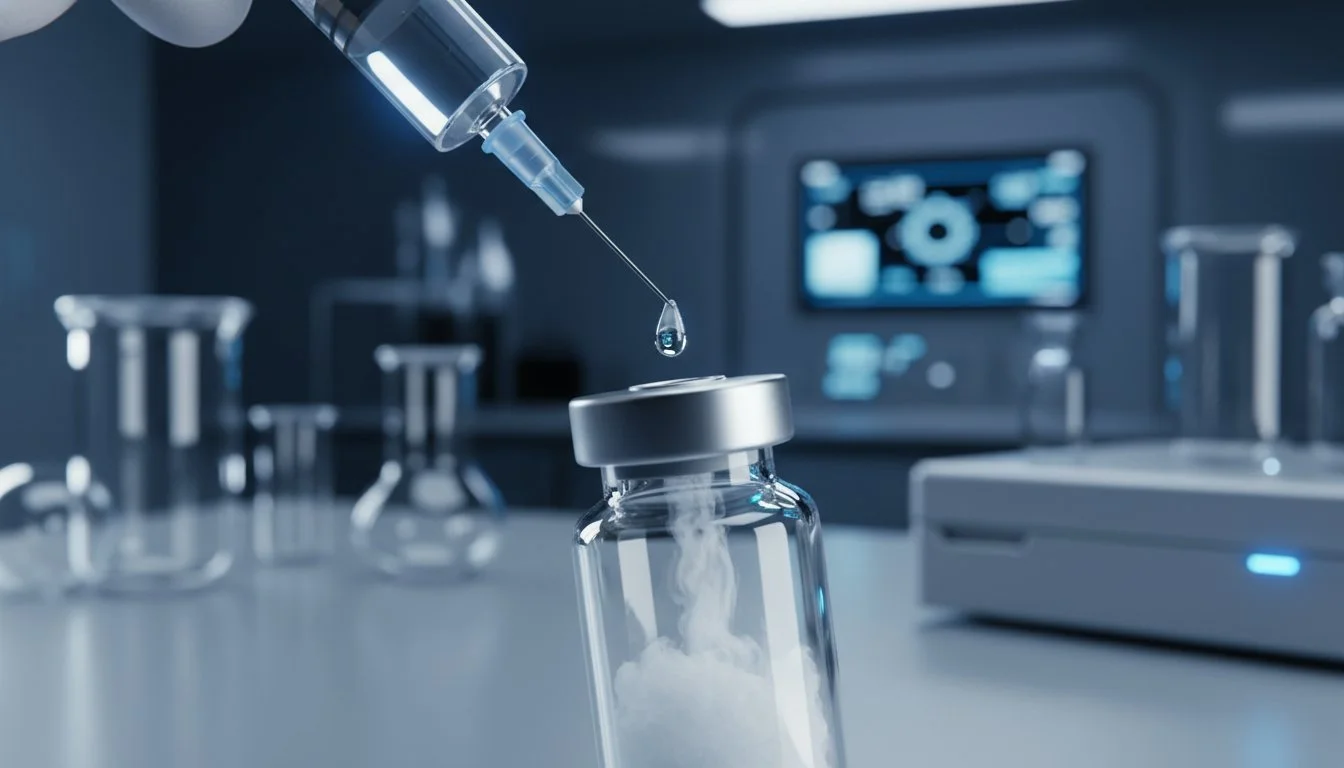
A single mathematical oversight during the reconstitution phase can invalidate months of laboratory data, particularly as the industry standard for research-grade purity has shifted to a 99% minimum as of 2026. You likely recognize the frustration of inconsistent results caused by unit confusion between milligrams, micrograms, and milliliters. Precision is the cornerstone of any credible study, yet calculating peptide concentration for research remains a primary point of failure for many laboratory operations. It’s a technical hurdle that demands a disciplined, manual approach to ensure the integrity of your scientific investigation.
This guide provides the technical math and standardized laboratory protocols necessary to master these calculations with absolute certainty. You’ll gain a clear formula for manual verification to ensure your research remains consistent and repeatable. We will examine the critical relationship between solvent and solute, the importance of HPLC and MS verification, and the exact steps required to maintain accuracy ahead of the July 23, 2026 PCAC regulatory review. By the end of this professional guide, you’ll possess the mathematical framework needed to eliminate variables and produce high-fidelity data.
Key Takeaways
- Master the primary equation for calculating peptide concentration for research by dividing the total microgram mass by the solvent volume in milliliters.
- Learn why manual mathematical verification remains the required gold standard for establishing new laboratory protocols and validating digital tool outputs.
- Identify the specific reconstitution protocols and aseptic techniques necessary to maintain peptide integrity when using bacteriostatic or sterile water.
- Understand how 99% purity standards impact your math by ensuring the mass indicated on the label accurately reflects the solute within the vial.
- Acquire standardized conversion methods to move between milligrams and micrograms, eliminating the unit errors that frequently compromise experimental data.
Understanding the Fundamentals of Peptide Concentration
Peptide concentration refers to the specific mass of a solute dissolved within a defined volume of solvent. This relationship forms the basis of all quantitative biochemical analysis. While the broader concept of Molar concentration describes moles per liter, laboratory practitioners typically measure peptide density in micrograms per milliliter (mcg/mL). Precision is non-negotiable in 2026. As regulatory scrutiny increases and purity standards rise to a 99% minimum, even minor deviations in your math can skew data and lead to irreproducible results. Accurate calculating peptide concentration for research ensures that experimental variables remain controlled. All protocols described here are strictly for laboratory research peptides use only and are not for human consumption.
To maintain accuracy, you must be fluent in the standard units of measurement. Milligrams (mg) represent the total mass of the peptide contained within a vial. Micrograms (mcg) are the target unit for most concentration calculations. Milliliters (mL) measure the liquid solvent used for reconstitution. Understanding the conversion between these units is the first step in avoiding the mathematical errors that frequently ruin delicate experiments.
The Role of Lyophilization in Concentration Math
Lyophilization is a sophisticated freeze-drying process that removes moisture through sublimation. This process leaves behind a stable “cake” or powder. This physical structure is often misleading. A larger cake doesn’t necessarily indicate a higher mass; it often reflects the presence of bulking agents or the specific drying cycle used during manufacturing. The mass listed on the vial, such as 5mg or 10mg, is the only reliable variable before you introduce a solvent. Because the powder’s volume is negligible, it doesn’t contribute to the final liquid volume of the solution. You must rely on the verified mass rather than the visual volume of the lyophilized powder.
Key Variables: Vial Mass vs. Reconstitution Volume
The vial mass is your starting constant. Whether you’re working with BPC-157 5mg or Tirzepatide 10mg, this number is fixed. The second variable is the solvent volume (V), which is the amount of bacteriostatic water added to the vial. By manipulating the volume of liquid, you dictate the final concentration (C). The interplay between these two figures determines the accuracy of your aliquots. If you add 2mL of water to a 5mg vial, the concentration is fundamentally different than if you added 1mL. Mastering the math behind calculating peptide concentration for research requires a strict adherence to these primary values. This ensures that every drop used in your study contains the precise amount of solute required for valid results.
The Core Formula: Using a Peptide Dosage Calculator Manually
Relying on digital tools without understanding the underlying arithmetic introduces unnecessary risk into a controlled laboratory environment. Mastery of the manual equation is essential for any professional tasked with calculating peptide concentration for research. The primary formula is straightforward: Concentration (C) = Total Peptide Mass (m) / Solvent Volume (V). This equation provides the concentration in micrograms per milliliter (mcg/mL), which is the standard metric for precise scientific investigation. Manual verification acts as a fail-safe against software glitches or data entry errors.
Before applying the formula, you must standardize your units. Most research vials are labeled in milligrams (mg). However, experimental protocols usually require microgram (mcg) precision. The conversion factor is absolute; 1mg equals 1,000mcg. Failing to perform this conversion before dividing by the solvent volume results in a thousand-fold error that would invalidate any subsequent data. Additionally, researchers utilizing standard insulin syringes must recognize that 100 units represent exactly 1mL of volume. This relationship allows for the translation of total concentration into manageable laboratory increments. Adhering to USP Peptide Reference Standards during the verification phase ensures that your starting mass is accurate, which is the foundation of any manual calculation.
Step-by-Step Calculation Example
Consider a scenario where you’re working with a 5mg vial of a research compound and intend to reconstitute it with 2mL of bacteriostatic water. First, convert the mass: 5mg becomes 5,000mcg. Next, divide the mass by the volume: 5,000mcg / 2mL equals a final concentration of 2,500mcg per mL. To determine the dose per syringe unit, divide the concentration by 100. In this instance, 2,500mcg / 100 units results in 25mcg per unit. This level of granularity is vital for maintaining experimental consistency across multiple trials.
Adjusting Volume for Desired Concentration
Researchers often need to work backward to achieve a specific target concentration. To find the required solvent volume, use the formula: V = m / C. If your protocol demands a concentration of 500mcg/mL and you’re starting with a 5mg (5,000mcg) vial, the calculation is 5,000 / 500, which equals 10mL. It’s essential to consider the physical limitations of the vial. Most standard research vials cannot accommodate 10mL of liquid. In such cases, you must either increase the target concentration or utilize a larger sterile mixing vessel. For those requiring precision supplies, sourcing high-quality Bacteriostatic Water 30ml ensures your solvent volume is both sterile and reliable. Double-checking these figures manually prevents the experimental variance that compromises long-term studies.

Digital Peptide Calculators vs. Manual Verification
Digital tools provide undeniable efficiency for the modern laboratory. Utilizing a peptide calculator streamlines the workflow by automating repetitive arithmetic, which is particularly beneficial when managing high-throughput studies. However, digital efficiency should never replace fundamental mathematical proficiency. Manual verification remains the gold standard for protocol development because it requires the researcher to engage directly with the specific variables of the experiment. Relying solely on an application creates a “black box” scenario where errors in input parameters might go unnoticed until the data is already skewed.
A common objection arises regarding the necessity of manual math when applications provide results instantly. The answer lies in the inherent risk of automated complacency. Many digital interfaces require users to select specific syringe volumes, such as 1mL (U-100) or 0.5mL (U-50). A single incorrect toggle can lead to a significant variance in the actual concentration. When calculating peptide concentration for research, human oversight ensures that the physical equipment in the technician’s hand matches the digital model. This disciplined approach prevents the entry of incorrect solvent volumes or vial masses into the system. It’s a matter of institutional credibility and technical discipline.
When to Use Digital Tools
Digital interfaces are ideal for rapid scaling across multiple vials in large-scale comparative studies. They serve as an excellent secondary verification system to catch human error during high-stress laboratory sessions. These tools function best when paired with standardized equipment, such as 1mL, 0.5mL, or 0.3mL syringes, where the unit-to-volume ratio is consistent. Using digital tools for cross-referencing ensures that the manual math performed at the start of the protocol remains accurate throughout the duration of the study. They are a supplement to, not a replacement for, professional expertise.
The Necessity of Manual Audits
Manual audits are mandatory when working with non-standard vial sizes, such as 2mg Tesamorelin or 50mg GHK-Cu. These outliers often fall outside the default settings of basic calculators. Documenting precise methodology in peer-reviewed research papers requires a clear, reproducible mathematical narrative that digital tools cannot provide. This is especially critical for calculating peptide concentration for research involving complex formulations like the CJC-1295 + Ipamorelin 5mg/5mg Blend. In these instances, the researcher must calculate the concentration of each individual component within the total solution volume. This ensures the integrity of the synergistic data and provides the transparency required for institutional credibility. Manual verification safeguards the experiment against the logical gaps that software might overlook.
Reconstitution Protocols for Precise Concentration
The physical process of reconstitution is as critical as the mathematical formula. Maintaining aseptic conditions is the first requirement for any laboratory protocol. You must sanitize the vial’s rubber stopper with 70% isopropyl alcohol before the needle penetrates the seal. The choice of solvent also dictates the longevity and stability of your solution. Bacteriostatic water, which contains 0.9% benzyl alcohol, is the industry standard for research applications where the vial will be accessed multiple times. It inhibits bacterial growth. Sterile water is reserved for single-use applications because it lacks a preservative. Understanding these distinctions is fundamental when calculating peptide concentration for research to ensure the integrity of the solute. Researchers working with melanocortin peptides, for instance, should consult a comprehensive guide to buying Melanotan II for research to understand how purity verification and reconstitution protocols apply to specific compound classes.
Managing the vacuum effect is a technical necessity. Most lyophilized vials are sealed under negative pressure. If you allow the solvent to be sucked into the vial rapidly, the force can denature the fragile peptide chains. You should manually control the plunger to allow the liquid to enter slowly and predictably. Once the solvent is added, never shake the vial. Vigorous agitation can break the molecular bonds of the peptide. Use a gentle swirling motion until the solute is completely dissolved. This disciplined approach preserves the biochemical structure and ensures that your calculated concentration remains accurate across all aliquots.
Managing Solvent Addition
Precision requires careful physical handling during the introduction of the liquid. Always aim the stream of solvent against the glass wall of the vial rather than directly onto the lyophilized cake. A “direct hit” often causes foaming. This foam traps the peptide and makes accurate withdrawal difficult, effectively skewing your math and leading to inconsistent results. Temperature also plays a role in this phase. Reconstituting at room temperature is generally preferred to avoid thermal shock to the peptide structure. Ensuring these physical variables are controlled is a prerequisite for calculating peptide concentration for research with high fidelity.
Addressing Volumetric Displacement
A common oversight in laboratory work is the failure to account for volumetric displacement. In most cases involving 5mg or 10mg vials, the mass of the powder does not significantly displace the liquid. The volume of the solution remains essentially equal to the volume of the solvent added. However, displacement becomes a factor in high-mass concentrations, such as 50mg GHK-Cu. In these instances, the powder may increase the total volume by a measurable fraction, which would slightly lower the actual concentration. For standard research, a reliable rule of thumb is that displacement is negligible for vials under 20mg. For those requiring the highest standards of purity and reliability, you can source Bacteriostatic Water 30ml to ensure your reconstitution media meets strict laboratory requirements.
Purity Standards and Their Impact on Your Math
The mathematical accuracy of your results depends entirely on the integrity of the starting material. When calculating peptide concentration for research, you must assume the mass listed on the vial is the actual mass of the peptide. However, this assumption only holds true if the product meets the modern 2026 industry minimum of 99% purity. If a vial contains significant impurities, you are dealing with “ghost mass.” This refers to non-peptide matter that contributes to the weight of the lyophilized cake but provides no experimental value. For example, a 10mg vial with only 95% purity contains 500mcg of unknown substances. This discrepancy skews your concentration calculations and introduces uncontrolled variables that can invalidate your entire dataset. The same principle applies when researchers buy Melanotan II for research, where batch-to-batch purity verification is essential to prevent ghost mass from corrupting concentration math.
Professional researchers verify the Certificate of Analysis (COA) for every batch to ensure their math reflects reality. Relying on vague marketing terms is a risk that disciplined laboratories can’t afford. High-purity standards ensure that the microgram-to-milliliter ratio remains precise throughout the study. Nexa Peptide Store maintains institutional credibility by providing high-integrity research materials that meet these uncompromising standards. By sourcing peptides with verified 99%+ purity, you eliminate the mathematical variance caused by inferior manufacturing processes.
The Importance of Third-Party HPLC Testing
High-Performance Liquid Chromatography (HPLC) is the gold standard for verifying peptide identity and purity. While “Pharma Grade” is often used as a subjective marketing term, a 99% purity rating is a verifiable scientific metric. The HPLC report provides a chromatogram that identifies the primary peak of the peptide and any secondary peaks representing impurities. When you review a COA for complex agonists, such as the Tirzepatide mechanism of action, you’re confirming that the mass in the vial is the exact molecular structure required for your protocol. This verification is a prerequisite for calculating peptide concentration for research with absolute certainty.
Storage and Stability Post-Calculation
Your mathematical work doesn’t end once the solvent is added. Improper storage leads to rapid molecular degradation, which effectively lowers the concentration of the solution over time. Reconstituted peptides are significantly more fragile than their lyophilized counterparts. Most research compounds require consistent refrigeration at 2°C to 8°C (36°F to 46°F) to maintain stability. Freezing reconstituted peptides is generally discouraged, as the formation of ice crystals can shear the delicate peptide chains. In a typical research setting, a reconstituted vial maintains its calculated integrity for approximately 21 to 30 days, depending on the specific sequence and the quality of the bacteriostatic water used. Monitoring these environmental variables ensures that your concentration remains consistent from the first aliquot to the last.
Advancing Laboratory Precision Through Mathematical Rigor
Mastering the technical requirements of calculating peptide concentration for research is a prerequisite for any high-fidelity scientific study. By prioritizing manual verification over automated shortcuts, you ensure that your data remains beyond reproach. The intersection of 99% purity standards, aseptic reconstitution protocols, and disciplined unit conversion forms the bedrock of institutional credibility. These rigorous protocols eliminate the variables that frequently compromise experimental outcomes and lead to inconsistent findings. Precision isn’t just a goal; it’s the standard that defines professional laboratory operations.
Reliable research begins with high-integrity materials that meet the industry’s most stringent quality controls. Every vial must be backed by transparent data to confirm its mass and purity before it enters your laboratory workflow. This level of oversight ensures that your mathematical formulas reflect the physical reality of the solute.
Secure High-Purity Peptides for Your Next Research Project at Nexa Peptide Store. Our inventory features 99%+ Purity Guaranteed, third-party lab tested vials, and global shipping for research institutions. We provide the technical foundation your investigation requires to produce repeatable, peer-reviewed results. Your commitment to precision today ensures the breakthrough discoveries of tomorrow.
Frequently Asked Questions
How do I calculate peptide dosage if I use a 0.5mL syringe?
Using a 0.5mL (U-50) syringe doesn’t alter the concentration of the solution, only the total capacity of the delivery tool. If your concentration is 2,000mcg/mL, each unit on a U-50 syringe still represents 0.01mL of volume. This means each unit contains 20mcg. You must ensure the syringe calibration matches your manual math to maintain experimental integrity and result reproducibility.
What is the most common mistake when using a peptide dosage calculator?
The most frequent error involves the failure to verify the syringe’s unit-to-volume ratio. Many researchers assume all syringes are 1mL (U-100), which leads to significant dosing errors when using 0.5mL or 0.3mL variants. Manually calculating peptide concentration for research acts as a necessary audit to catch these digital input mistakes before they compromise your data.
Does adding more bacteriostatic water make the peptide less effective?
Increasing the volume of bacteriostatic water doesn’t reduce the biological efficacy of the peptide. It simply lowers the concentration per unit of volume. The total mass of the solute remains constant. If you add 4mL instead of 2mL to a 5mg vial, you must withdraw twice the volume to achieve the same microgram dose in your specific research protocol.
Can I use the same formula for peptide blends like CJC-1295 and Ipamorelin?
You can use the same base formula, but you must apply it to each ingredient separately. In a CJC-1295 + Ipamorelin 5mg/5mg blend reconstituted with 2mL of water, both peptides exist at a concentration of 2,500mcg/mL. Total volume is the shared denominator for all components within the solution. Accurate math ensures each component remains within the target range for your study.
How long does a peptide remain stable after I have calculated and reconstituted it?
Most reconstituted peptides maintain biochemical stability for 21 to 30 days when stored at 2°C to 8°C. After this period, molecular degradation begins to reduce the effective concentration. Proper refrigeration is mandatory for all research agonists. Freezing the solution is prohibited as ice crystals can shear the peptide chains and invalidate your initial calculations, leading to unreliable data.
Is there a difference between mg and mcg in peptide math?
The distinction is a factor of 1,000. Milligrams (mg) measure the total mass in the vial, while micrograms (mcg) are the standard unit for research dosing. Confusing these units results in a 1,000-fold error. This is the most catastrophic mistake possible when calculating peptide concentration for research. You must always multiply the milligram mass by 1,000 before dividing by the solvent volume.
Why do some researchers prefer 1mL of water over 2mL for reconstitution?
Researchers often prefer 1mL of solvent to achieve a higher concentration in a smaller volume. This is useful when the experimental protocol requires a high dose but limits the total liquid volume that can be introduced. Conversely, 2mL is often chosen to make the units easier to measure on a standard syringe. This reduces the risk of minor measurement errors during withdrawal.
What happens to the concentration if the vial has a vacuum?
A vacuum is a standard manufacturing feature that ensures sterility and stability. It doesn’t affect the concentration math, but it does impact the physical reconstitution technique. You must control the plunger to prevent the solvent from rushing in too quickly. Rapid entry can cause foaming or denaturing, which leads to an uneven distribution of the solute and potential mass loss.
