- Your cart is empty
- Continue shopping
-
Dr Hoffman
- Posted on
- Categories:Uncategorized
- 0 comments
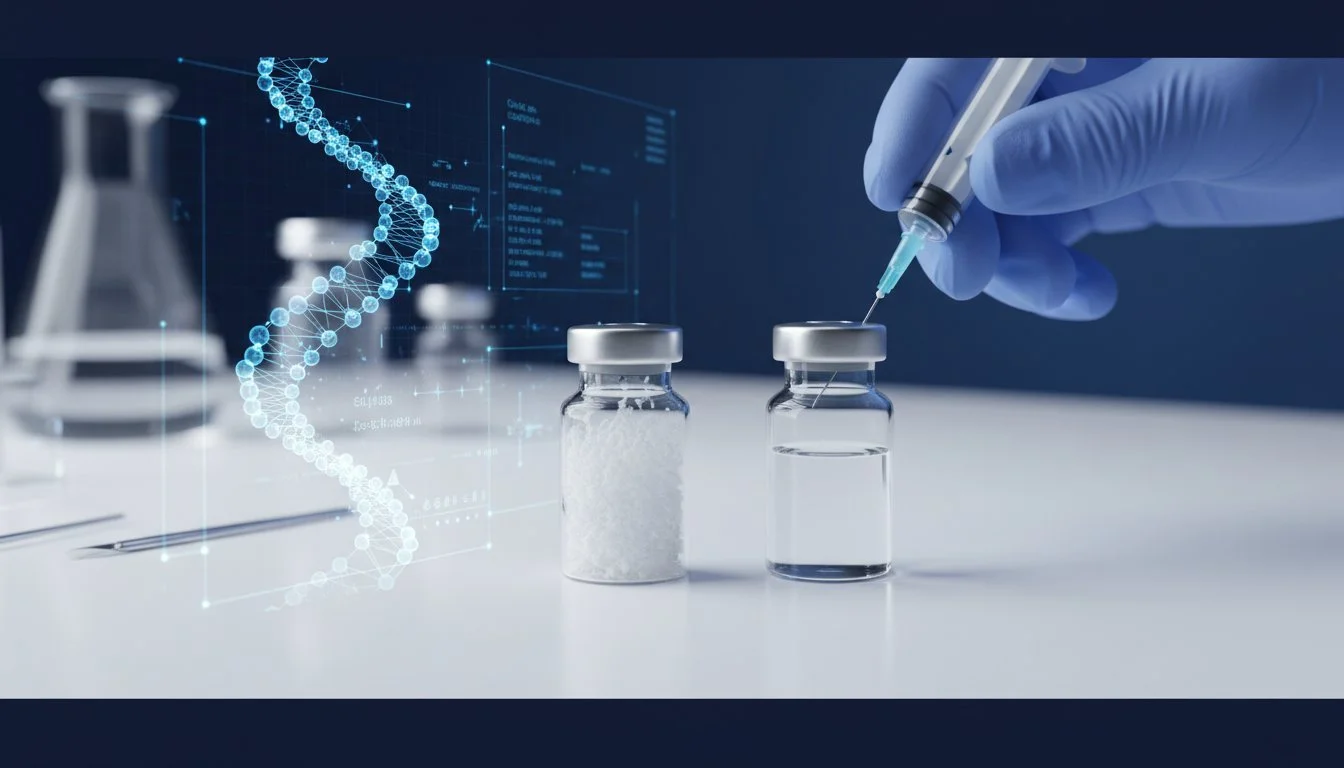
A digital peptide calculator serves as a convenient reference, yet relying solely on automated tools without mastering the underlying arithmetic introduces an unacceptable variable into your laboratory environment. Data integrity depends on the researcher’s ability to verify every concentration manually. You likely recognize that a single miscalculation during the reconstitution of a 5mg vial of BPC-157 or a 10mg vial of Tirzepatide can compromise an entire study. The transition from lyophilized powder to a precise liquid solution requires more than a software interface; it demands a rigorous understanding of the relationship between mass and volume.
We agree that the discrepancies between international units and micrograms, alongside inconsistent syringe markings across manufacturers, present significant hurdles to standardization. Building on our history of providing high-purity reagents for laboratory use, this guide establishes a definitive mathematical framework to ensure absolute dosing precision in your scientific investigations. You’ll learn a repeatable protocol for any peptide concentration, gain total confidence in your syringe draw accuracy, and master the foundational physics of reconstitution. By the conclusion of this protocol, you’ll possess the technical expertise to eliminate mathematical ambiguity from your research workflow.
Key Takeaways
- Establish a standardized protocol for converting lyophilized powders into liquid solutions to ensure the integrity of longitudinal laboratory data.
- Master the mathematical conversion of milligrams to micrograms to manually verify the results generated by any digital peptide calculator.
- Decode syringe-specific calibrations, such as the 0.01mL volume of a single U-100 unit, to eliminate draw-volume inconsistencies between different manufacturers.
- Adopt a rigorous “Dry Math” preparation phase to calculate precise solvent requirements before compromising the sterile environment of the research vial.
- Recognize the critical role of third-party verification and high purity standards in preventing calculation errors caused by undisclosed reagent impurities.
Understanding Peptide Reconstitution: Why Mathematical Precision is Non-Negotiable
Peptide reconstitution is the meticulous process of restoring a lyophilized (freeze-dried) powder to a liquid state for laboratory investigation. This step isn’t merely a logistical hurdle but a foundational protocol that dictates the validity of every subsequent data point in a longitudinal study. Because these compounds are strictly designated for laboratory research use only, the burden of precision falls entirely on the researcher. Inaccurate reconstitution protocols lead to concentration variances that skew results, making it impossible to replicate findings or establish a reliable dose-repose curve. Precision isn’t optional; it’s the benchmark of scientific credibility.
Many researchers utilize a peptide calculator to mitigate the risk of human error during these complex preparations. Manual calculation pitfalls often stem from simple unit conversion mistakes, such as misidentifying the difference between milligrams and micrograms or failing to account for the dead space in a syringe. These small deviations compound over time, especially in multi-week studies where consistent concentration is paramount for data integrity. If your initial math is flawed, every subsequent measurement in your study becomes a variable rather than a constant. A disciplined approach to calculating peptide concentration for research is therefore the single most important safeguard against compounding errors in longitudinal investigations.
The Science of Lyophilization and Stability
Peptides are inherently fragile molecules. Through the process of Chemical peptide synthesis, these chains of amino acids are created and then immediately lyophilized to preserve their molecular structure during transport and storage. This freeze-drying process removes water while the peptide is in a frozen state, resulting in a stable “cake” or powder. When you introduce a solvent like bacteriostatic water, the peptide must dissolve completely to form a homogenous solution. Sourcing high-purity research peptides is essential for this step. Impurities or fillers can interfere with solubility, leading to precipitates that invalidate your mathematical models and compromise the integrity of the reagent.
Concentration vs. Dose: Clarifying the Terminology
Achieving accuracy requires a clear distinction between two frequently conflated terms. Concentration refers to the density of the peptide within the solvent, typically expressed as milligrams per milliliter (mg/mL). In contrast, the dose is the specific mass of the peptide required for a single experimental instance, usually measured in micrograms (mcg). There’s a direct inverse relationship between solvent volume and concentration: increasing the volume of bacteriostatic water decreases the concentration of the peptide. Mastering this balance allows you to use a peptide calculator effectively to achieve repeatable, high-fidelity results in any laboratory environment.
Decoding the Equation: Variables in Research Peptide Calculations
To achieve absolute precision in a laboratory setting, a researcher must isolate three primary variables before beginning the reconstitution process. These variables include the total mass of the vial content (expressed in milligrams), the volume of the solvent to be introduced (expressed in milliliters), and the specific target dose required for the study (expressed in micrograms). While a digital peptide calculator can process these figures rapidly, the underlying mathematical logic must be understood to prevent data skewing. Adhering to a standardized Laboratory Safety Guide ensures that these calculations are performed within a framework of rigorous operational security and accuracy.
The most common point of failure in manual calculations is the conversion between milligrams (mg) and micrograms (mcg). In the metric system, 1mg is equivalent to 1000mcg. Therefore, a 5mg vial of a research compound contains 5000mcg of the active reagent. Standardizing your math to micrograms early in the process simplifies the division required to determine the final concentration. It’s much easier to divide 5000 by a set volume than to work with decimal points that are prone to transcription errors.
One variable often overlooked by automated tools is the “displacement volume.” This refers to the physical space the lyophilized powder occupies once it’s dissolved into the solvent. In most peptide research involving 2mg to 10mg vials, the powder adds a negligible amount of volume to the final solution, typically less than 0.01mL. For standard laboratory concentrations, this displacement is usually ignored. However, in high-concentration studies where total volume is extremely limited, this minute addition can slightly alter the expected concentration ratio. Researchers seeking a comprehensive manual framework for these edge cases will find the professional protocols for calculating peptide concentration for research particularly valuable for maintaining accuracy across variable vial sizes.
Bacteriostatic water remains the industry standard solvent for these procedures. It contains 0.9% benzyl alcohol, which acts as a preservative to inhibit the growth of bacteria. This allows the reconstituted solution to remain stable for longer periods under refrigeration. For those conducting frequent investigations, maintaining a supply of high-quality laboratory solvents is just as critical as the peptides themselves.
Calculating the Concentration Ratio
The concentration ratio is determined by the formula: Total mcg in vial / mL of solvent = mcg per mL. For example, if you introduce 2mL of solvent into a 5mg vial, the calculation is 5000mcg / 2mL, resulting in a concentration of 2500mcg per mL. Choosing round numbers for your solvent volume, such as 1mL or 2mL, significantly simplifies the subsequent math required to determine the draw volume on a syringe. This clarity reduces the cognitive load on the researcher and minimizes the risk of dosing variance.
Adjusting for High-Concentration Blends
Blustered reagents, such as a CJC-1295 and Ipamorelin 5mg/5mg blend, require a dual-layered approach. You must calculate the concentration for each active ingredient independently within the shared volume of the solvent. If you reconstitute this 10mg total mass blend with 2mL of solvent, each individual peptide will have a concentration of 2500mcg per mL. Using high-purity vials of BPC-157 or other verified compounds ensures that the mass listed on the label is accurate, which is the only way to guarantee your calculated concentrations are reflectively true in the resulting solution.

Syringe Calibration and Unit Conversion: Mastering Microliters and Tics
Precision requires the right tools. While a peptide calculator provides the numeric value, the physical syringe must match the intended calibration to avoid catastrophic dosing errors. Most laboratory protocols utilize the U-100 syringe as the baseline standard, which is calibrated for 100 units per 1.0mL of volume. In contrast, U-40 syringes, occasionally found in specialized clinical environments, are calibrated for only 40 units per 1.0mL. Utilizing a U-100 mathematical result on a U-40 syringe barrel will result in a 2.5x variance in the delivered dose. Manual verification remains the only safeguard against the misinterpretation of peptide calculator outputs during the draw process.
Syringe “dead space” is another critical variable that researchers must account for when investigating high-potency compounds. This refers to the residual fluid that remains in the needle hub and the tip of the syringe after the plunger is fully depressed. For very small dose volumes, such as those under 10 units, this dead space can represent a significant percentage of the total volume, leading to inconsistent data across multiple research subjects. Selecting low dead-space (LDS) syringes is a standard requirement for maintaining high-fidelity results in micro-dosing studies.
The U-100 Standard: The Researcher’s Baseline
The U-100 syringe is the most common instrument for peptide research due to its straightforward decimal relationship with the milliliter. On these syringes, 100 units equals exactly 1.0mL, which means a single unit is 0.01mL. Understanding this conversion is vital for precise microliter (µL) measurements:
- 100 Units: 1.0mL (1000µL)
- 50 Units: 0.5mL (500µL)
- 10 Units: 0.1mL (100µL)
- 1 Unit: 0.01mL (10µL)
For studies requiring extreme precision, syringes with half-unit markings allow for 5µL increments. This level of granularity is essential when working with highly concentrated reagents where a single unit may contain a significant microgram mass.
Calculating the ‘Tick’ Mark Value
To determine the exact number of units to draw, apply the following formula: (Target Dose / Total Vial mcg) * Total Solvent Units = Units on Syringe. Consider an experiment requiring a 250mcg dose from a 5mg (5000mcg) vial reconstituted with 2mL (200 units) of bacteriostatic water. The calculation would be (250 / 5000) * 200, which equals 10 units on the syringe. A single ‘tick’ or unit marking on a syringe barrel represents a specific volume of liquid rather than a fixed weight of the peptide reagent. Always confirm that the plunger’s top ring aligns perfectly with the leading edge of the graduation mark to ensure the volume is consistent across all research instances.
Step-by-Step Guide to Reconstituting Research Peptides with Accuracy
The transition from mathematical theory to physical laboratory execution requires a disciplined, step-by-step protocol. While the peptide calculator provides the requisite data, the mechanical handling of the reagent determines the final stability of the compound. Failure to maintain aseptic technique or improper solvent introduction can degrade the peptide’s molecular integrity before the experiment even begins. Accuracy isn’t just about the numbers; it’s about the preservation of the chemical structure.
- Step 1: Sanitization. Thoroughly disinfect the laboratory workspace and the rubber stoppers of both the peptide vial and the solvent container using 70% isopropyl alcohol. Allow the alcohol to air dry completely to ensure maximum antimicrobial efficacy.
- Step 2: Dry Math Verification. Before unsealing any supplies, perform a final “Dry Math” check. Use your peptide calculator to confirm the exact draw volume required for your solvent and the resulting unit measurement on your syringe to ensure they align with your research goals.
- Step 3: Controlled Solvent Introduction. Insert the needle at a slight angle against the glass wall of the vial. Introduce the solvent slowly, allowing it to trickle down the side rather than spraying the lyophilized cake directly, which can cause mechanical stress to the peptide chains.
- Step 4: Passive Dissolution. Once the solvent is added, allow the vial to sit undisturbed. If necessary, gently swirl the vial between your palms. Never shake the vial vigorously, as agitation can lead to denaturing of the protein structure.
- Step 5: Documentation. Affix a label to the vial immediately. This must include the final concentration (e.g., 2.5mg/mL) and the specific date of reconstitution to track the reagent’s shelf-life accurately.
Solvent Selection and Handling
Bacteriostatic water is the preferred solvent for multi-use research vials because it contains 0.9% benzyl alcohol to inhibit bacterial growth. In contrast, sterile water lacks this preservative and is intended for immediate, single-use applications only. Most lyophilized vials are sealed under a vacuum. If the plunger is not held firmly during introduction, the solvent will be pulled in rapidly, potentially damaging the reagent. After reconstitution, most peptides should be stored at 2 to 8 degrees Celsius. For those requiring high-volume solvents, you can purchase Bacteriostatic Water 30ml to support extended longitudinal studies.
Verification and Troubleshooting
A successful reconstitution should result in a clear, colorless solution. If the liquid remains cloudy or contains visible particulates after 20 minutes, it may indicate a solubility issue related to the peptide’s pH or the presence of impurities. Always double-check your initial pull volume against your calculated concentration to ensure no volumetric errors occurred during the transfer. For insights into handling complex triple-agonist reagents, consult the Retatrutide research roundup, which details specific stability considerations for advanced compounds.
Ensuring Data Integrity: Sourcing High-Purity Peptides for Reliable Results
Analytical precision is only as reliable as the raw materials utilized in the laboratory. While a peptide calculator provides a mathematically perfect output, it operates on the assumption that the mass indicated on the vial label is 100% accurate and pure. If a reagent contains significant impurities or undisclosed fillers, the actual concentration of the active compound will deviate from the calculated value. According to independent testing data from May 2026, approximately 8% of tested samples from unregulated online vendors were contaminated with endotoxins, and some vials contained none of the labeled compound. For the serious researcher, such variances invalidate longitudinal data and render experimental results irreproducible.
Data integrity requires the verification of every reagent through third-party Certificates of Analysis (COAs). These documents provide quantitative proof of purity and mass, ensuring that when you input “5mg” into your peptide calculator, you’re working with the exact amount of active peptide required. Nexa Peptide Store maintains an uncompromising stance on quality control, mandating a minimum purity standard of 99% for all laboratory reagents. This commitment to transparency allows academic and private research institutions to maintain the highest standards of scientific rigor. Researchers who need to buy Melanotan II for research will find that applying this same COA-verification framework is equally essential for ensuring batch-to-batch consistency and reproducible experimental outcomes.
The Impact of Purity on Reconstitution
Low-quality vials often contain stabilizers or bulking agents that interfere with the solubility of the lyophilized cake. These additives can alter the pH of the solution or create precipitates that prevent the peptide from reaching a homogenous state. Predictable solubility is a hallmark of high-purity reagents. By adhering to a strict “Research Use Only” mandate, we ensure that our products are optimized for laboratory environments where chemical stability is the primary objective. Consistent lyophilization techniques preserve the molecular structure of compounds like Tirzepatide 10mg or Retatrutide 10mg, ensuring they dissolve predictably when introduced to a solvent.
Logistics of Quality Procurement
The journey from the laboratory to your facility is a critical phase in maintaining reagent integrity. Reliable international shipping protocols must prioritize the preservation of the lyophilized state through climate-controlled logistics and secure packaging. Exposure to extreme temperatures or moisture can degrade fragile peptide chains before they ever reach the reconstitution phase. To maintain a high-standard laboratory environment, researchers should utilize the following checklist:
- Verify the third-party COA for every batch number.
- Inspect the vacuum seal and the integrity of the lyophilized cake upon arrival.
- Store vials at -20°C for long-term stability or 2-8°C for immediate research needs.
- Cross-reference the verified mass with your mathematical protocols before adding solvent.
Maintaining institutional credibility depends on the quality of your reagents. Secure the precision your research demands by choosing verified materials from a trusted supplier. Purchase high-purity research peptides to ensure your laboratory data remains beyond reproach.
Advancing Laboratory Precision with Standardized Protocols
Mastering the mathematical foundations of reconstitution ensures that every microgram is accounted for during your scientific investigations. By standardizing syringe calibration and validating reagent purity through third-party analysis, you eliminate the variables that typically compromise research integrity. A digital peptide calculator serves as a high-efficiency tool; however, it reaches its full potential only when paired with a researcher’s manual verification and rigorous aseptic technique. This intersection of digital assistance and manual discipline is what defines high-fidelity laboratory results.
Nexa Peptide Store remains committed to supporting the scientific community with reagents rigorously tested for 99%+ purity. Our established history of supply excellence and reliable global shipping ensures that research institutions receive the materials necessary to maintain uncompromising standards. Ensuring that your reagents meet these absolute benchmarks is the final, essential step in any reconstitution protocol. We look forward to seeing how these precision-focused methods enhance the accuracy and repeatability of your upcoming laboratory findings.
Secure High-Purity Research Peptides for Your Next Study at Nexa Peptide Store
Frequently Asked Questions
How much bacteriostatic water should I add to a 5mg peptide vial?
You should add a volume of bacteriostatic water that aligns with your specific target concentration, with 1.0mL or 2.0mL being the standard laboratory benchmarks for a 5mg vial. If you introduce 2.0mL of solvent, your final concentration becomes 2500mcg per mL. This volume provides enough liquid for precise measurement while maintaining the stability of the reagent for longitudinal studies. Always verify these figures using a manual check alongside your peptide calculator.
What is the difference between mcg and units on a peptide calculator?
Micrograms (mcg) represent the mass of the peptide itself, whereas units represent the volume of the solution as measured on a syringe barrel. A peptide calculator translates the mass required for an experiment into the physical volume you must draw from the vial. On a standard U-100 syringe, one unit is equal to 0.01mL of volume. Confusing these two distinct metrics is a primary cause of dosing variance in laboratory environments.
Can I use a standard peptide calculator for a blend like CJC-1295 and Ipamorelin?
You can utilize a standard calculator for blends by treating each active ingredient as a separate variable within the same total volume of solvent. In a CJC-1295 and Ipamorelin 5mg/5mg blend reconstituted with 2.0mL of water, each peptide will have an individual concentration of 2500mcg per mL. It’s critical to ensure the total mass of the blend is accounted for to prevent concentration skewing during the reconstitution process.
What happens if I add too much solvent during peptide reconstitution?
Adding an excessive volume of solvent results in a lower concentration of the peptide per mL, which necessitates a larger draw volume to reach the target dose. While this doesn’t inherently damage the chemical structure, it may exceed the volume capacity of your syringe or dilute the reagent beyond the requirements of your study. If the solution becomes too dilute, you’ll need to recalibrate your mathematical protocol to maintain data consistency.
How do I calculate the dosage if my syringe is U-40 instead of U-100?
To calculate for a U-40 syringe, you must adjust your volume ratio to account for 40 units per 1.0mL instead of the standard 100 units. You can find the correct draw by multiplying your target mL volume by 40. For example, a 0.1mL dose requires 4 units on a U-40 syringe but 10 units on a U-100 syringe. This distinction is vital because utilizing U-100 math on a U-40 barrel leads to a 2.5x dosing error.
Is it necessary to refrigerate peptides after they have been reconstituted?
Refrigeration is mandatory for maintaining the molecular integrity of reconstituted peptides, as they become significantly more susceptible to heat degradation once in a liquid state. You should store the vials at a constant temperature between 2 and 8 degrees Celsius. Exposure to room temperature for extended periods can denature the protein chains, leading to a loss of potency that will invalidate your experimental results and compromise your data integrity.
How do I read 250mcg on a 1mL insulin syringe?
Reading 250mcg depends entirely on the concentration of your solution. If you have reconstituted a 5mg vial with 2.0mL of bacteriostatic water, a 250mcg dose is represented by exactly 10 units on a U-100 1mL syringe. You must align the top ring of the plunger with the tenth graduation mark on the barrel. Always perform a manual calculation to verify that your volume corresponds to the mass required for your specific research instance.
Why does the peptide calculator ask for the total volume of the syringe?
The total volume of the syringe is required to determine the specific unit count that corresponds to your target dose. Syringes come in various sizes, such as 0.3mL, 0.5mL, and 1.0mL, and their graduation markings can vary by manufacturer. Providing the total volume allows the tool to provide a numeric representation of the draw that is specific to the physical equipment you are using in the laboratory environment.
